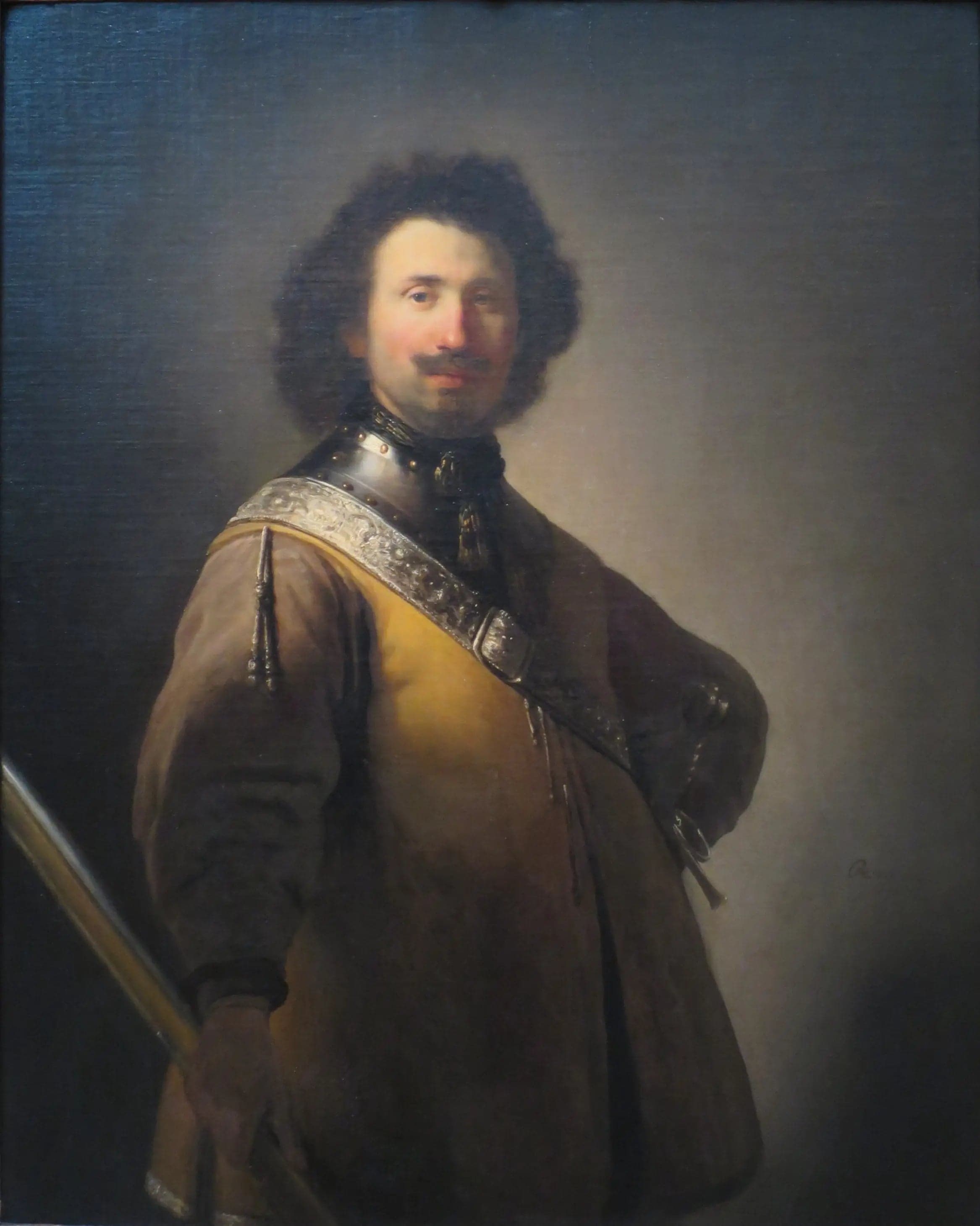
Portrait of Joris de Caullery
- Original dimensions
- 84.3 x 102.9 cm
- Museum
- San Francisco Museum of Fine Arts
- Year
- 1632
Scene depicted
In the Portrait of Joris de Caullery, Rembrandt captures not only the face of his model but also a part of his soul. The portrait depicts a man of stature, dressed in a rich outfit reflecting his status, with a gaze imbued with introspection and depth. This representation is not simply a capture of appearance; it is an immersion into the intimacy of a moment, a silent dialogue between the model and the viewer.
Historical context
This iconic painting, completed in 1632, is part of the golden age of the Netherlands. The painting was created in Amsterdam, a city in the midst of artistic effervescence at that time, characterized by the baroque movement. The Portrait of Joris de Caullery is currently on display at the San Francisco Museum of Fine Arts, where it continues to amaze art lovers with its impressive dimensions.
Place in the artist's career
This painting represents a pivotal moment in Rembrandt 's career, balancing between his meteoric rise and the challenges to come. Alongside other significant paintings such as The Night Watch and The Return of the Prodigal Son, Portrait of Joris de Caullery demonstrates both technical and emotional evolution, a dialogue between tradition and innovation.
Anecdote
Rembrandt once declared: "Every face tells a story." It is in this profound essence that the genesis of this masterpiece finds its meaning. Imagine a spring morning, soft light filtering through the windows of the master's studio, as he admires the model Joris de Caullery, whose face expresses wisdom and serenity. Each brushstroke, imbued with this emotion, makes this painting a living pictorial work.