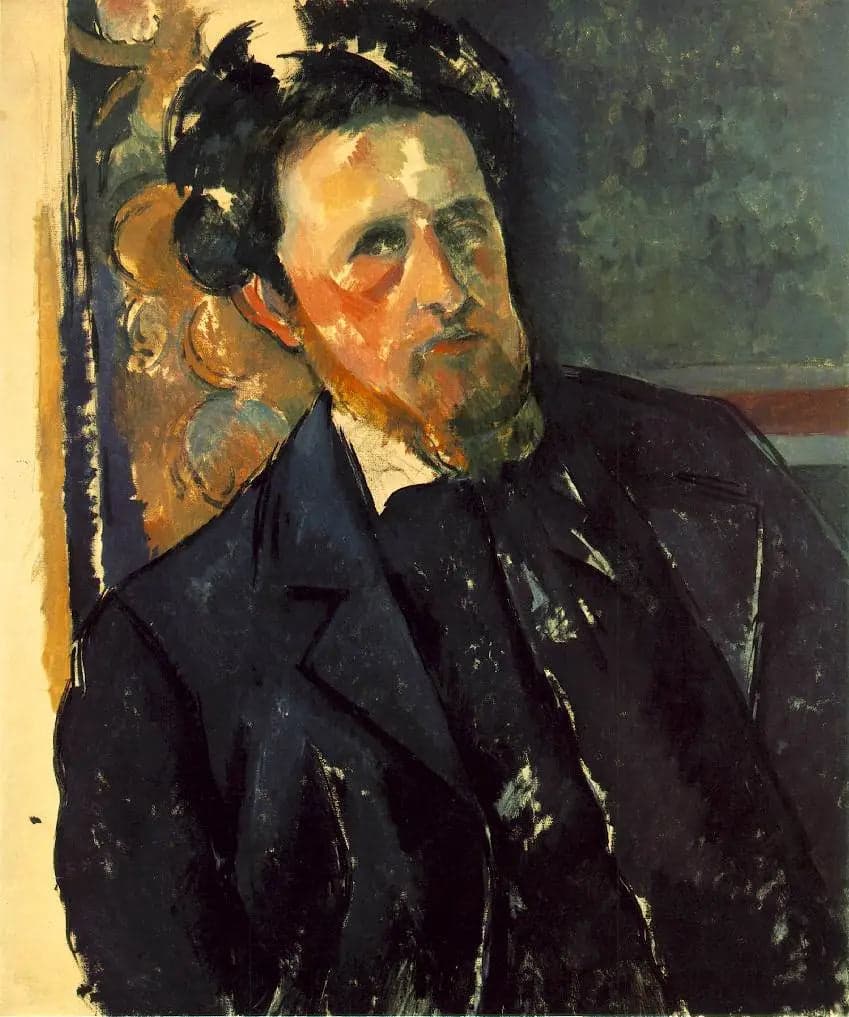
Portrait of Joachim Gasquet
- Original dimensions
- 54 x 65 cm
- Museum
- National Gallery in Prague
- Year
- 1896
Scene depicted
The painting “Portrait of Joachim Gasquet” depicts Cézanne's friend in a thoughtful posture. The composition reflects the technical characteristics of the artist, where each brushstroke reveals not only the features of the face but also the depth of the human soul. The air that emanates is charged with emotions, an open window to introspection and tranquility.
Historical context
Created in 1896, this painting is emblematic of the artistic movement of post-impressionism , a movement that advocates for the free expression of emotions through color and form. Located in Prague, the National Gallery holds this canvas captivating that testifies to the importance of portraiture in Cézanne's work, combining technique and emotion, at a time when art explodes in colors and shapes.
Place in the artist's career
This canvas represents a pivotal moment in Cézanne's career. Not only does it reveal his distinctive style, but it also marks a turning point where his realistic approach evolves, while remaining true to his roots. In comparison with “The Card Players” and “The Montagne Sainte-Victoire,” this masterpiece illustrates the momentum towards the simplification of forms and the intensification of colors, stabilizing his reputation as an innovator.
Anecdote
“Color is my religion, and each face a confession.” This quote may have been spoken one spring morning, when Cézanne, walking through alleyways like blank canvases, crossed the intense gaze of Joachim Gasquet. This intense memory emerges in the painting , offering a vivid connection between the artist and his muse.