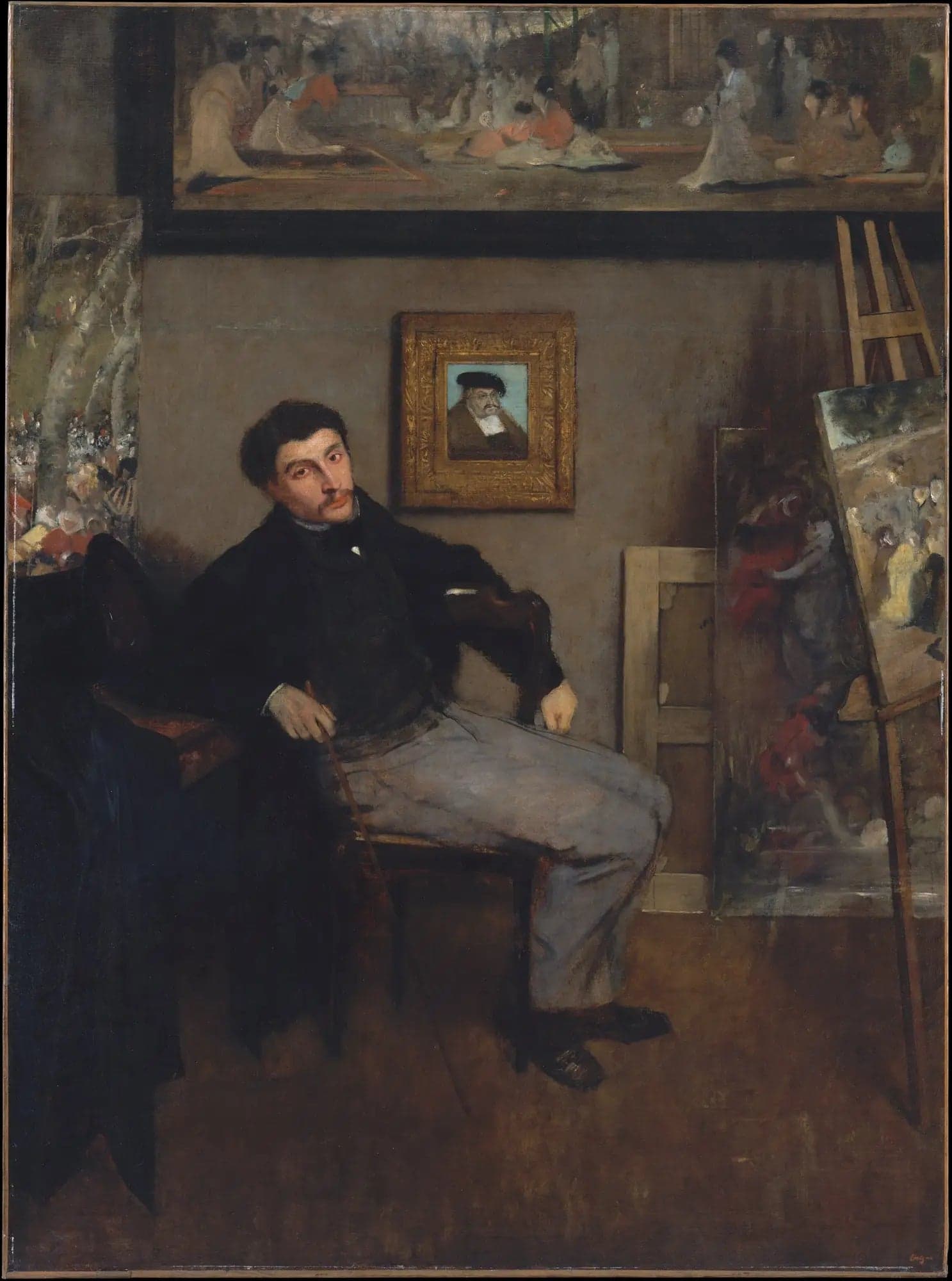
Portrait of James Tissot
- Original dimensions
- 111.8 x 151.4 cm
- Museum
- Metropolitan Museum of Art
- Year
- 1867
Scene depicted
This painting depicts the famous artist James Tissot with a fascinating intensity. Tissot's confident posture and penetrating gaze capture not only his character but also his role as a key figure in the artistic world of his time, revealing the richness of artistic exchanges that beat at the heart of 19th century Paris.
Historical context
Created in 1867, during a period of cultural upheaval, this iconic painting is a vibrant witness to the impressionism that was flourishing in Paris, this iconic city of art and innovation. Today, this masterpiece resides at the Metropolitan Museum of Art , a place as prestigious as the work itself. With its impressive dimensions of 111.8 x 151.4 cm, this painting invites deep contemplation, an intimate encounter with art.
Place in the artist's career
Portrait of James Tissot represents a pivotal phase in Degas's career, one where he combines his influences from realism with his penchant for impressionism , reflecting a delicate balance between technique and emotion. Alongside, his painting "The Dance Class" and "The Dance Foyer" also testify to this artistic maturity, revealing a subtle evolution of his style.
Anecdote
“A portrait is like a song; it must express the feelings of the soul, without ever getting lost in details.” These words of Edgar Degas resonate powerfully for Portrait of James Tissot . The artist, on that spring morning, surely felt the brilliance of colors and the softness of light filtering through the windows, inspiring this reflection of friendship and complicity between the two artists.