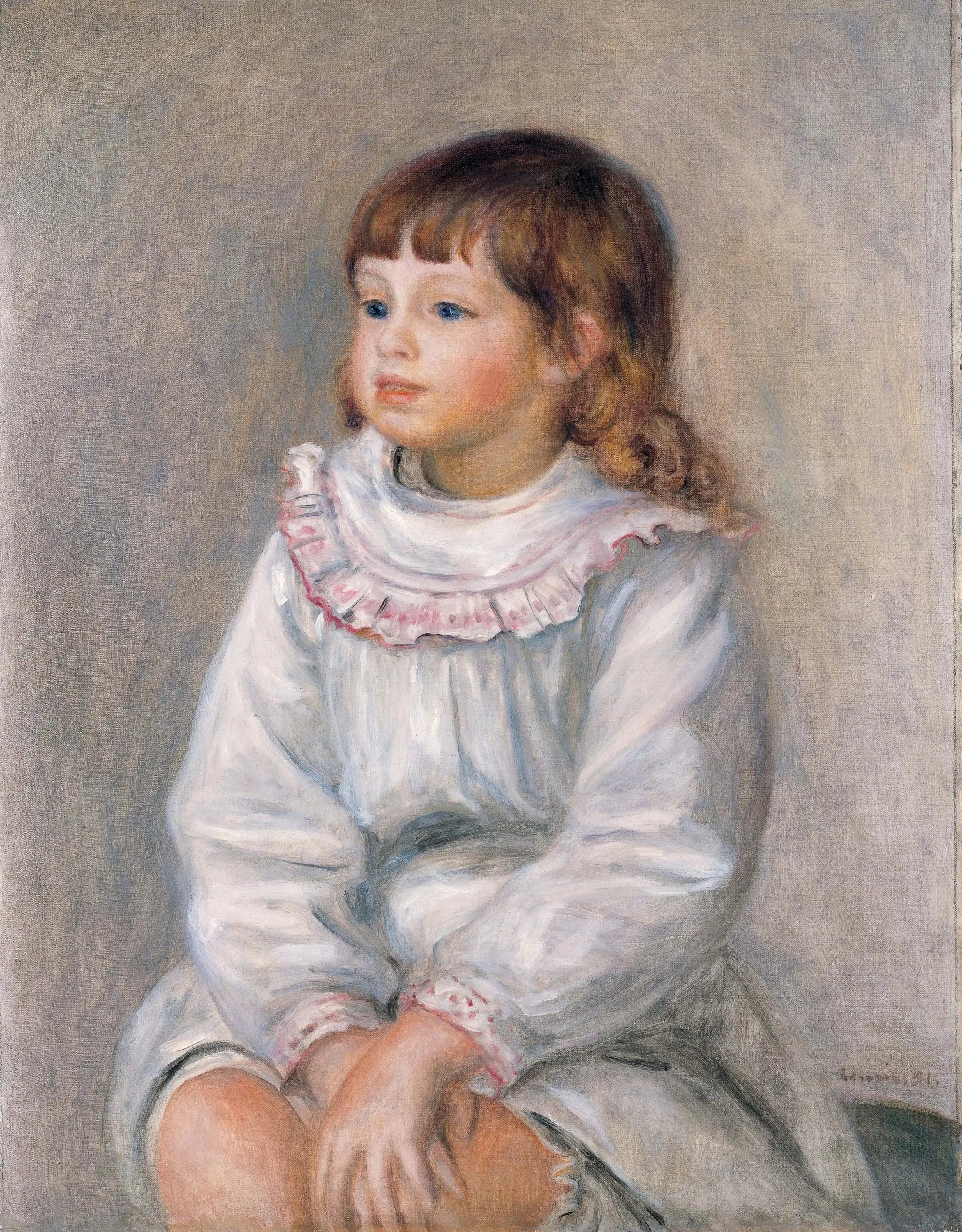
Portrait of Jacques Gallimard - Pierre
- Original dimensions
- 50 x 64 cm
- Museum
- Yamagata Art Museum
- Year
- 1891
Scene depicted
The painting "Portrait de Jacques Gallimard" offers us a subtle glimpse of a man in deep thought. With a relaxed posture, he seems to contemplate the world around him, thus capturing a moment rich in emotions. This suspended moment where life and art meet reflects a time when the impact of individuality in art echoed the emergence of new ideas.
Historical context
Created in 1891, during the period of artistic effervescence that France was experiencing, this painting is an integral part of the Impressionist movement. At that time, Paris was a true living scene, where artists began to break conventions to explore light and color. Today, this masterpiece is carefully preserved at the Yamagata Art Museum in Japan, offering a beautiful display of its timeless brilliance.
Place in the artist's career
This painting is situated at a pivotal moment in Renoir's career, marking the transition from ephemeral intimations to more thoughtful compositions. In parallel with works such as "Le Bal du moulin de la Galette" and "Les Grandes Baigneuses," it is interesting to note how the treatment of figures and the capture of light evolve, demonstrating a profound mastery of pictorial technique.
Anecdote
Auguste Renoir once stated: "Beauty is in the harmony of colors and shapes." This painting, inspired by a sunny morning, was a moment of encounter with Jacques Gallimard, a dear friend. The bursts of light in this painting evoke shared happiness and the intimacy of a sincere friendship, making every brushstroke resonate.