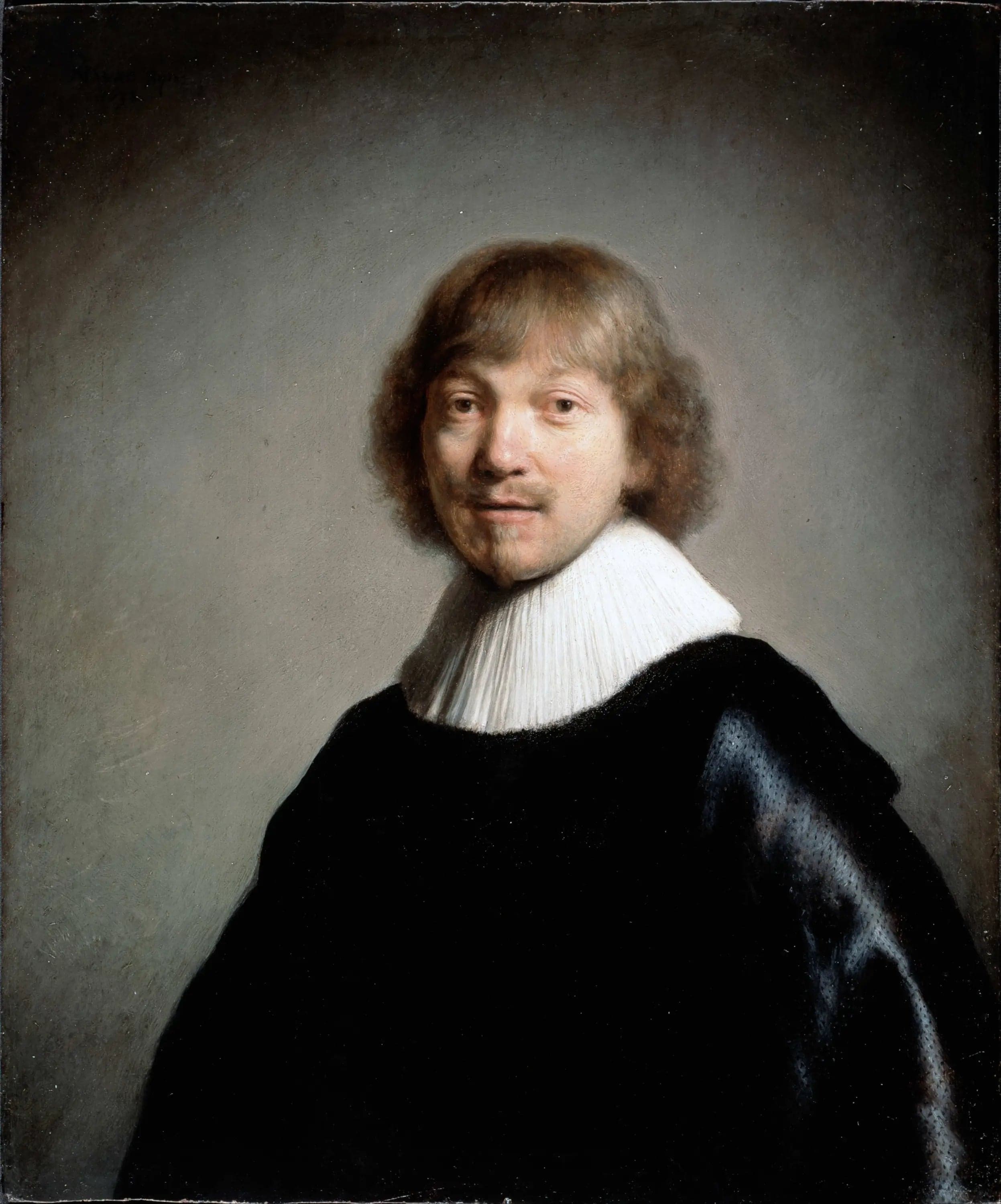
Portrait of Jacob de Gheyn III
- Original dimensions
- 24.9 x 29.9 cm
- Movement
- Dutch Golden Age of painting
- Museum
- Dulwich Picture Gallery
- Year
- 1632
Scene depicted
The painting “Portrait of Jacob de Gheyn III” depicts an intimate and introspective moment. Rembrandt succeeds in capturing the intensity of Jacob's gaze and the exceptional mastery of his craft as an artist and engraver. The character, carefully dressed, presents himself in a sober setting, reinforcing the authenticity and dignity of his presence. The carefully modeled lighting accentuates the features of the face, creating an atmosphere that is both serene and poignant.
Historical context
Created in 1632, this iconic painting is at the heart of the Dutch Golden Age of painting, in Amsterdam, a vibrant city of creativity and commerce. Rembrandt , master of light and shadow, captured the very essence of his time, highlighting the richness of human expression in his works. Today, this masterpiece resides in the Dulwich Picture Gallery, a refuge for art lovers where the history of the old masters intertwines with the present in a timeless atmosphere.
Place in the artist's career
The Portrait of Jacob de Gheyn III is situated at a turning point in Rembrandt 's career, marking a period of experimentation and refinement of his style. Compared to works such as “The Night Watch” and “Self-Portrait,” this painting shows a technical evolution and growing emotional depth, highlighting his transition from academicism to a more humanistic and expressive approach to painting.
Anecdote
“Beauty lies in the gaze of a man,” Rembrandt might have said as he settled into his studio one sunny morning, ready to immortalize the face of Jacob de Gheyn III. This moment of creation illustrates the depth of his commitment to pictorial representation, connecting the artist to his model with a simple brushstroke. This work then becomes the mirror of the souls reflected in it, a tribute to the individual and the human condition.