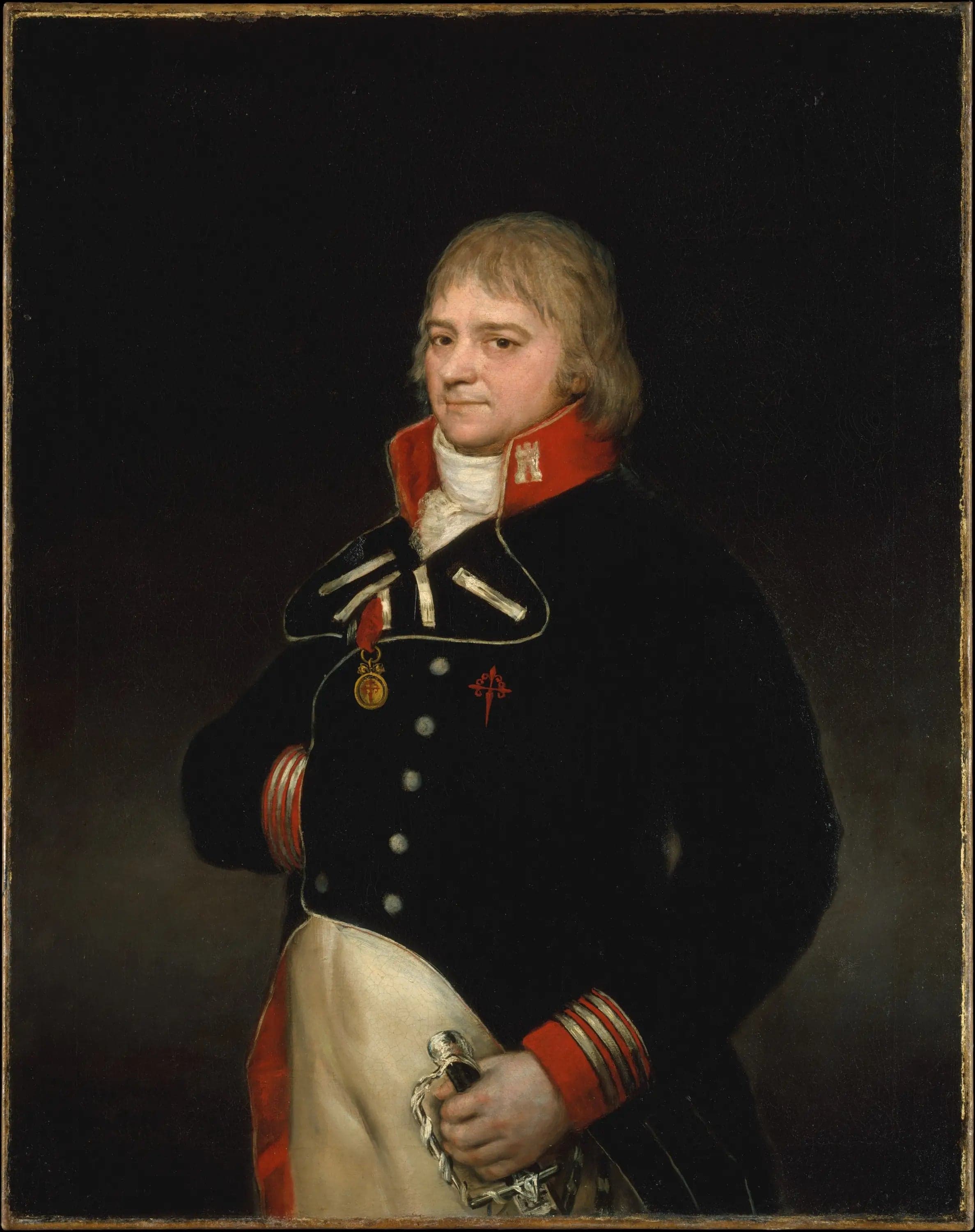
Portrait of Ignacio Garcini y Queralt
- Original dimensions
- 83.2 x 104.1 cm
- Museum
- Gallery 619, Goya and Eighteenth-Century Italy, Metropolitan Museum of Art
- Year
- 1804
Scene depicted
The painting depicts Ignacio Garcini y Queralt, a charismatic figure of the 18th century, in a moment of reflection. The features of his face testify to a rich history, an intense family heritage, and the weight of social responsibilities. Goya, with his mastery of shadows and lights, manages to transcend the traditional portrait, revealing the inner complexity of his subject.
Historical context
Created in 1804, this painting emblematic of Goya takes root in Madrid, a bubbling hub of artistic dynamism of the time. It is part of the romantic movement, marking a fundamental transition towards more personal and emotional themes. The painting is currently exhibited at the Metropolitan Museum of Art , where the work continues to captivate an international audience with its landscapes of light and shadow.
Place in the artist's career
This painting represents a turning point in Goya's career, marking his entry into artistic maturity. Compared to two works such as The Gardens of the Mountain and The Naked Maja , this canvas unveils a deeper exploration of human emotions and bubbling social themes.
Anecdote
“Every face tells a story, but it is the soul that reveals itself,” Goya might have said while capturing the penetrating gaze of Ignacio Garcini y Queralt. Let us imagine the artist, sitting in his studio, listening to the gentle whisper of leaves caressed by the wind, feeding on these fleeting moments to infuse vibrant life into his canvas .