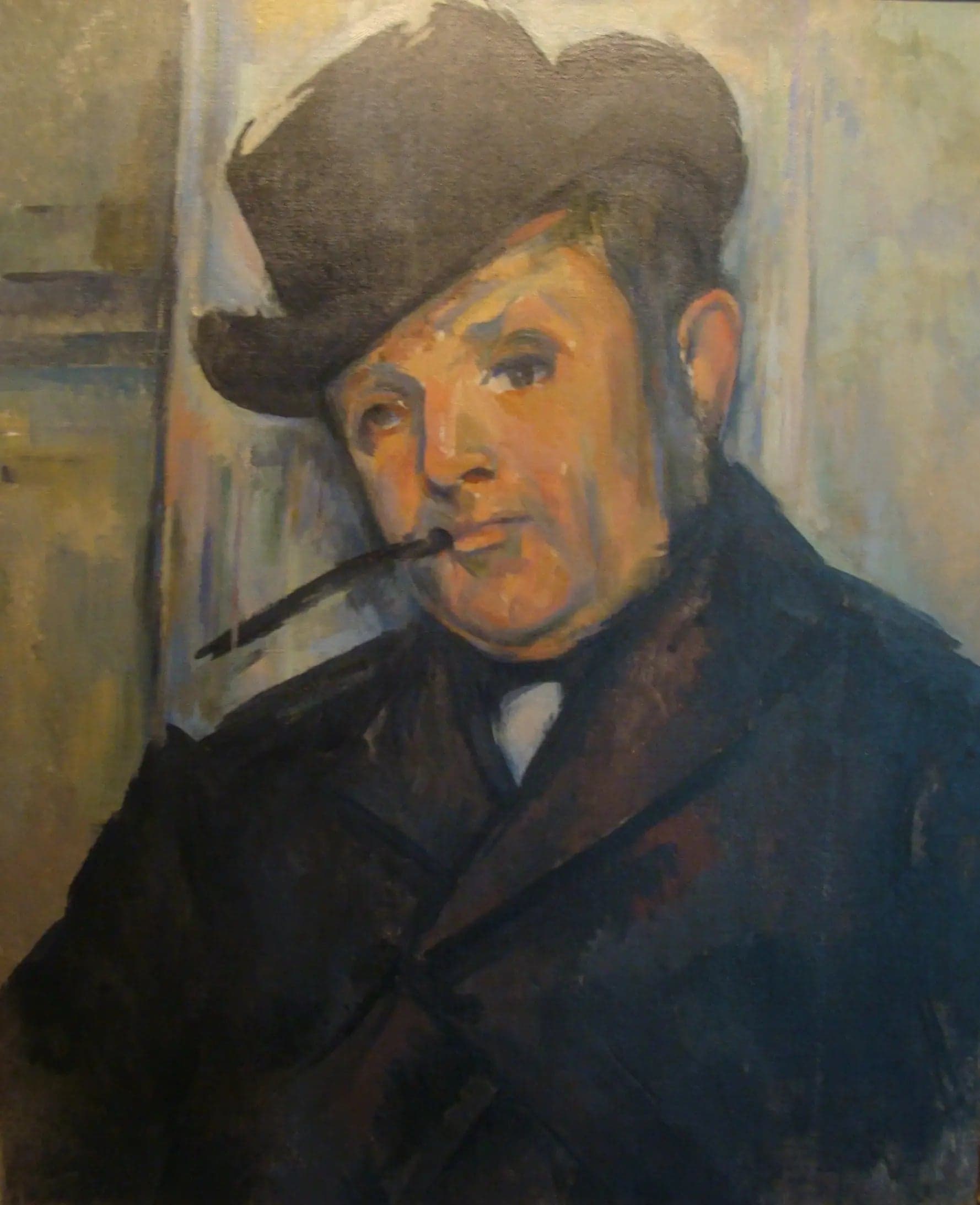
Portrait of Henri Gasquet
- Original dimensions
- 47 x 56.2 cm
- Museum
- McNay Art Museum
- Year
- 1896
Scene depicted
In the painting, Henri Gasquet appears in a relaxed pose, with a thoughtful gaze, highlighting the complicity between the subject and the artist. This pictorial work explores not only the depth of Gasquet's personality but also Cézanne's ability to capture the essence of his contemporaries. The layers of paint give a palpable texture to the model's soft and introspective expression.
Historical context
Created in 1896, during a pivotal period of the post-impressionist movement, this painting is an emblematic testimony of the golden age of art in Aix-en-Provence, Cézanne's hometown. The richness of this painting lies in the unique atmosphere of the late 19th century, where art explores a new psychological depth. Currently, this canvas is displayed in the McNay Art Museum , a sanctuary for painting enthusiasts, where size and emotions meet in every detail.
Place in the artist's career
This canvas is positioned at the heart of Cézanne's artistic maturation. It illustrates a transition towards more complex compositions while moving closer to expressionism . At a crossroads, this painting dialogues with other masterpieces such as “The Montagne Sainte-Victoire” and “The Garden of Les Baux,” marking a stylistic turning point in his quest for psychological depth and harmony of forms.
Anecdote
Cézanne once stated: “I feel such fascination for light that I wish to capture every nuance of a beloved face.” It is undoubtedly while flipping through memories of a spring morning in Aix-en-Provence that the artist found inspiration for his masterpiece . This fleeting moment of calm and revelation infused a vibrant strength into the painting , making its subject, Henri Gasquet, a reflection of human emotions.