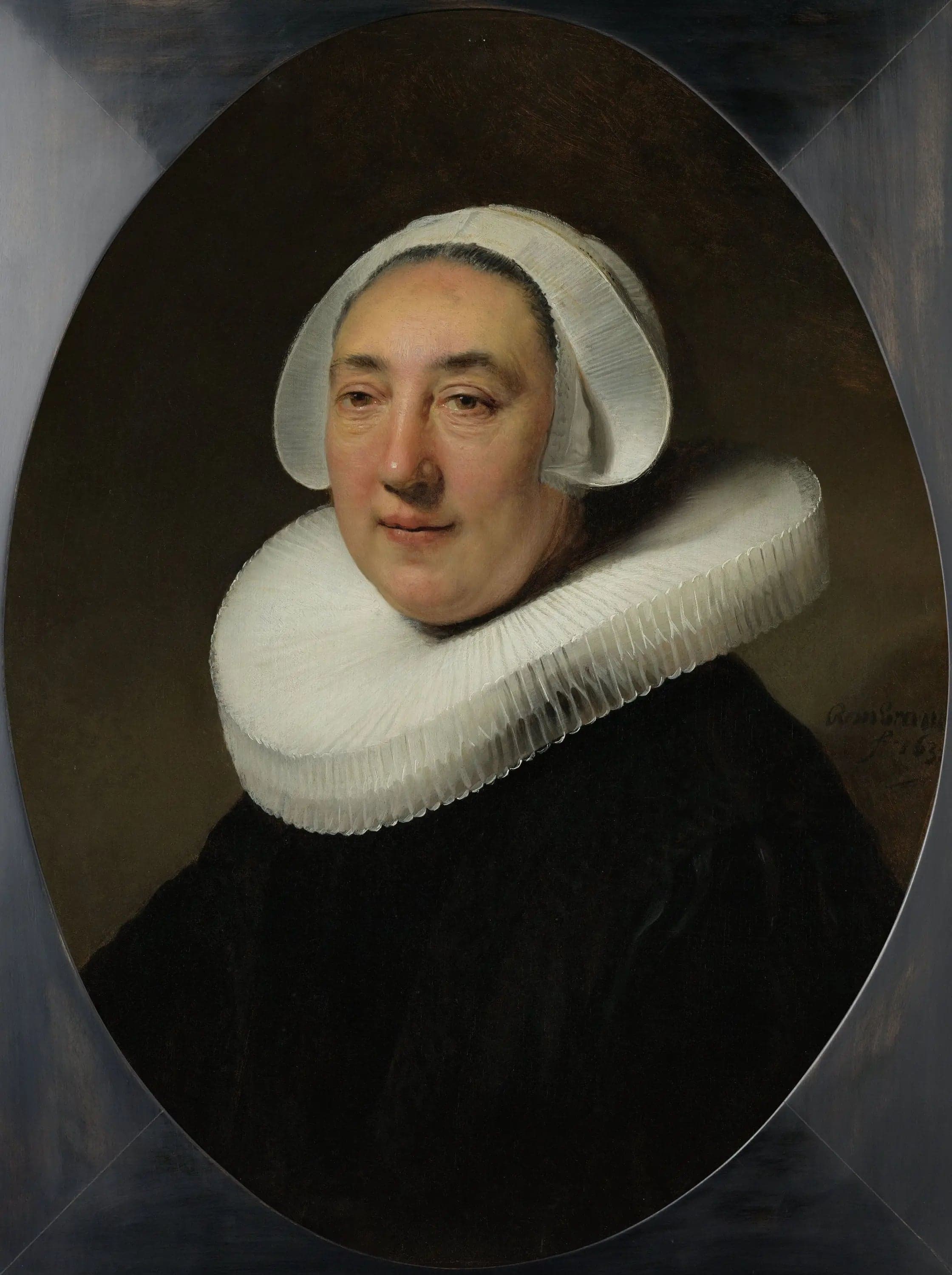
Portrait of Haesje Jacobsdr van Cleyburg
- Original dimensions
- 53.4 x 68.6 cm
- Museum
- Rijksmuseum
- Year
- 1634
Scene depicted
Within this canvas , Haesje Jacobsdr van Cleyburg presents herself with majestic grace. Dressed in rich fabrics and sparkling jewelry, she captures the essence of a woman of Dutch high society. With a penetrating and serene gaze, she embodies the dignity and depth of human emotions, enhancing the art of Rembrandt who, through this composition, invites contemplation of the intimacy and brilliance of the soul.
Historical context
Created in 1634, this painting comes to life in the heart of Amsterdam, within the dynamic artistic context of the Dutch Golden Age. Rembrandt , a central figure of the baroque movement, painted this work during a period of great excitement where his mastery of chiaroscuro elevated him to the status of an icon. The painting is currently housed in the Rijksmuseum , a sanctuary of art where it continues to move visitors with its harmonious dimensions.
Place in the artist's career
The Portrait of Haesje Jacobsdr van Cleyburg represents a pivotal moment in the career of Rembrandt , combining tradition and innovation. It stands between major works such as the painting of "Men in Black" and the powerful "Return of the Prodigal Son," showcasing his evolution in portrait mastery. This masterpiece testifies to his ability to capture not only likeness but the very essence of his subjects.
Anecdote
“Every face tells a story, but some just deserve to be listened to,” could have declared Rembrandt while contemplating the captivating gaze of Haesje Jacobsdr. That morning, bathed in the soft light of Amsterdam, he fell under the spell of this woman, a muse whose gaze seems to evoke forgotten secrets, imbued with the timeless strength of his masterpiece .