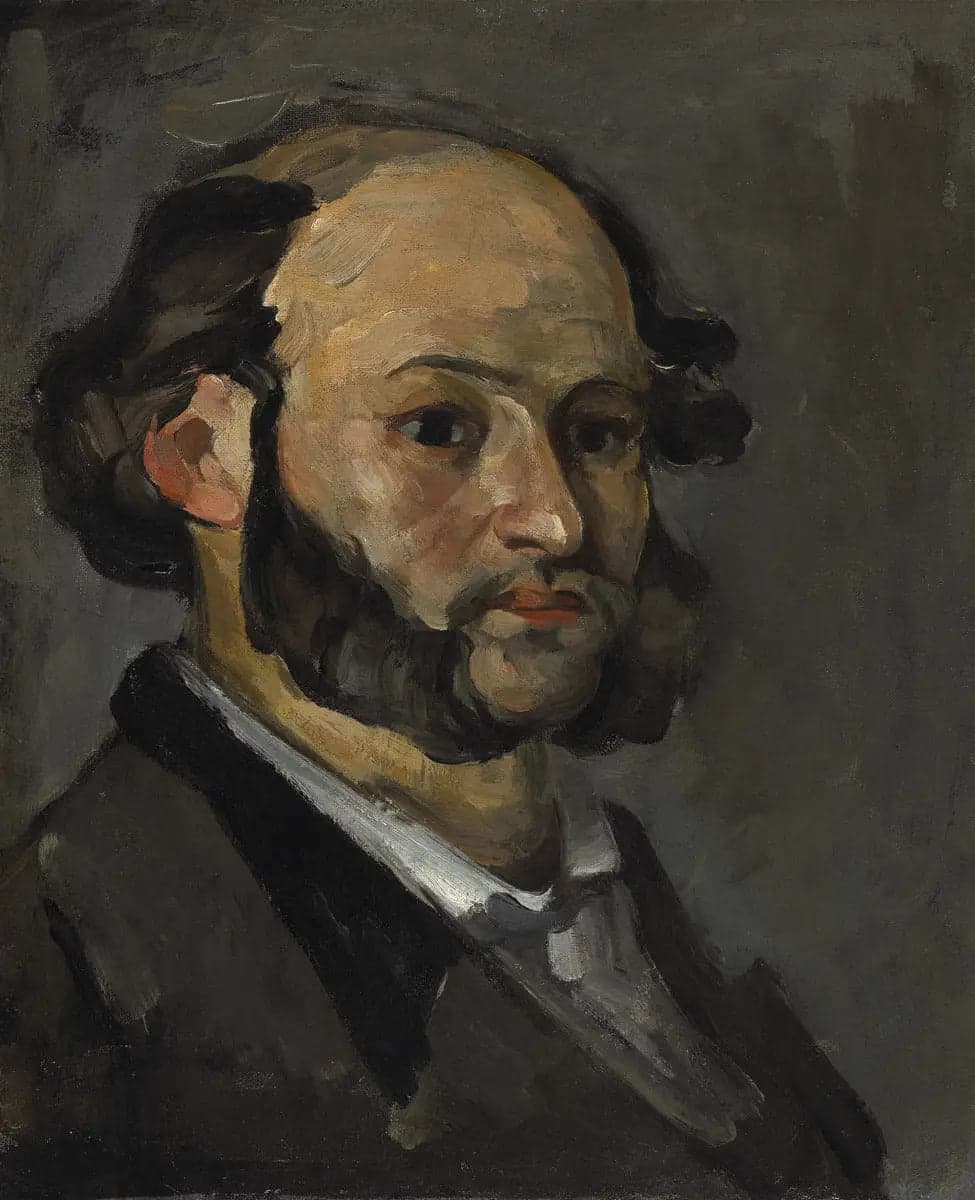
Portrait of Gustave Boyer
- Original dimensions
- 38.1 x 46.2 cm
- Museum
- National Gallery of Canada
- Year
- 1870
Scene depicted
The canvas “Portrait of Gustave Boyer” depicts a moment of intimacy, where the model is skillfully portrayed in a thoughtful pose. The composition reveals an introspective approach, immersing us in Cézanne's vibrant universe, where the subtle contrasts of shadows and lights dance delicately around the subject. Every detail seems to tell a story beyond mere representation, revealing the hidden thoughts and emotions of the painter and his friend.
Historical context
Created in 1870, this painting is emblematic of a pivotal moment in art history, standing at the intersection of realism and impressionism . At that time, in the vibrant city of Ottawa, the canvas not only testifies to the technical virtuosity of Paul Cézanne , but also captures the spirit of an era where art evolves and redefines itself. Today, the work is carefully preserved at the National Gallery of Canada , continuing to inspire visitors with its elegant presence and precise dimensions.
Place in the artist's career
This canvas is an important milestone in Cézanne's career, reflecting a style in formation, maturing towards its peak. Indeed, this painting lies between other iconic works such as “The Montagne Sainte-Victoire” and “The Card Players,” showing an evolution in the use of colors and shapes. It is a crucial step towards exploring depth and structure, consolidating his reputation as a pioneer in the transition to modern art.
Anecdote
“Light is the key to everything,” Cézanne might have said while observing the nuances of morning light filtering through a window. It was on a gentle spring morning that the idea for this masterpiece emerged. Facing Gustave Boyer, a close friend, Cézanne felt the need to transcribe the soul of his model onto canvas, connecting emotion and technique with poignant sincerity.