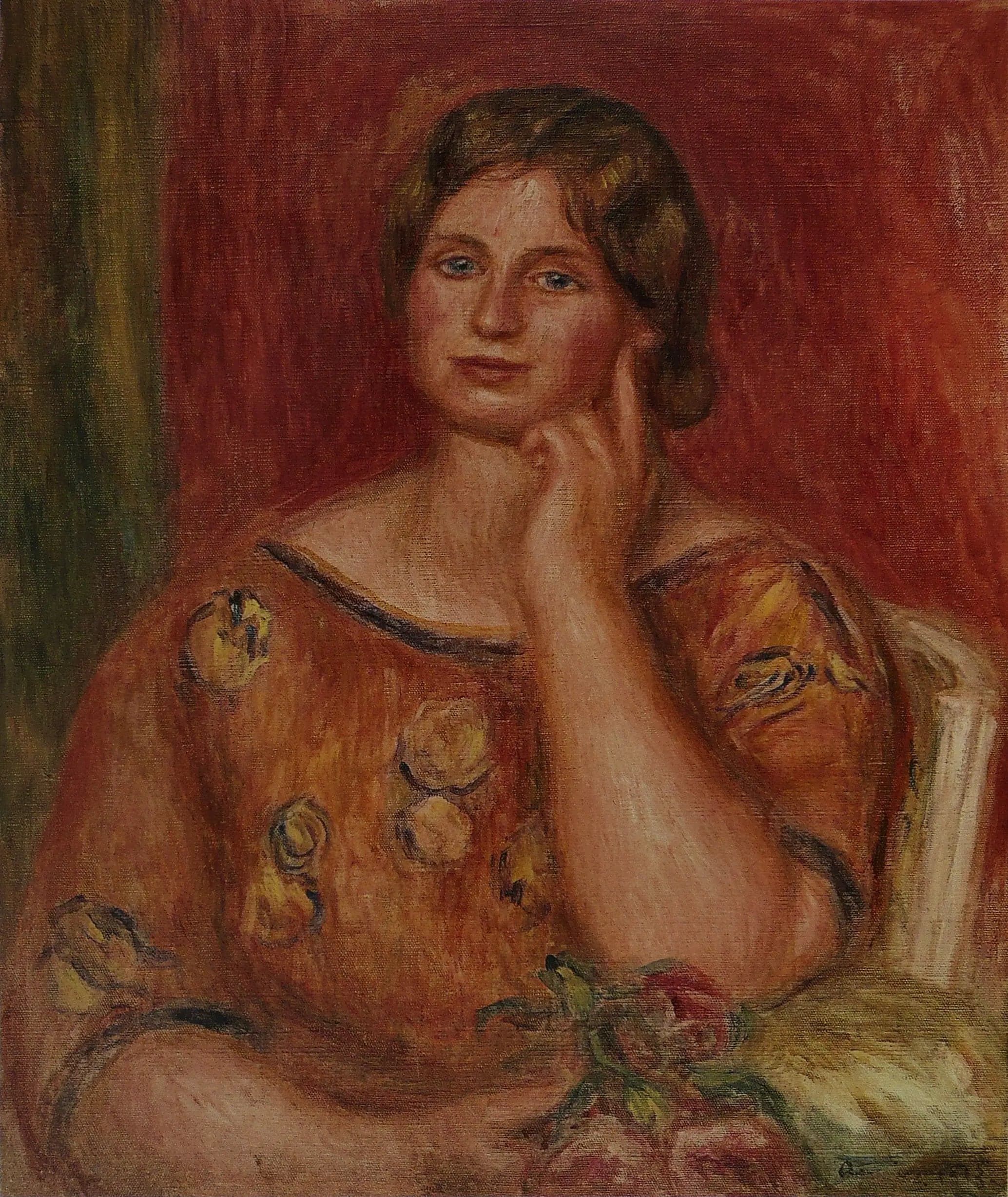
Portrait of Gertrude Osthaus - Pierre
- Original dimensions
- 46.5 x 55 cm
- Museum
- Folkwang Museum
- Year
- 1913
Scene depicted
In this painting , Renoir immortalizes Gertrude Osthaus with vibrant sensitivity. She is immersed in a luminous universe, where bright colors and delicate features outline a serene silhouette. The composition, marked by a subtle interplay between shadow and light, comes to life, creating an intimate and warm atmosphere.
Historical context
Created in 1913, the painting "Portrait of Gertrude Osthaus" is at the heart of the Impressionist movement, a time when light and color transcended reality to express emotion. This iconic painting is now preserved at the Folkwang Museum in Essen, Germany. Its elegant dimensions of 46.5 x 55 cm invite intimate contemplation, bringing each pigment to life.
Place in the artist's career
"Portrait of Gertrude Osthaus" represents a turning point in Renoir's career, a high point where he evolves towards unprecedented emotional mastery. Alongside the famous "Luncheon of the Boating Party" and "Dance in the City," this painting evokes emotions and demonstrates the artist's ability to capture the essence of his models and the beauty of fleeting moments.
Anecdote
Renoir once stated: "The portrait is the soul, revealed by color and light." This masterpiece was born on a gentle spring morning, where the artist, nose to the wind, captured a ray of light playing on Gertrude Osthaus's face. This fleeting moment became a canvas imbued with emotion, an illustrious testimony to the timeless charm of its subject.