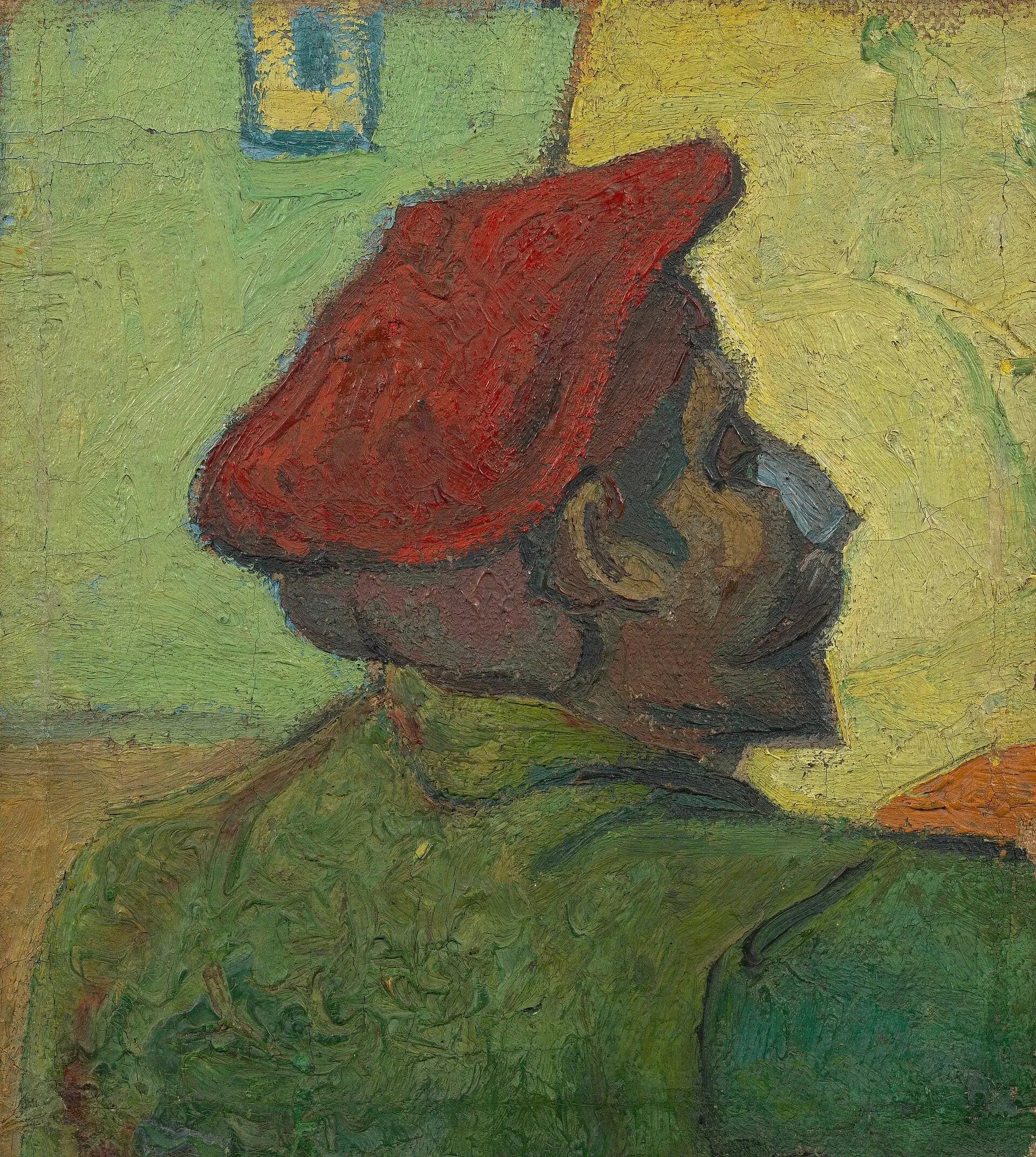
Portrait of Gauguin
Scene depicted
In this canvas , Vincent captured not only an image but also an essence. Gauguin's face, imbued with serenity, reflects their intense friendship, yet tinged with tensions. The composition, with its warm colors and dynamic lines, evokes the passionate artistic debates between these two iconic figures.
Historical context
Created in 1888 , in Arles , this painting refers to the movement of post-impressionism . It is in this Provençal city, bathed in light and stories, that Vincent van Gogh brought his friend Paul Gauguin to life. The canvas , now preserved at the Van Gogh Museum , measures 33.8 x 38.2 cm and is an essential piece of the legacy of Western art.
Place in the artist's career
The Portrait of Gauguin is situated at a turning point in van Gogh's career. Representative of a period where the artist intensely explores his identity and relationships, this painting can be paralleled with The Sunflowers and The Starry Night , each of them reflecting a unique emotional experience and a refined technical evolution.
Anecdote
“I tried to capture his soul through the brush. For me, he is much more than just a friend, he is my reflection, my muse,” could have said Vincent van Gogh while contemplating his masterpiece . This painting was born on a sunny morning, when the blue sky and the scent of summer flowers mingled, creating a vibrant atmosphere that infused every brushstroke.