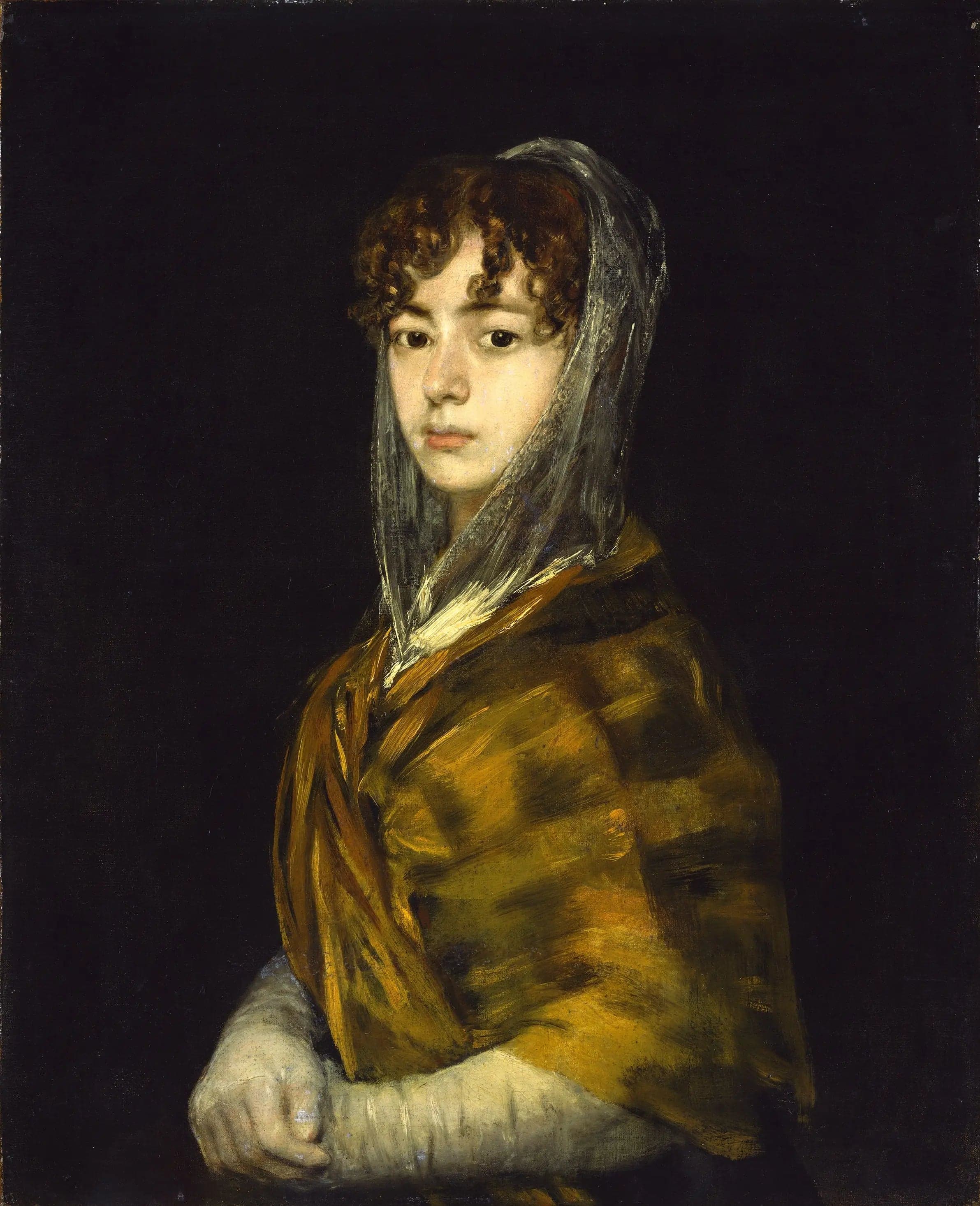
Portrait of Francisca Sabasa García
- Original dimensions
- 58 x 71 cm
- Museum
- National Gallery of Art
- Year
- 1804
Scene depicted
This painting features Francisca Sabasa García, who is dressed with timeless elegance. Her delicate expression and graceful posture capture the essence of a woman who is both strong and gentle. Set in a sober yet refined setting, she embodies a sensitivity unique to her time. Francisca's gaze, imbued with mystery and depth, engages the viewer in a gentle contemplation.
Historical context
Created in Madrid, Spain, in the heart of the 19th century, this painting is part of the romantic movement, a movement rich in emotions and artistic expressions. The canvas results from a period when Goya begins to move away from academic ideals to embrace more intimate and profound representations. Today, this masterful work is displayed at the National Gallery of Art, where it fascinates visitors with its intensity and beauty, measuring 58 x 71 cm.
Place in the artist's career
The canvas “Portrait of Francisca Sabasa García” represents a crucial step in Goya's career, where he merges his pictorial influences with a deeper introspection. In parallel with notable works like “The Majas” and “The Family of Carlos IV,” this masterpiece reflects the technical and emotional evolution of his art, marking the peak of his distinctive style.
Anecdote
“In the gazes lie a thousand stories. One just needs to know how to see them.” These are Goya's words that evoke the very essence of his masterpiece . Imagine a soft and calm morning, where the artist, influenced by the golden light of the sunrise, meets the captivating gaze of Francisca. This fleeting moment becomes the heart of Portrait of Francisca Sabasa García , capturing a palpable emotion on the canvas.