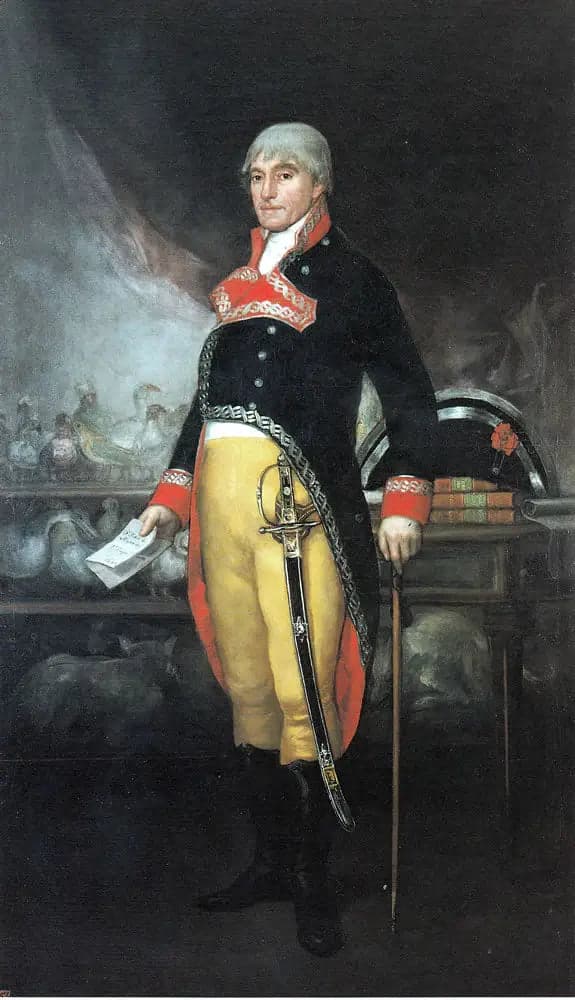
Portrait of Félix de Azara
- Original dimensions
- 124 x 212 cm
- Museum
- Not specified
- Year
- 1805
Scene depicted
The canvas depicts Félix de Azara, a distinguished explorer with a captivating aura, dressed with distinction, looking into the distance. His proud posture embodies the spirit of adventure and intellectual curiosity of his time. Goya, using skilled light techniques, manages to bring this historical figure to life, in search of knowledge and exploration. The scene is bathed in soft light, highlighting Azara's facial features and foreshadowing the great discoveries that characterize his time.
Historical context
Created in 1805, this painting is emblematic of a pivotal moment in the history of Spain, a period marked by intense cultural evolution in the Madrid region. Falling within the emerging artistic movement of romanticism , this canvas by Goya captures the spirit of an era while questioning the aesthetic norms of its time. To this day, this masterpiece remains without a precise place of conservation, adding to its mystery and allure. Its impressive dimension of 124 x 212 cm gives it undeniable presence.
Place in the artist's career
This portrait is situated at the peak of Goya's career, at a time when he was asserting his unique style. In parallel, works such as “The 3rd of May 1808” and “Las Meninas” reveal an impressive technical and emotional progression, placing this painting at the heart of his artistic legacy.
Anecdote
“Every face is a story to tell,” said Goya. Imagine him in his studio in full light, one spring morning in Madrid, captivated by the spirit of Félix de Azara, a man of science and an adventurer. This canvas is not just a pictorial construction but a tribute to the nuances of the human soul, linked to the evocative power of this painting .