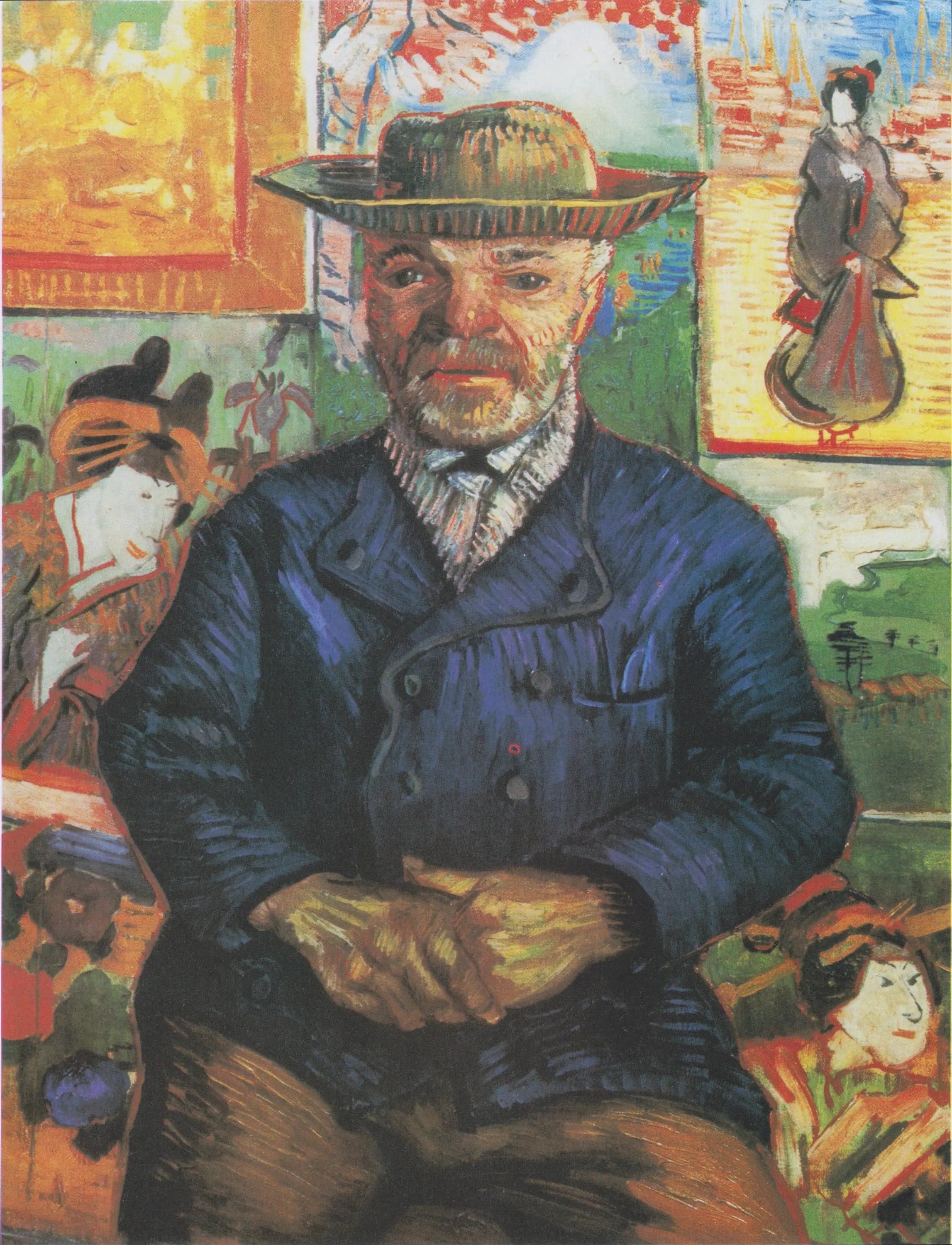
Portrait of Father Tanguy
- Original dimensions
- 51 x 65 cm
- Museum
- Not specified
- Year
- 1887
Scene depicted
This painting offers a poignant representation of Père Tanguy, a color merchant and a friend of Van Gogh, embodying the warm aspect of the artistic milieu. The thoughtful gaze, imbued with wisdom, of the subject seems to pierce the viewer, while the vibrant hues of the canvas add an unprecedented emotional tension. The interaction between light and color is essential, each detail contributing to an atmosphere of introspection and sharing, a moment frozen in time.
Historical context
Iconic work of the bubbling creativity of Vincent van Gogh , the Portrait of Père Tanguy embodies the soul of the artistic Paris of the late 19th century. At that time, the French capital was transforming into a crossroads of avant-garde, where the Impressionist and Post-Impressionist movements intertwined with intensity. This painting, now lost to public view, bears witness to the vibrant universe in which Van Gogh operated, marking a time of deep exploration of color and form.
Place in the artist's career
The Portrait of Père Tanguy stands at the heart of Van Gogh's artistic revolution. As he emerges as a pioneer of Post-Impressionism , this painting symbolizes a turning point, skillfully blending with other significant creations like “ The Starry Night ” and “ The Sunflowers .” This painting denotes an expressive maturation, revealing the intense connections between the artist and his environment while foreshadowing bolder works.
Anecdote
“Every face has a story to tell, and Père Tanguy is a living testimony.” In this inspired quote, the artist emphasizes the importance of the human element in his painting . It is a spring day in Paris , in the studio filled with the scents of linseed oil and vibrant pigments, that Van Gogh captures the essence of Père Tanguy, a prominent figure in the artistic community. The poetry of this moment is palpable, each brushstroke varying to accentuate the depth of this human relationship.