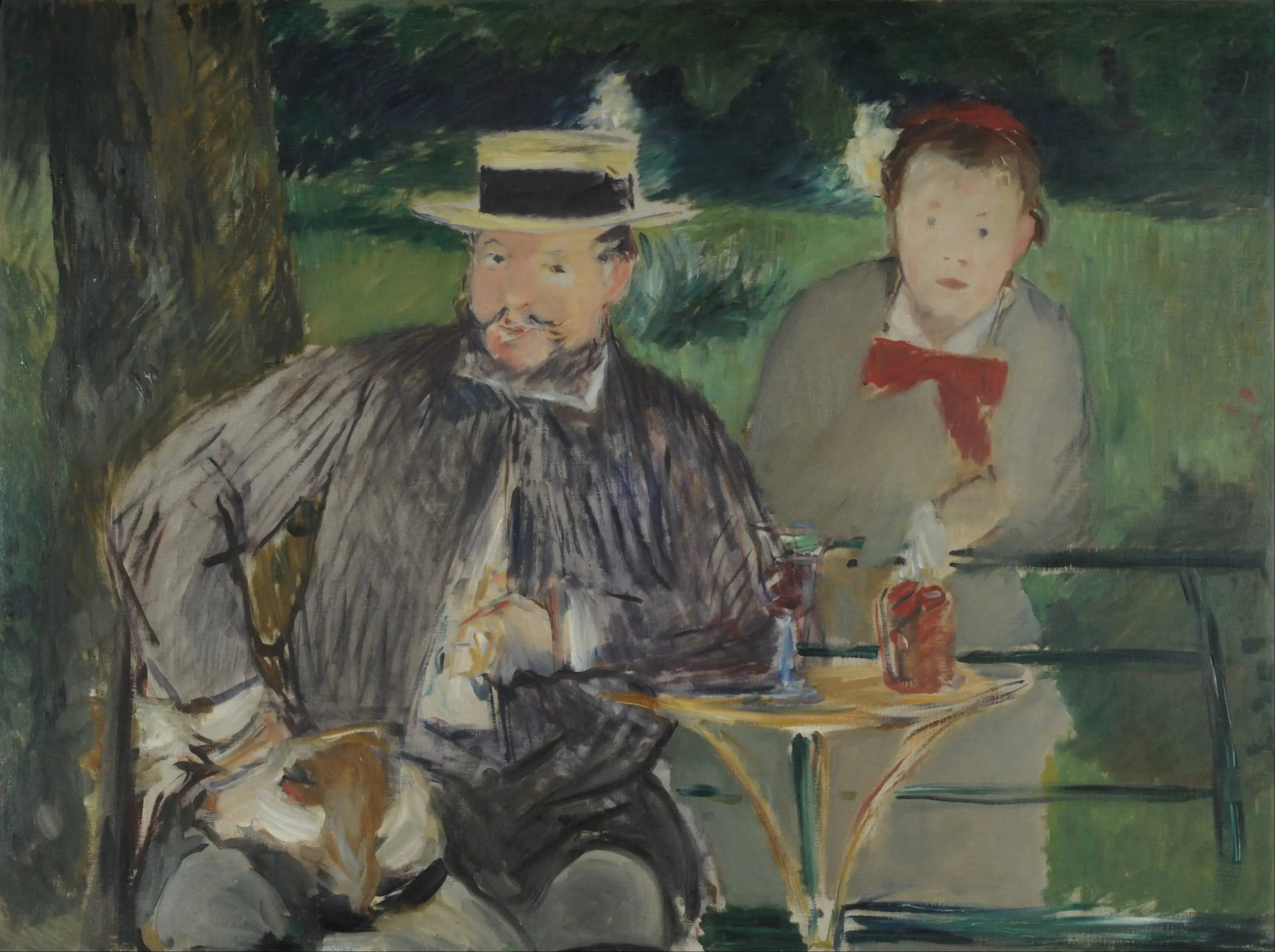
Portrait of Ernest Hoschede and his daughter Marthe
- Original dimensions
- 130 x 97.5 cm
- Museum
- national museum of Fine Arts Buenos Aires
- Year
- 1875
Scene depicted
This painting is an intimate portrait testifying to the love and complicity between a father and his daughter. Manet chose to represent the innocence of childhood and parental affection through sincere smiles and exchanged glances. The painting exudes a warm atmosphere, inviting the viewer to share this exquisite moment between two loved ones.
Historical context
Created in 1875, this painting is part of the impressionist movement, characterized by its search for light and color. Édouard Manet , an iconic figure of this artistic movement, executed this canvas in Paris, a city then radiant with creativity and artistic innovations. Currently, the painting is preserved in the national museum of Fine Arts in Buenos Aires, where it attracts the admiring gazes of visitors.
Place in the artist's career
Portrait d'Ernest Hoschede et sa fille Marthe marks a period of maturity in Manet's career, while presenting a technical evolution. It is interesting to parallel it with his earlier work, Déjeuner sur l'herbe, which he dared, and later, Olympia, where he pushes the boundaries of female representation. It is with increased mastery and sensitivity that he delivers this painting imbued with humanity.
Anecdote
“I always pushed the boundaries of reality, seeking to capture an ephemeral emotion.” This is the spirit in which Manet created this masterpiece . Imagine a warm spring afternoon, where the gentle rays of the sun play on the faces of Ernest and Marthe, breathing life into this memorable composition.