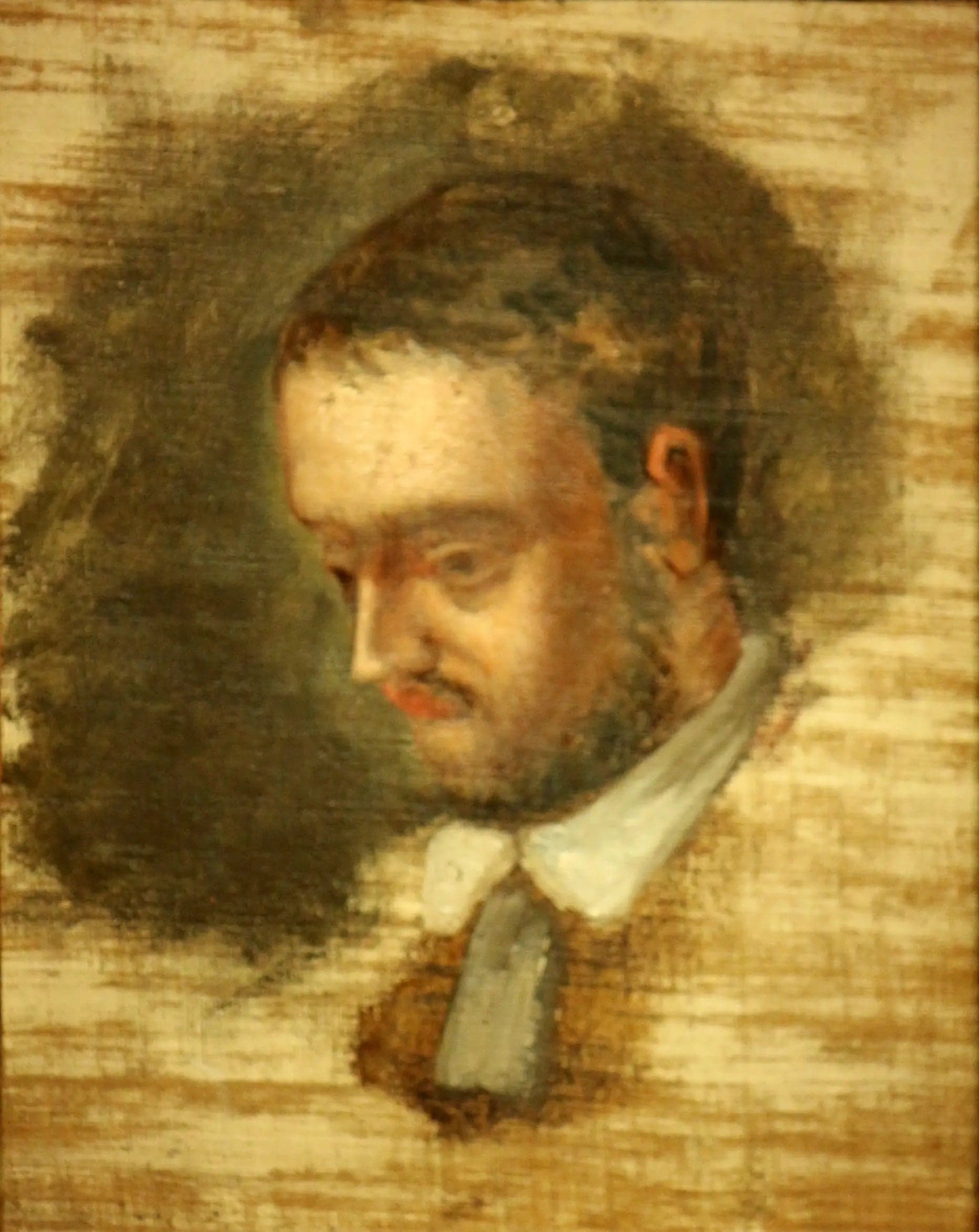
Portrait of Émile Zola
- Original dimensions
- 21 x 26 cm
- Museum
- Granet Museum
- Year
- 1862
Scene depicted
This canvas captivating depicts Émile Zola, the great writer, in a meditative pose. A visionary of naturalism, Zola was not only a friend of Cézanne but also a source of inspiration. The bright yet thoughtful gaze perceived on the canvas testifies to the intense dialogue between the artist and his model, offering a window into the creative thought of the time.
Historical context
Created in 1862, this painting emblematic was born in the warm city of Aix-en-Provence, in the heart of Provence. Immersed in the artistic movement of post-impressionism , this canvas is set in a culturally vibrant context, where Cézanne, still relatively unknown at the time, painted with a burning passion. The canvas is now preserved in the Granet Museum, where it attracts visitors from around the world.
Place in the artist's career
The Portrait of Émile Zola represents a turning point in Cézanne's career, marking both the promise of a brilliant artistic future and an anchoring in his own style. Let’s compare it with his other works such as The Montagne Sainte-Victoire and The Card Players, two pieces that reveal the evolution of his approach to forms and colors, as well as his tireless quest for artistic truth.
Anecdote
Paul Cézanne said: “Nature must bend to my eye.” It is in this enchanting Provençal landscape, dressed in golden light, that he met Émile Zola, his long-time friend, whose masterpiece of painting evokes depth. This moment, imbued with complicity and light, infused the work with an unforgettable evocative power.