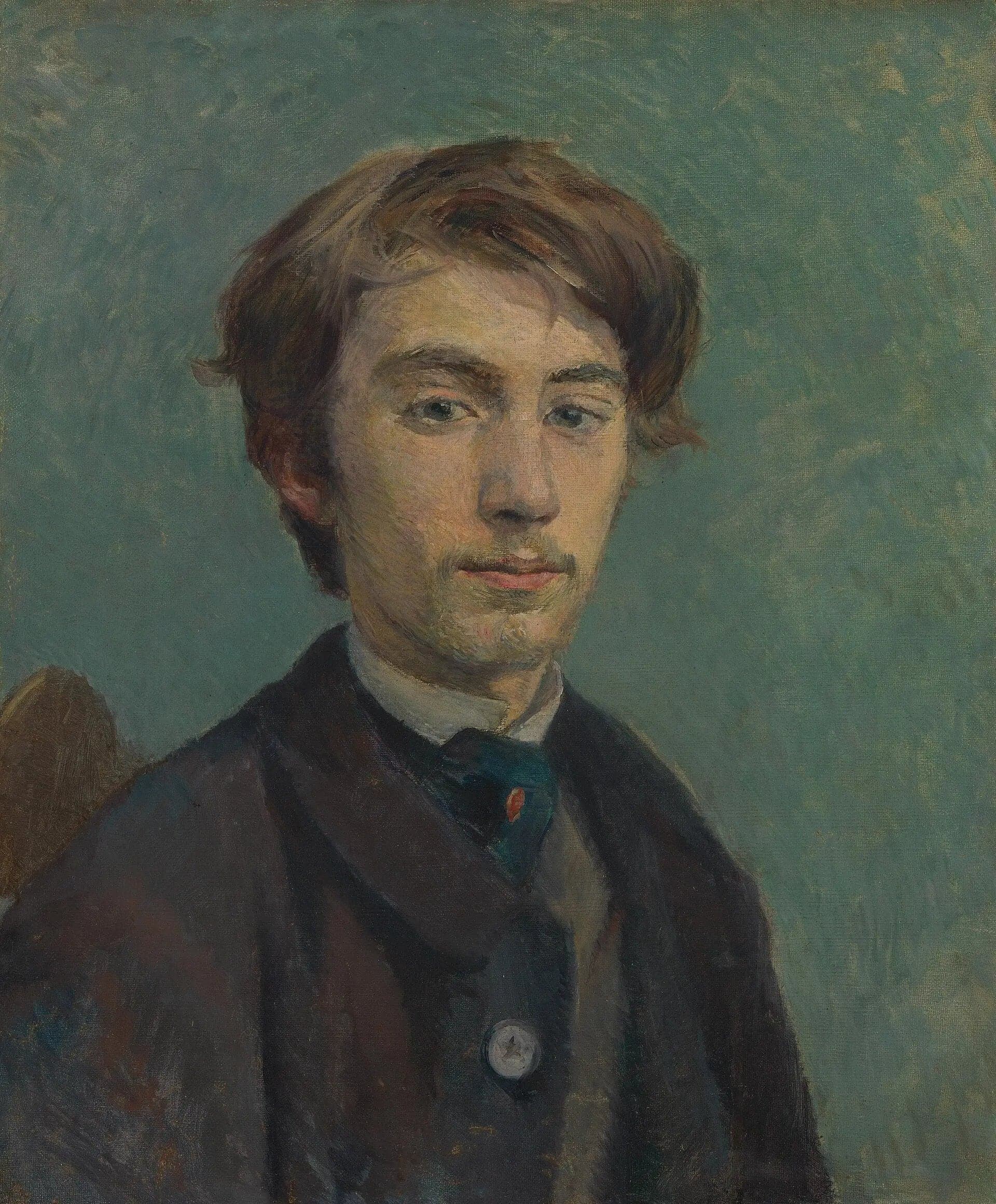
Portrait of Émile Bernard - Henri de Toulouse
- Original dimensions
- 44.5 x 54 cm
- Museum
- National Gallery
- Year
- 1885
Scene depicted
In this pictorial work, Toulouse-Lautrec presents an introspective portrait of Émile Bernard, where the model's gaze seems to capture a deep, poignant, and almost melancholic thought. The choice of colors and strokes accentuates the intimacy of the moment, making visible the essence of the character through a painting captivating. Every detail reveals a story of complicity and fascination.
Historical context
Created in 1885 in Paris, this painting is part of the artistic movement of post-impressionism . In a context where the artistic bohemia is exploding, Toulouse-Lautrec immortalizes his friend Émile Bernard, one of the prominent figures of the time, in this canvas emblematic. Currently exhibited at the National Gallery, this painting reveals through its dimensions 44.5 x 54 cm a part of the intimacy of the artist and those around him.
Place in the artist's career
The Portrait d'Émile Bernard marks the virtually nascent period of Toulouse-Lautrec's style. In parallel with other paintings such as “Jane Avril” and “At the Moulin Rouge,” this canvas illustrates the artist's evolution towards more introspective and psychological portraits, which he will carry throughout his career.
Anecdote
Henri de Toulouse-Lautrec once said, “Art is a means of capturing the moment.” This painting is the result of a wooded morning, where the golden light penetrated the studio, illuminating Émile Bernard's thoughtful face. This moment of emotional availability inspired this composition, capturing the very soul of his friend.