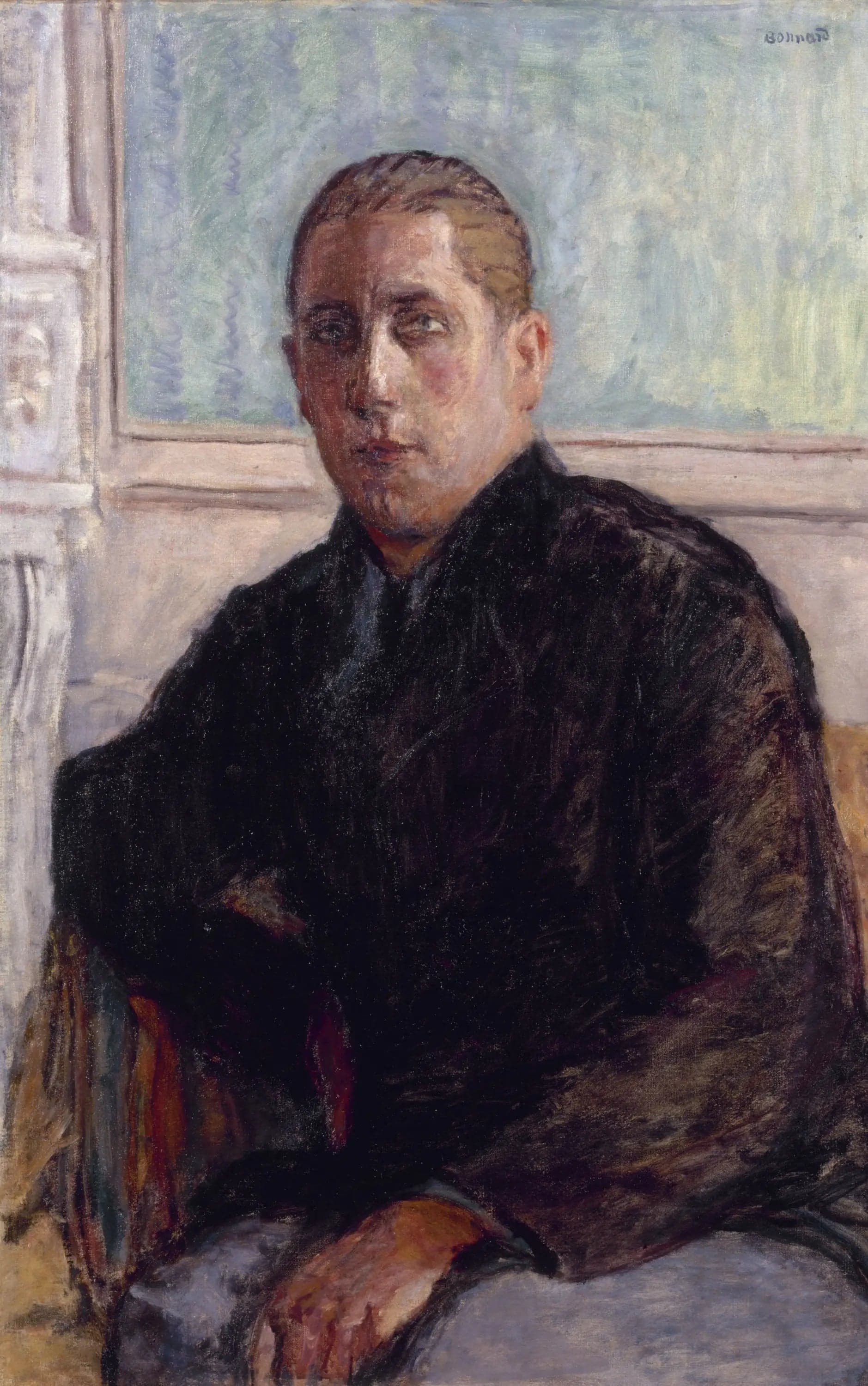
Portrait of Doctor Maurice Girardin
- Original dimensions
- 51 x 81 cm
- Museum
- Petit Palais
- Year
- 1917
Scene depicted
This painting strikingly depicts Doctor Maurice Girardin, a dear friend of the artist and a well-known physician. With a palpable concentration on his serene face, Bonnard captures the very essence of an intellectual, surrounded by an atmosphere imbued with peace. The soft light that bathes the scene highlights the warmth of humanity and invites the viewer to immerse themselves in this moment, suggesting the depth of thoughts that inhabit him.
Historical context
Created in 1917, during a tumultuous period in Europe marked by World War I, this painting emanates from Paris, a city then at the heart of avant-garde artistic movements. Representing the Nabi movement, which merges modern style and symbolism, this painting is currently exhibited at the Petit Palais in Paris, where it continues to evoke the refined aesthetics of a bygone era.
Place in the artist's career
The Portrait of Doctor Maurice Girardin represents a pinnacle in Bonnard's career, brilliantly illustrating his mastery of portraiture. At that time, the artist had already created other memorable compositions such as La Terrasse à Vernon and Les Grands Boulevards , each marking a key stage in his technical and emotional evolution. Here, Bonnard's sensitivity takes shape in an intimate dialogue between art and subject.
Anecdote
“To paint is to feel the soul of the subject.” These words still resonate, testifying to Bonnard's inspiration, which was born from a chance encounter with Doctor Girardin in a café bathed in morning light. At that moment, a canvas vibrant with emotion was born, perpetually frozen in a moment of tenderness and reflection.