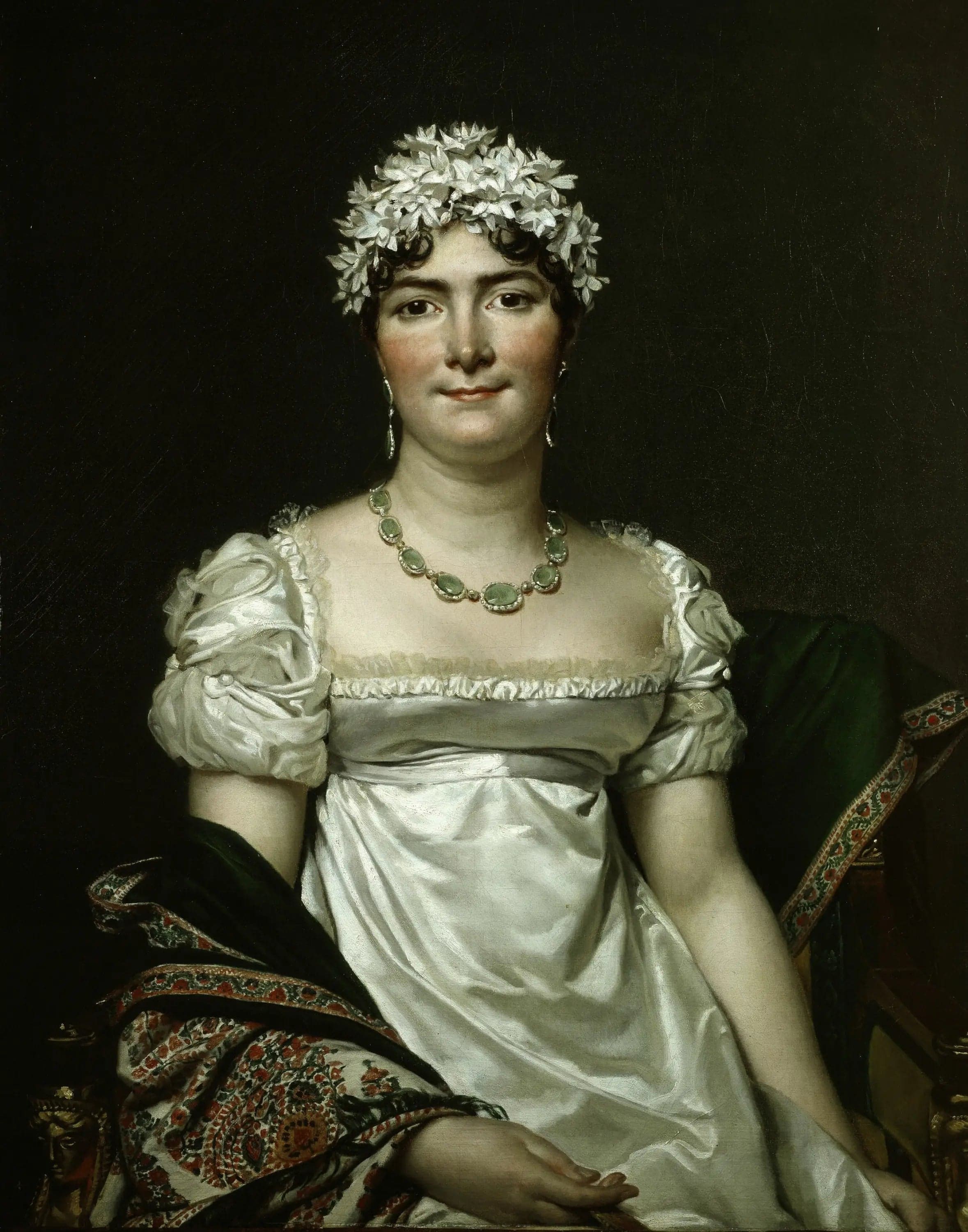
Portrait of Countess Daru - Jacques
- Original dimensions
- 65.1 x 81.6 cm
- Movement
- neoclassicism
- Museum
- The Frick Collection
- Year
- 1810
Scene depicted
The painting depicts the Countess Daru, a charismatic figure of her time, dressed in a sumptuous gown that highlights her aristocratic status. Her penetrating gaze, captured by David's meticulous brushwork, invites the viewer into a silent dialogue, revealing the complexity and depth of her character. This moment suspended in time is a celebration of feminine beauty and dignity.
Historical context
Created in 1810 in Paris, this painting is emblematic of the neoclassical movement, reflecting an era where art is imbued with ancient values. The canvas is currently housed at The Frick Collection , an art sanctuary in the heart of New York, where it continues to inspire visitors with its elegance and historical depth.
Place in the artist's career
Portrait of the Countess Daru marks a turning point in Jacques-Louis David 's career, showcasing his success in the field of neoclassical portraiture. When compared to other works such as The Coronation of Napoleon , one understands the evolution of his technique and the emotional depth that characterizes this pictorial work . This painting thus becomes an obvious milestone of his artistic maturity.
Anecdote
Jacques-Louis David once said: “Light is the very essence of life, my painting is its echo.” This thought resonates particularly with Portrait of the Countess Daru , painted in spring, when natural light plays against the dark background of the canvas, awakening a sense of renewal and admiration.