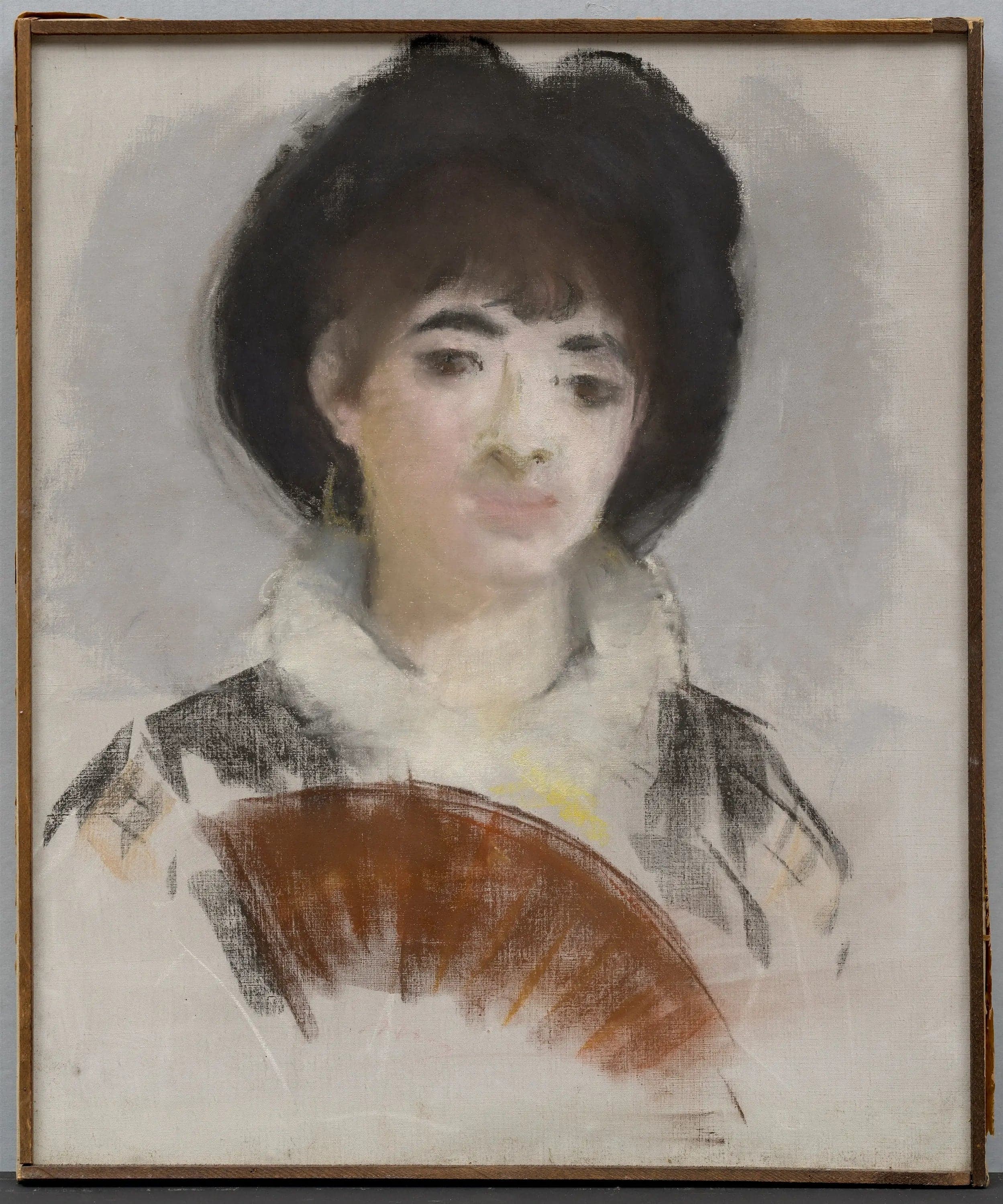
Portrait of Countess Albazzi
- Original dimensions
- 46.5 x 56.5 cm
- Museum
- Solomon R. Guggenheim Museum
- Year
- 1880
Scene depicted
The canvas depicts the Countess Albazzi in all her splendor, playing on the attributes of nobility and feminine delicacy. The graceful pose and the softness of her expression invite a silent dialogue between the subject and the viewer. The natural light seems to caress the canvas, revealing a universe that is both intimate and majestic, where every detail matters.
Historical context
Created in 1880, this painting is emblematic of the artistic Paris, a true epicenter of innovation during the Impressionist period. The canvas is currently housed in the Solomon R. Guggenheim Museum , a jewel of New York, where it continues to captivate the eyes of art lovers. Manet, a pioneer of the movement, managed to capture the essence of his time, transcending established conventions with this singular pictorial work.
Place in the artist's career
The Portrait of the Countess Albazzi stands as a milestone in Manet's career, symbolizing a period of artistic maturity. At that time, the artist distinguished himself through bold choices, as evidenced by his *Olympia* and *Déjeuner sur l'herbe*, visible references to the modernity of his approach. This painting thus fits into an evolution towards greater freedom of expression.
Anecdote
Manet once declared: “Painting is a way of feeling, a dance between light and shadow.” This quote echoes the moments of inspiration that blew over him, perhaps during one of those sweet spring mornings, when he crossed the intriguing gaze of the Countess Albazzi. This fleeting moment gave birth to a composition where passion and delicacy live.