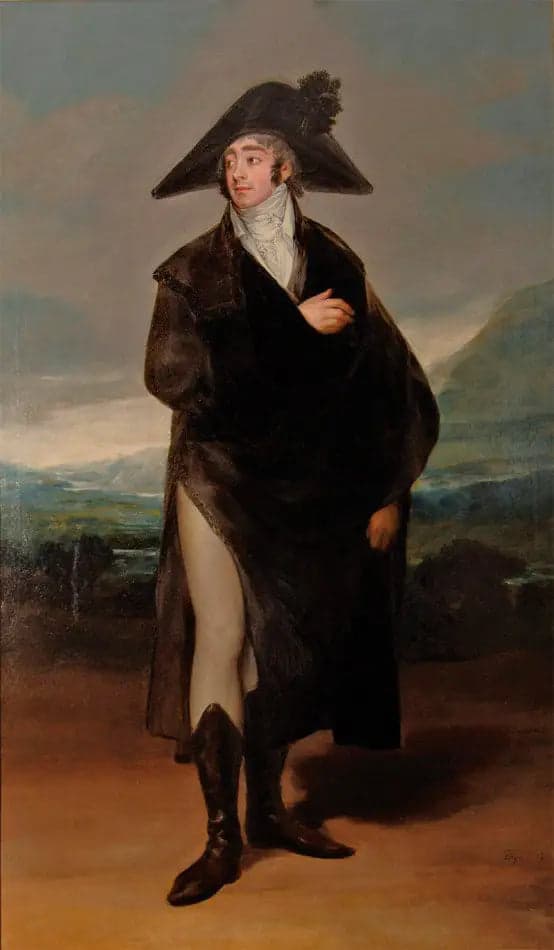
Portrait of Count Fernán Núñez
- Original dimensions
- 137 x 211 cm
- Museum
- Not specified
- Year
- 1803
Scene depicted
In this pictorial work , Goya reveals with incredible finesse the noble character of the Count of Fernán Núñez. Elegantly dressed, the protagonist exudes an aura of dignity and mystery. The painting, rich in color, invites exploration of a complex personality, while offering a glimpse into the societal standards of the time, where the high aristocracy was expected to be both respectful and impressive in its presentation.
Historical context
Created in 1803, the painting "Portrait of the Count of Fernán Núñez" is set in the historic city of Madrid, the beating heart of Spain and a witness to the artistic fervor of the romantic movement. At the time, Goya, an emblematic figure of his era, thrived in a period marked by social and political upheaval. This work, now in a private collection, fascinates with its imposing dimensions and the richness of its composition, capturing the very essence of its subject in a moment immortalized on canvas.
Place in the artist's career
The Portrait of the Count of Fernán Núñez sits at the heart of Goya's career, at a time when he navigates between realism and romanticism . This painting marks a significant advancement from his earlier works , and alongside other masterpieces like "La Maja Desnuda" and "Los Fusilamientos del 3 de Mayo," it testifies to the emotional and stylistic evolution of the artist.
Anecdote
"In the gaze of each subject, I seek the soul that fervently lies beneath the skin," Goya might have said in a burst of inspiration in the studio. Imagine him, one spring morning, facing the count in soft light, every detail of the face captured by his sharp eyes; he seizes the authentic emotion of his model, making the painting as alive as the memory itself.