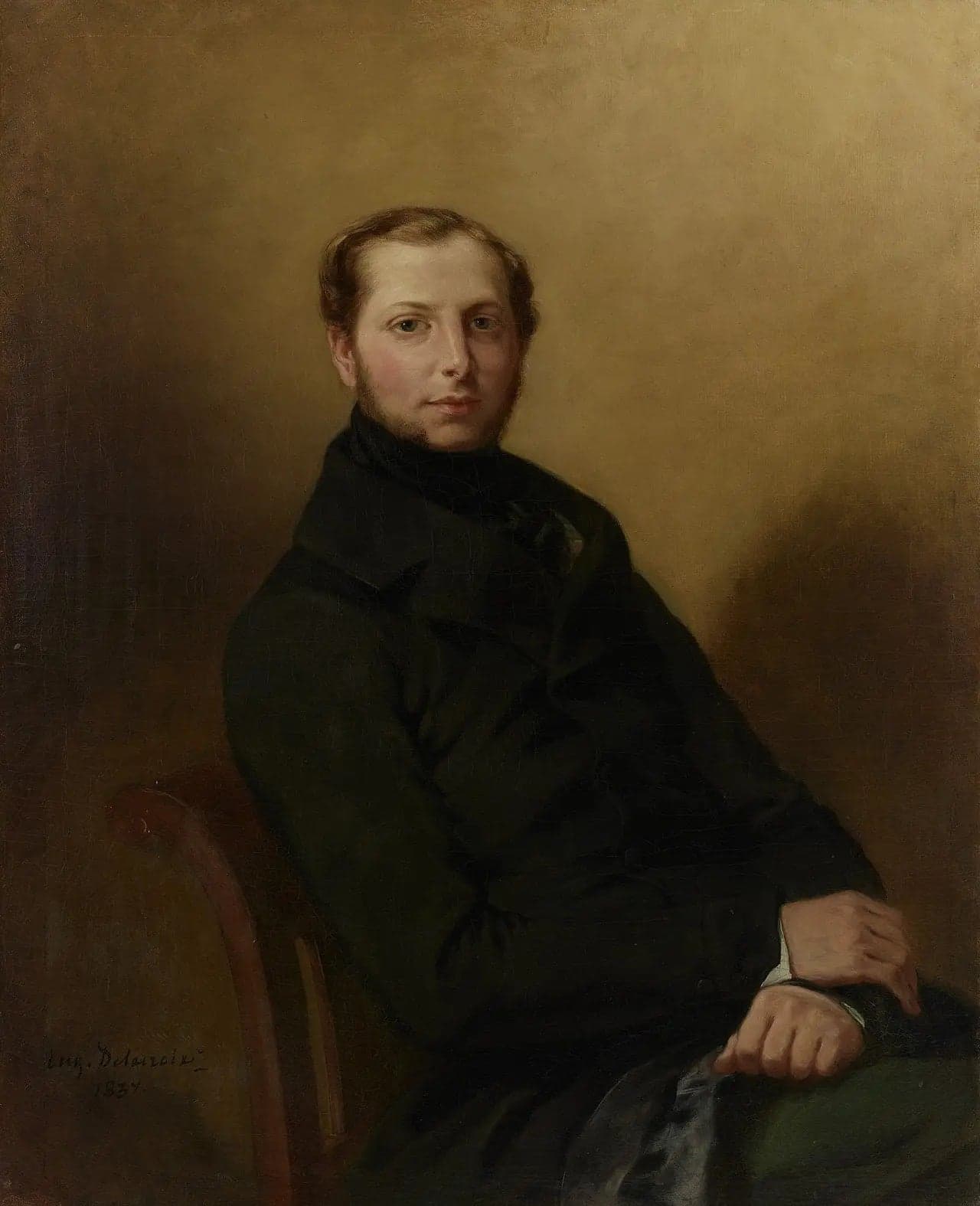
Portrait of Count Charles de Mornay
- Original dimensions
- 81 x 100 cm
- Museum
- Yale University Art Gallery
- Year
- 1837
Scene depicted
The painting "Portrait of Count Charles de Mornay" focuses on the representation of the count in a pose that is both solemn and approachable. Delacroix uses his expertise to humanize the subject, highlighting not only his aristocratic status but also his inner emotions. Every detail, from the embroidery of his clothing to the nobility of his gaze, tells a story rich in nuances and hidden tales.
Historical context
Created in 1837, this iconic painting is set against the backdrop of French romanticism , an artistic movement where emotional expression and individualism are celebrated. The painting, currently displayed at the Yale University Art Gallery , evokes the elegance of an era where fashion and bourgeois culture intersect, thus capturing a precious moment in history. Measuring 81 x 100 cm, it unfolds like a master canvas, revealing not only the face of the count but also the soul of his time.
Place in the artist's career
This masterpiece symbolizes a pivotal period in Delacroix's career. It is during this time that he perfects his art, balancing academic traditions and romantic innovations. At the same time, works such as " Liberty Leading the People " and "The Lion of the Atlas" testify to a marked technical and emotional evolution, making Delacroix a pioneer of the romantic movement.
Anecdote
Delacroix once declared: "Light is the truth of painting ." When he executed this canvas on a spring morning, he felt the need to unveil the depth of the individual through light and shadow. The count's face, bathed in enchanting rays, transforms into a reflection of human passions, a moment captured forever.