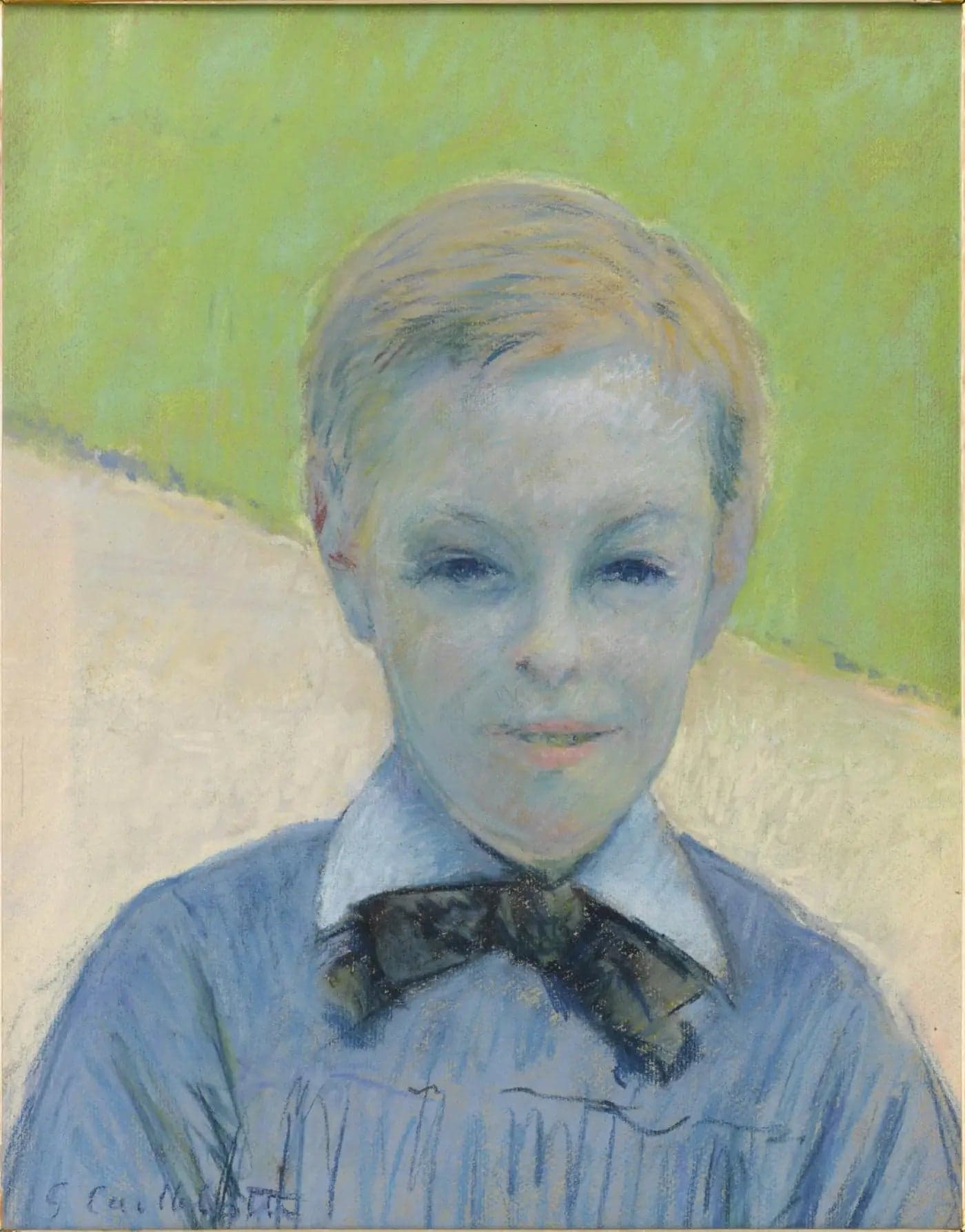
Portrait of Camille Daurelle
- Original dimensions
- 320 x 400 cm
- Museum
- musée d'Orsay
- Year
- 1877
Scene depicted
In this masterpiece, Caillebotte captures the very essence of his model, Camille Daurelle, enveloped in an atmosphere of intimacy and reflection. The canvas depicts not only a portrait but also the unique spirit and perspective of his muse. The subtle interplay between shadow and light, Camille's serene expression, intertwine to form a harmonious composition.
Historical context
Created in 1877, in the heart of vibrant Paris, this painting is part of the impressionist movement, characterized by its boldness and its quest for light. Gustave Caillebotte , one of the pioneers, offers a new vision, a tool of an era in full transformation. The canvas is currently located at the musée d'Orsay , a recognized temple of French art, where it continues to fascinate with its imposing dimensions.
Place in the artist's career
“Portrait de Camille Daurelle” represents a turning point in Caillebotte's career. After his earlier, more realistic works, this painting reflects an impressionist maturation, where he explores new shades of human expression. Alongside “Les Raboteurs de parquet” and “Le Pont de l’Europe,” this canvas reveals an artist in full search of his unique style, embodying light while preserving reality.
Anecdote
“Faces tell a story, each gaze is a window to the soul,” said Caillebotte as he contemplated Camille Daurelle's face. This portrait was created one April morning, in the fresh and fragrant air of blooming flowers, where the light intensified through the windows. Camille's painting does not merely immortalize a moment; it captures an emotion, a story, a presence.
Major exhibitions
fifth impressionist exhibition