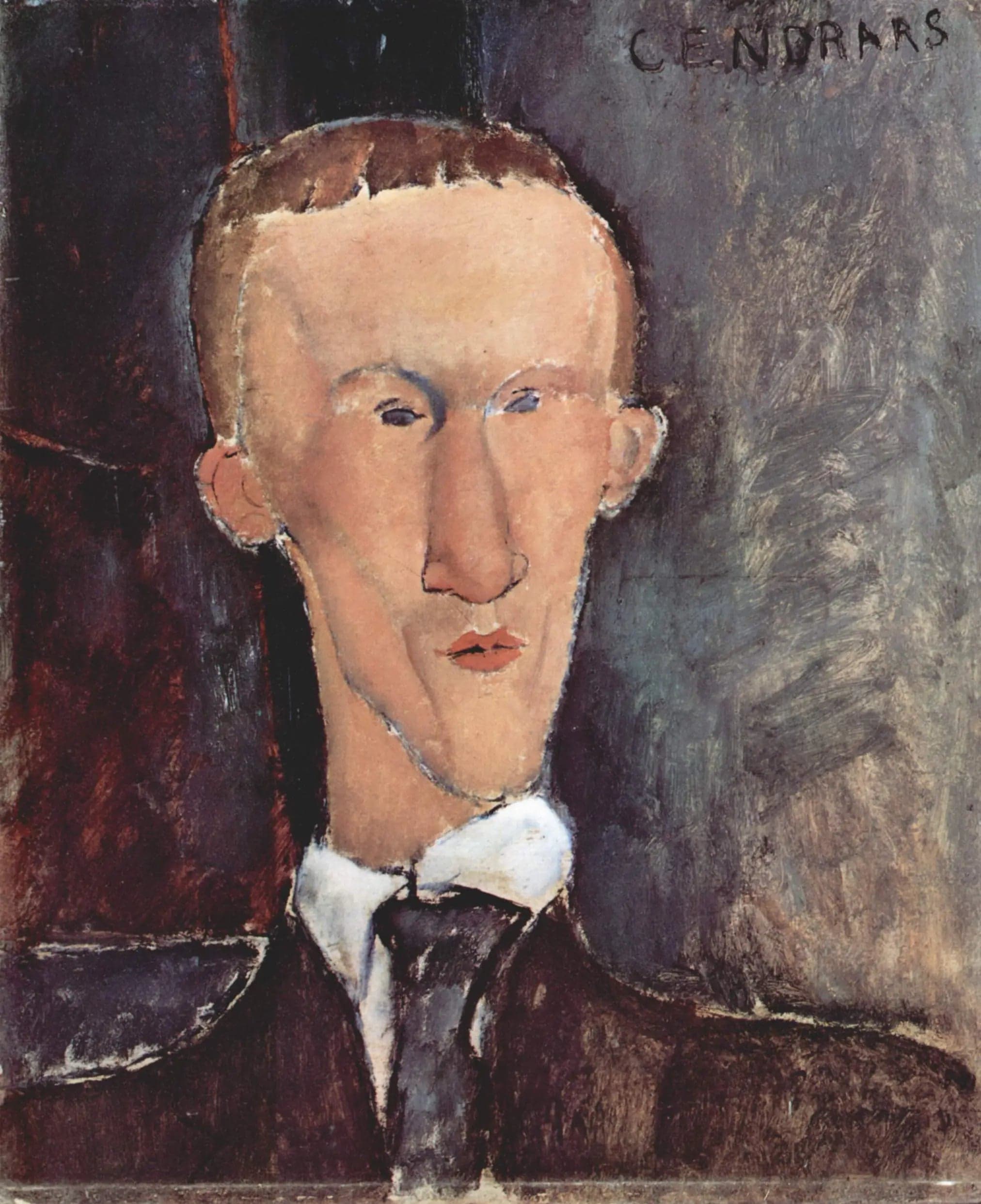
Portrait of Blaise Cendrars
- Original dimensions
- 50 x 61 cm
- Museum
- Savoie Gallery
- Year
- 1917
Scene depicted
Through the painting “Portrait of Blaise Cendrars,” Modigliani offers a unique vision of the writer and poet. His striking gaze, surrounded by fluid shapes, immerses us in a disturbing intimacy. The elongated features and softened colors create an atmosphere that is both melancholic and modern, an invitation to discover the soul of a man whose literary creation transcends his time.
Historical context
This emblematic work was created in 1917, a vibrant and tumultuous time, in the heart of Paris, the city of light. Inscribed in the artistic movement of modernism , Portrait of Blaise Cendrars reflects the creative upheavals of a world in full transformation. Today, this painting is located at the Savoie Gallery, where it continues to fascinate art lovers. Its dimensions of 50 x 61 cm contrast with the emotional grandeur evoked by its composition.
Place in the artist's career
This painting is situated at a turning point in Modigliani's career, revealing his refined style. In parallel with other remarkable pieces such as Nu couché and Femme à la mandoline , it celebrates a moment of artistic maturity. It shows a quest for simplicity that drifts towards a revealing emotional complexity.
Anecdote
Modigliani often said: “Every face tells a story.” This portrait was inspired after a chance meeting with the poet Blaise Cendrars, one sunny morning in the streets of Montparnasse. The light danced on the cobblestones, and the poet's face, marking its imprint in the artist's memory, suddenly materialized on the canvas, capturing an essence, a breath.