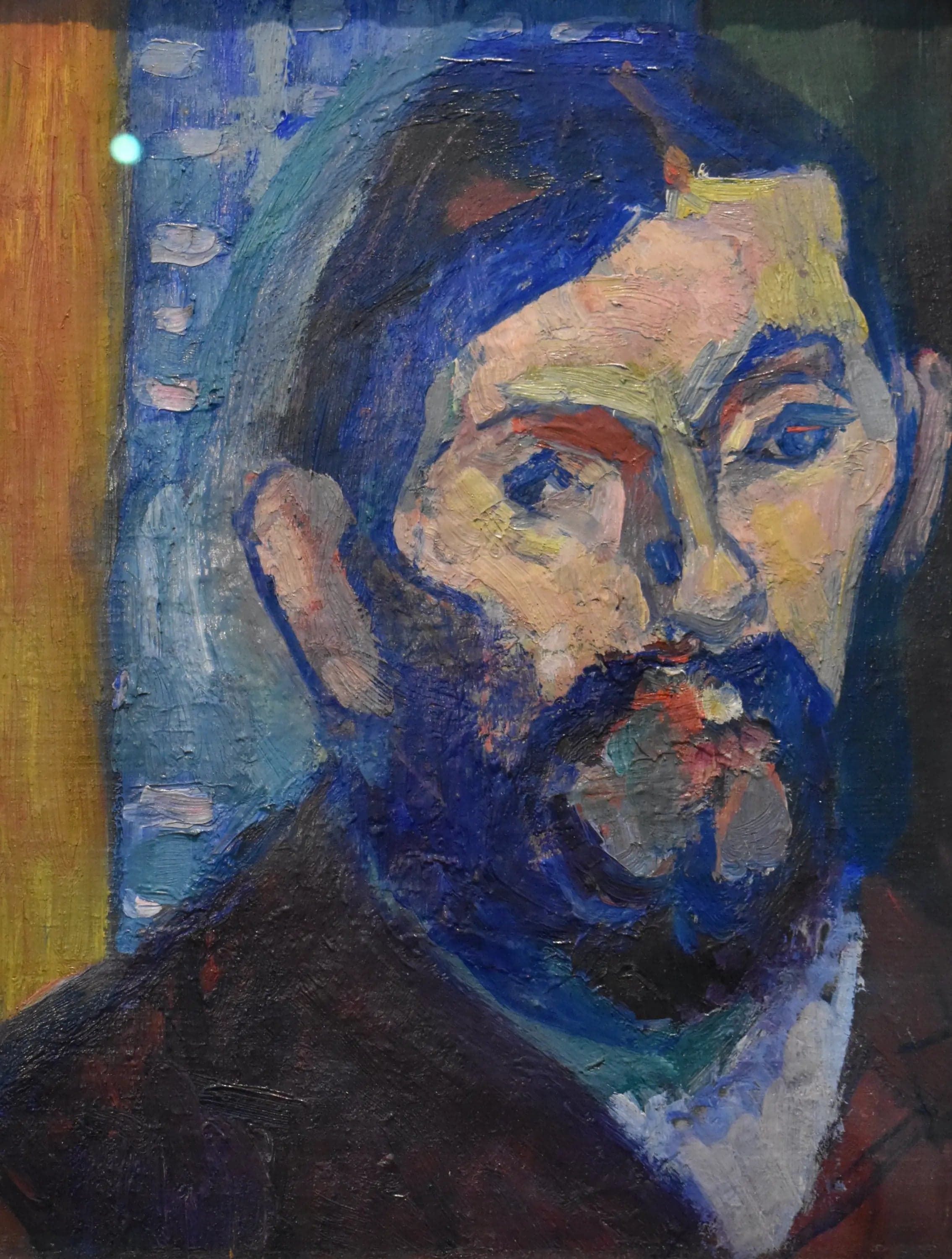
Portrait of Bevilacqua
- Original dimensions
- 27 x 35 cm
- Museum
- musée des Beaux-Arts de Bordeaux
- Year
- 1901
Scene depicted
In this painting, Matisse captures Bevilacqua's personality with delicate attention. The artist explores the contours of the face, enriched with vibrant colors that evoke light and emotion. The composition, with its simplified background, focuses all attention on the face. It testifies to the intensity of human relationships, making the viewer a witness to a precious intimacy.
Historical context
Created in 1901, this iconic painting from the Fauvist period, “Portrait de Bevilacqua”, is set against a rich cultural backdrop in Bordeaux. This era sees the birth of new forms of artistic expression, where color becomes the central element, transcending the subject. The current work is located at the musée des Beaux-Arts de Bordeaux, a place that celebrates artistic heritage in a city marked by creativity.
Place in the artist's career
“Portrait de Bevilacqua” represents a pivotal moment in Matisse's career. This painting is situated between “Le Bonheur de vivre” and “La Danse”, reflecting a stylistic and emotional development. The work marks the transition to a bold palette and increased expressiveness, while consolidating his status as a modern masterpiece.
Anecdote
Henri Matisse once declared: "Colors are my words, painting is my language." It was on a sunny spring afternoon, on a light-drenched terrace, that he crossed paths with Bevilacqua's bright gaze. This fleeting moment, filled with promise, infused the canvas with an unparalleled depth and warmth, capturing both the simple and complex essence of his model.