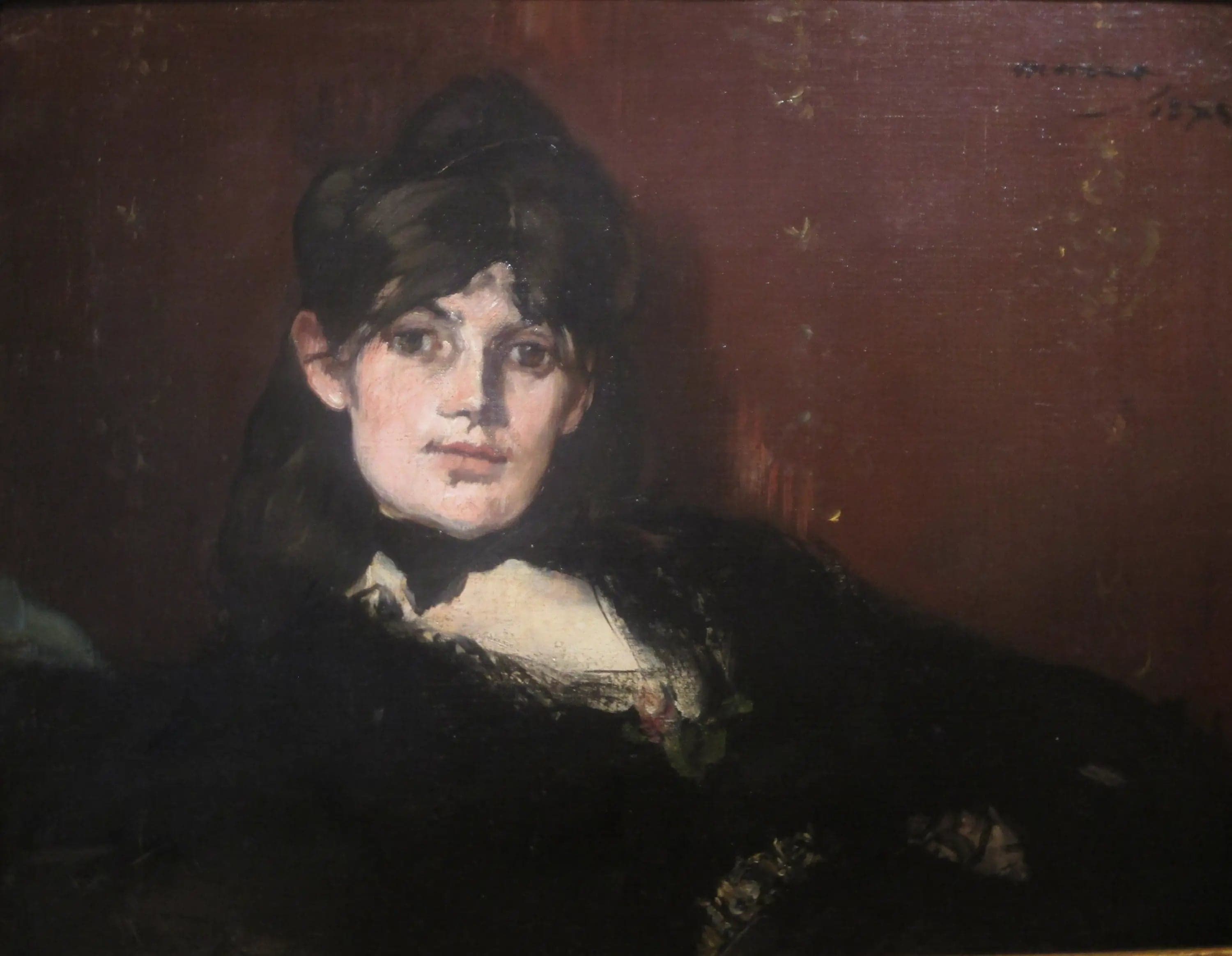
Portrait of Berthe Morisot Reclining
- Original dimensions
- 34 x 26 cm
- Museum
- musée Marmottan Monet
- Year
- 1873
Scene depicted
In this pictorial work, Édouard Manet captures the suspended moment where Berthe Morisot, one of the first women of the impressionist movement, rests gracefully. The painting reveals not only her radiant face but also the brilliance of her personality. The painting , imbued with a gentle melancholy, evokes the tender and respectful relationship that Manet maintained with Morisot, marking an era where feminine individuality finally took shape in the world of art.
Historical context
Created in 1873, this painting emblematic finds its origin in Paris, the city of lights and art. Édouard Manet , leading figure of the impressionist movement, signs here a work that embodies the elegance of the 19th century while defying the aesthetic conventions of his time. The painting is currently at the musée Marmottan Monet , where it enriches a unique collection of impressionist works. With its 34 x 26 cm, it invites a contemplative closeness.
Place in the artist's career
This painting positions itself as a centerpiece in Manet's career, symbolizing both a period of maturity and a stylistic turning point. In parallel with works like "Olympia" and "Le Déjeuner sur l'herbe", Morisot's painting evokes the evolution of the treatment of the human figure and the play of light, while highlighting the respect and admiration that Manet held for his female models.
Anecdote
Manet is said to have once whispered: “Art is the meeting of the invisible and the visible.” Imagine him, one spring morning, in his studio bathed in light, sketching the face of Berthe Morisot after a quiet walk along the Seine. This human and intimate composition resonates through the ages, while capturing the essence of the painter's creativity.