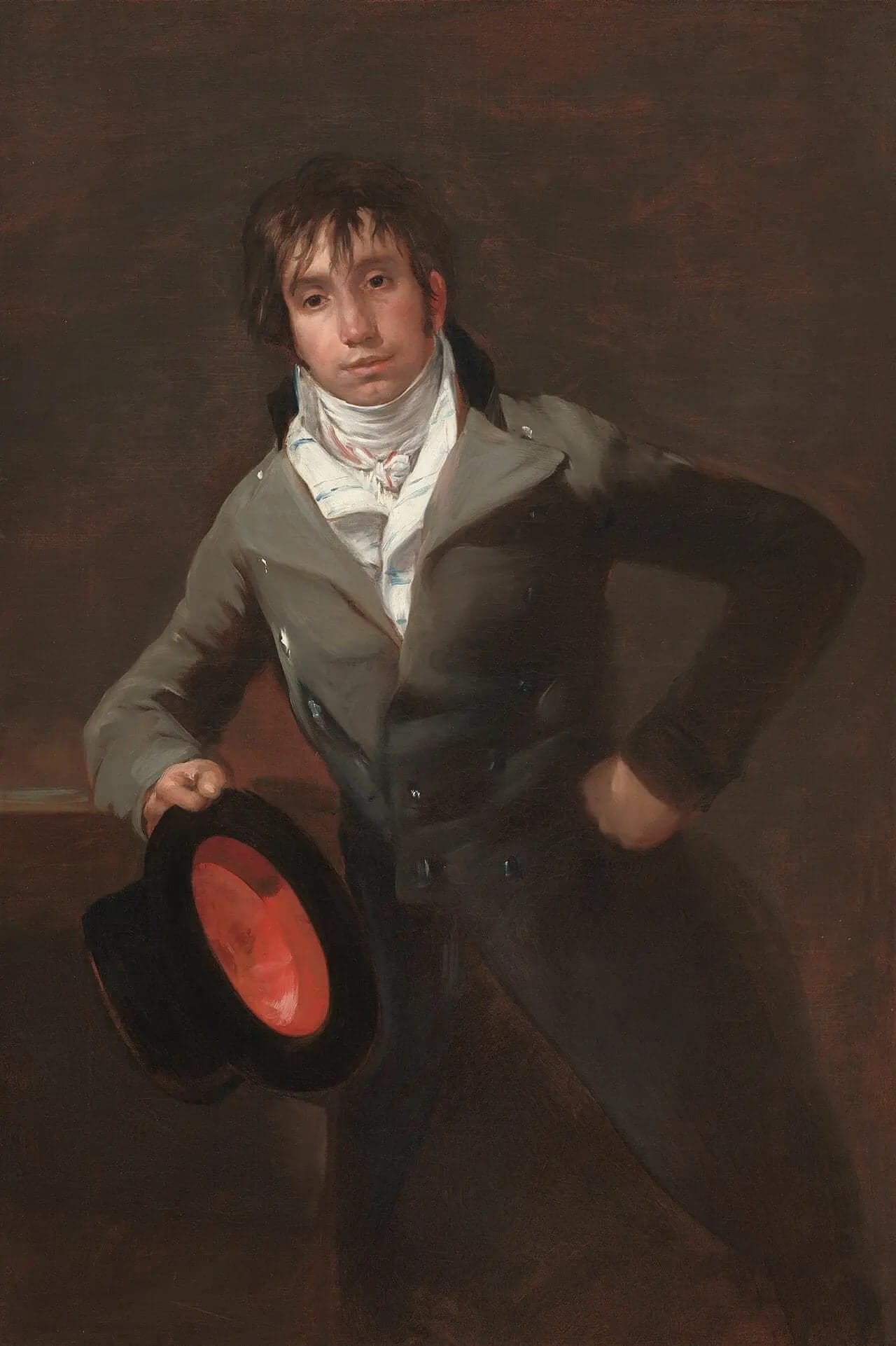
Portrait of Bartolomé Sureda
- Original dimensions
- 79.3 x 119.7 cm
- Museum
- National Gallery of Art
- Year
- 1804
Scene depicted
The painting “Portrait of Bartolomé Sureda” highlights the figure of the famous businessman, capturing the elegance of his time. Goya uses his masterful technique to personalize the image of Sureda, whose gaze seems to invite the viewer into a silent dialogue, revealing his inner strength and presence.
Historical context
Created in 1804 in Madrid, this painting is emblematic of the Romanticism movement, illustrating a time of political and social upheaval in Spain. Witness to a major artistic evolution, the painting is now housed in the prestigious National Gallery of Art, a collection capable of preserving the legacy of masterpieces from the past.
Place in the artist's career
This painting , located at the heart of Goya's career, marks a period of maturity where his style evolves towards a more intimate and psychological representation. In parallel, other works such as “The Maja” and “Saturn Devouring a Son” demonstrate his journey towards a bold exploration of human emotions through the canvas .
Anecdote
Francisco de Goya , known for his penetrating gaze on the human condition, once declared: “Beauty lies in the soul that one captures with the brush.” It was on a sunny morning, in the vibrant streets of Madrid, that he encountered the mysterious face of Bartolomé Sureda, a moment that inspired the depth and intensity of this masterpiece .