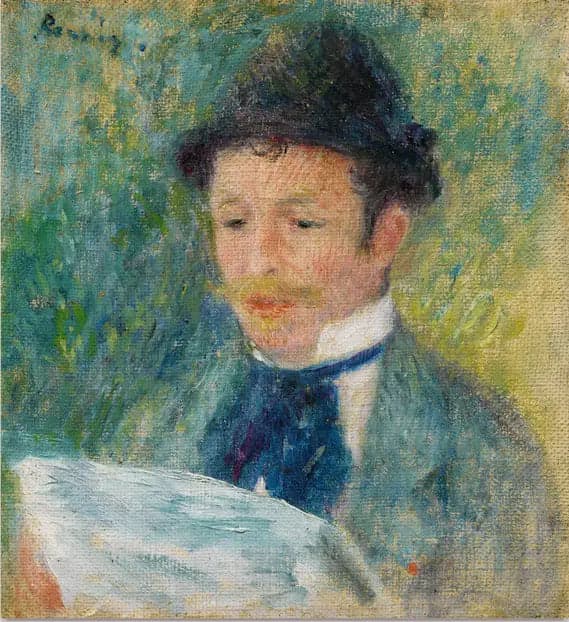
Portrait of Baron Barbier - Pierre
- Original dimensions
- 16.4 x 17.6 cm
- Museum
- Not specified
- Year
- 1877
Scene depicted
In this painting , Renoir manages to convey the personality of Baron Barbier through a refined composition. The penetrating gaze, the subtle features make this painting a psychological study as much as a physical portrait. The light and blurred background accentuates the charismatic presence of the model, creating a lively and authentic atmosphere.
Historical context
Created in 1877 within the intimate framework of Parisian artistic life, Portrait du baron Barbier is part of the Impressionist movement, emblematic of the search for light and vibrant colors. The city of Paris, a true epicenter of the artistic Revolution, provides the ideal setting where this canvas took shape, paying tribute to the ease and elegance of the subject. The original work, now unspecified in its location, reveals captivating dimensions that give it an elegant presence.
Place in the artist's career
Portrait du baron Barbier is part of a phase of exploration where Renoir meditates on human interactions and the intimacy of portraits. In parallel with other pieces like Le Déjeuner des canotiers and Femme au parasol , this canvas bears witness to a major technical evolution, marking a balance between light and form, revealing the maturity of his Impressionist style.
Anecdote
“The portrait is a silent conversation between the painter and his model.” This quote, imbued with Renoir's thought, perfectly illustrates the essence of the creative moment. Imagine a sunny morning, filled with soft light filtering through the windows, when Renoir meets the gaze of Baron Barbier. Each brushstroke captures not only the appearance but also the spirit of the man.