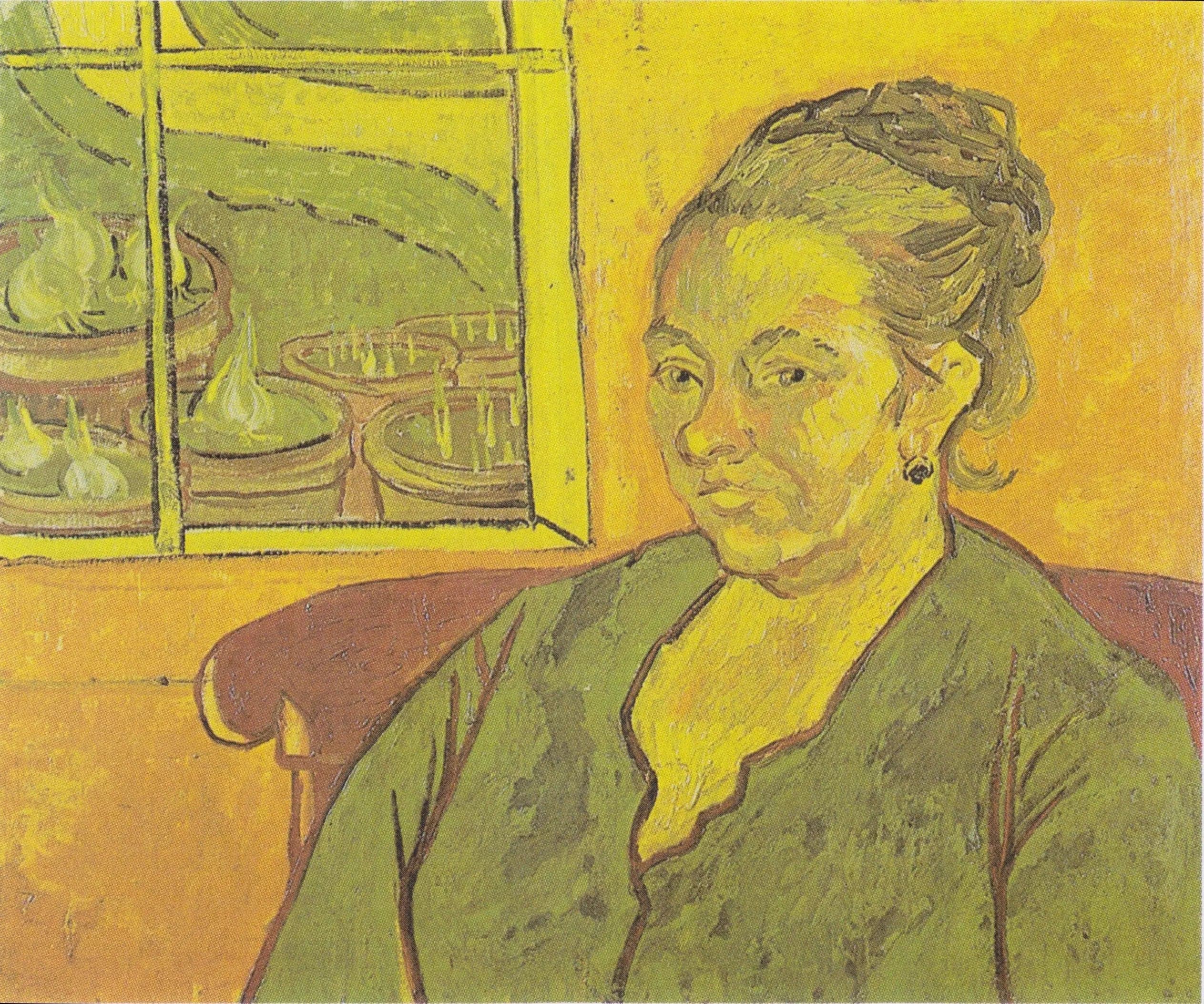
Portrait of Augustine Roulin
Scene depicted
In this canvas , Vincent van Gogh elevates the essence of Augustine, mother of his friend Joseph Roulin. The composition, using vibrant colors and rich textures, illustrates not only the character of this model but also evokes a rich inner universe of emotions. The painting captures the gaze, revealing a strong woman, both gentle and resilient, immersed in an aura of confidence.
Historical context
This painting is iconic and was created in 1888, during the vibrant summer in Arles , a city in the south of France synonymous with light and inspiration. Gathering influences from post-impressionism , Portrait of Augustine Roulin embodies the rise of a bold and innovative artistic movement. The canvas is now preserved at the Oskar Reinhart Museum "Am Römerholz" , where visitors can admire the expressive power of this pictorial work . Its dimensions of 65 x 55 cm capture the very essence of its subject, vibrant at the heart of this fascinating era.
Place in the artist's career
Portrait of Augustine Roulin is situated at the heart of an explosive period of creativity for Vincent van Gogh , marking a turning point in his journey. Alongside iconic works such as The Sunflowers and The Starry Night , this masterpiece testifies to a remarkable evolution in his approach to portraits, combining bold technique with heightened emotional sensitivity.
Anecdote
“Beauty resides in the soul of the beings we paint,” said Vincent van Gogh , inspired by a clear morning in Arles , where the luminous face of Augustine Roulin appeared to him as a precious vision. It is in the intimacy of this encounter that the evocative power of the painting was born, reflecting both tenderness and human depth, a palpable magic in every brushstroke of this work .