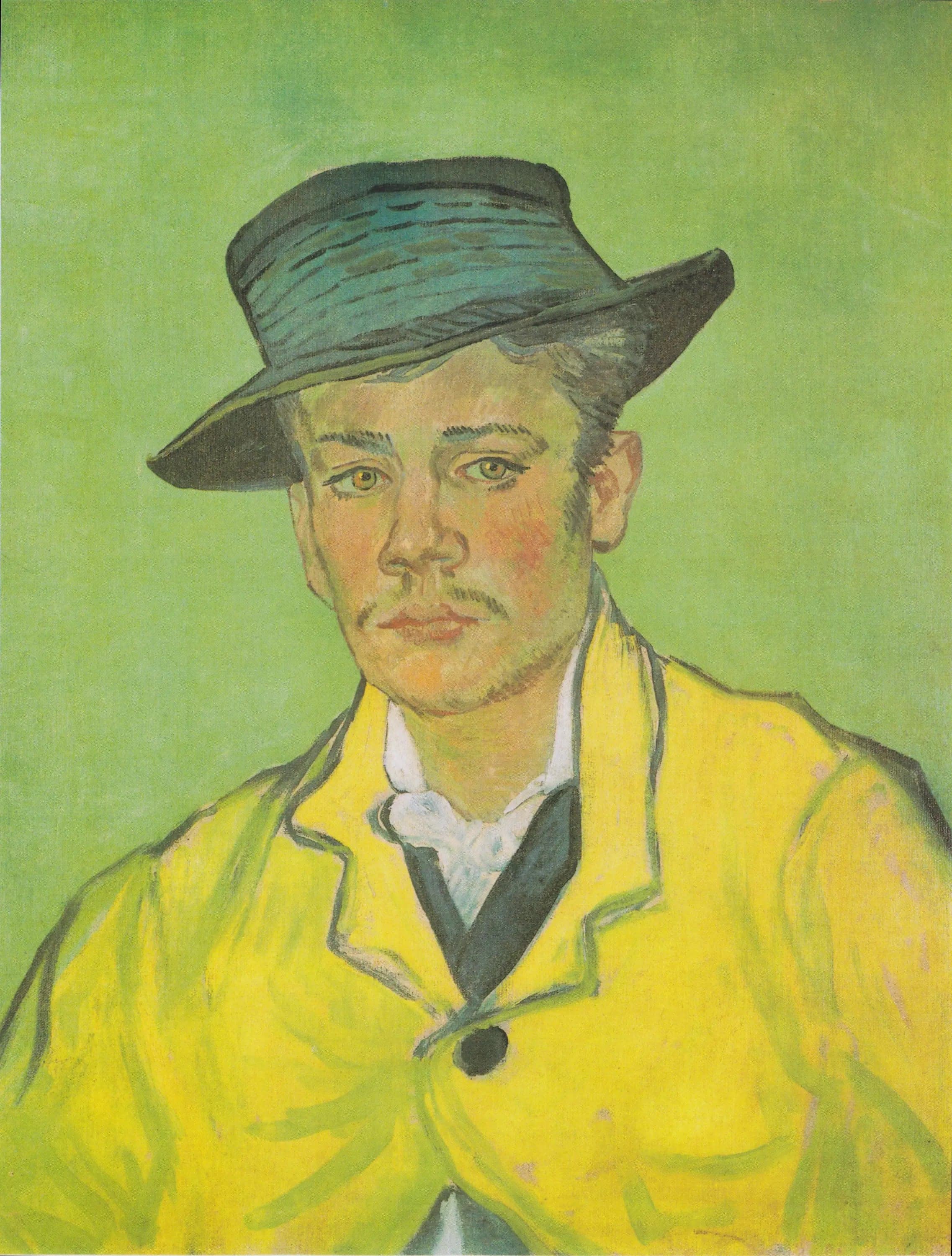
Portrait of Armand Roulin
Scene depicted
This canvas illustrates the portrait of Armand Roulin, a close friend of the artist and a familiar face in the community of Arles . Van Gogh's affectionate composition evokes not only Armand's personality but also a dialogue between the artist and his model, creating a palpable intimacy. The energetic brushstrokes convey emotions, making the viewer complicit in this fleeting and eternal moment.
Historical context
Created in 1888, the iconic Portrait of Armand Roulin is set in the city of Arles , in the heart of Provence, during a time when Vincent van Gogh flourished within the post-impressionist movement. This work was born in an artistic context of vibrant experimentation, and it is currently displayed at the Folkwang Museum , where its magnetism and emotional power continue to dazzle visitors. Its dimensions, 54.1 x 65 cm, accurately capture the depth of the subject.
Place in the artist's career
The painting Portrait of Armand Roulin is a milestone in Van Gogh's career, marking his Arles period where the artist reaches stylistic maturity. Following this masterpiece, one can also admire The Sunflowers and The Bedroom of Van Gogh in Arles , which reveal an evolution in color choices and mastery of light, illuminating the suffering and beauty that coexist in his works.
Anecdote
Van Gogh, passionate about the beauty of faces, once declared: “Every portrait is a universe that demands to be revealed.” That morning, in a sunlit alley in Arles , he crossed paths with the penetrating gaze of Armand Roulin, the postman. The energy, character, and humanity of this man inspired him to bring a living masterpiece to life. This painting reveals the hidden nuances of a human soul in full light.