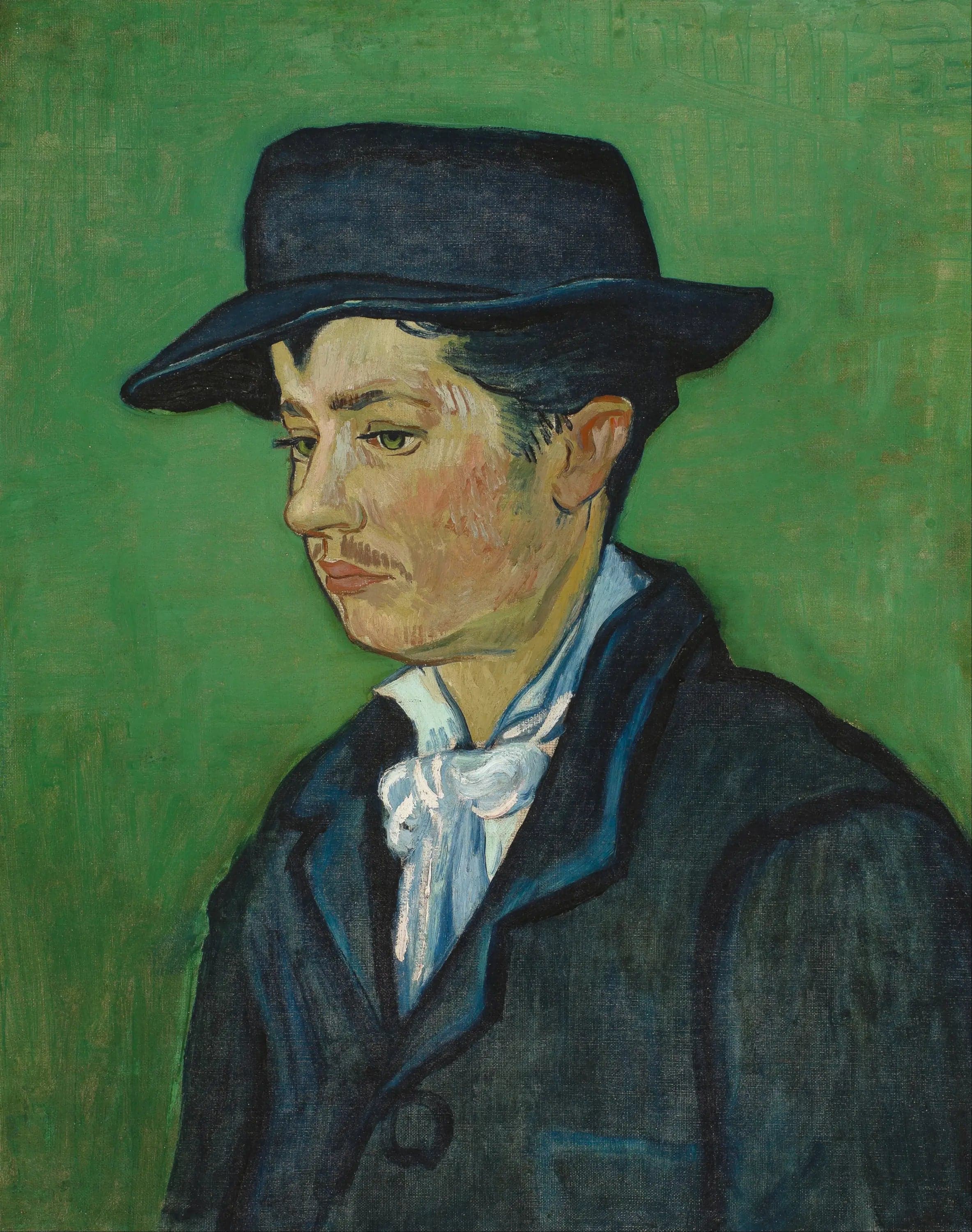
Portrait of Armand Roulin
Scene depicted
The painting depicts Armand Roulin, the postman's son, a man with a robust appearance and features marked by life. The work reveals the intimacy between the artist and his model, capturing a moment of great human depth. With bold brushstrokes, Van Gogh composes a lively scene, immersing the viewer in a silent dialogue between the painter and his subject.
Historical context
Created in 1888 in Arles , this painting is emblematic of the post-impressionist movement. At that time, Vincent van Gogh delves deeply into the soul of Provence, filling it with vibrant colors and palpable emotions. Currently exhibited at the Boijmans Van Beuningen Museum , the canvas measures 54 x 65 cm, an ideal format to captivate the eye and awaken sensitivity.
Anecdote
“I aspire to capture the human essence through light and color.” Thus speaks Van Gogh, evoking the creative momentum that led him to paint the masterpiece that is the Portrait of Armand Roulin . That day, in a sunlit alley of Arles , Armand's face appears, inspiring a canvas that echoes the authenticity and sincerity of friendship.