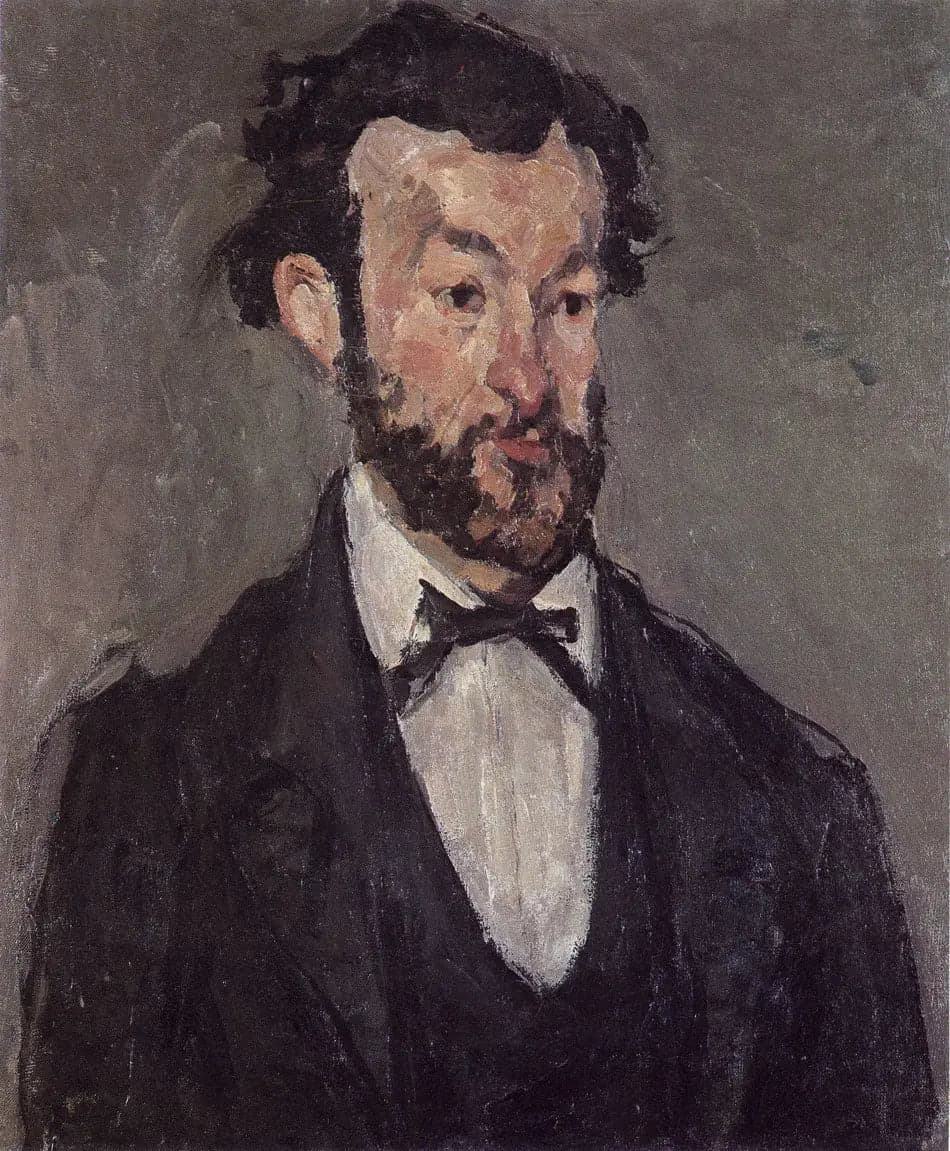
Portrait of Antony Valabregue
- Original dimensions
- 52.8 x 64.1 cm
- Museum
- Pola Museum
- Year
- 1874
Scene depicted
The painting highlights the portrait of Antony Valabregue, a young man whose pensive expression seems to capture a moment of intimate reflection. Cézanne, with his emblematic style, manages to infuse a deep humanity into this face, transforming each brushstroke into a palpable emotion. The blurred background and delicate shades enhance the contemplative aspect of the scene, thus offering a fascinating glimpse into the mysterious character of the subject.
Historical context
Created in the heart of the second half of the 19th century, in Aix-en-Provence, in the south of France, this masterpiece belongs to the Impressionist movement. At that time, the city resonated with bursts of colors and plays of light that would profoundly influence the soul of Portrait of Antony Valabregue . Currently preserved at the Pola Museum , this painting is a perfect example of the translucency and emotion that characterize Cézanne's art.
Place in the artist's career
Situated at the beginning of a career that promised much, Portrait of Antony Valabregue illustrates Cézanne's artistic transition, moving from Impressionist influences to his own unique style. Alongside other works such as The Garden of the Publisher and Mont Sainte-Victoire , this painting bears witness to a stylistic maturation, consolidating the visual identity of one of the pioneers of modernity.
Anecdote
Paul Cézanne , in a moment of creative solitude, once declared: "Painting must not simply reproduce, but also seduce and transport." This phrase resonates particularly when one thinks of the wonder Cézanne felt upon encountering a face in the light of a spring morning, a direct inspiration for his masterpiece , the painting Portrait of Antony Valabregue.