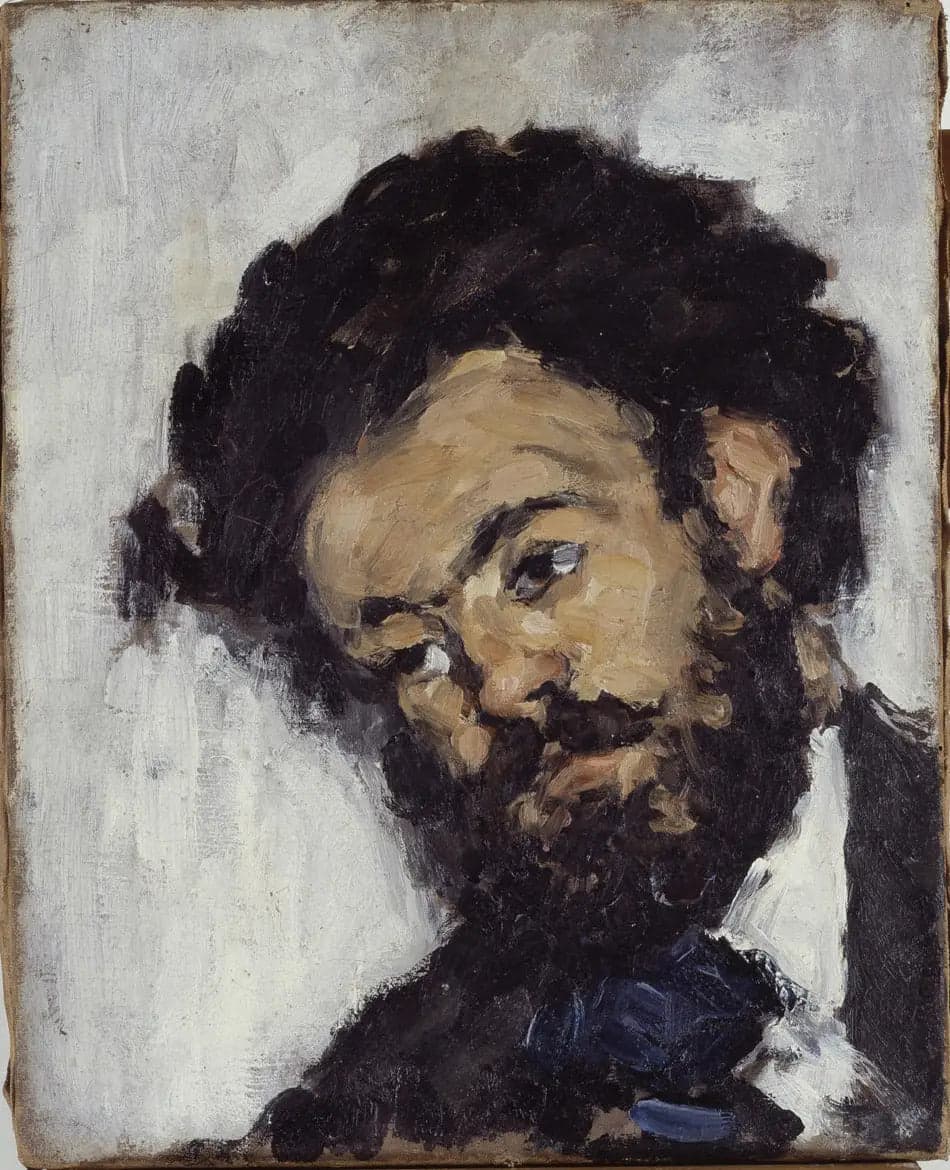
Portrait of Antoine-Fortuné Marion
- Original dimensions
- 33 x 41 cm
- Museum
- Kunstmuseum Basel
- Year
- 1871
Scene depicted
In this painting , Cézanne depicts Antoine-Fortuné Marion, a close friend, highlighting his intense gaze and imposing stature. The neutral background skillfully plays with light, contrasting with the delicate features of the subject. Each brushstroke emphasizes not only Marion's personality but also Cézanne's unique approach to human representation, going beyond mere outlines to capture the soul of the individual.
Historical context
This painting , created in 1871 in Aix-en-Provence, an iconic city in the south of France, is at the heart of the Impressionist movement. It was during this time that Cézanne, considered the father of pictorial modernity, began to explore innovative techniques that redefined painting. Currently exhibited at the Kunstmuseum in Basel, this canvas still resonates with the light and energy of its time, reflecting the cultural richness of the late 19th century.
Place in the artist's career
This canvas marks a crucial milestone in Cézanne's career, a turning point where he began to break free from academic conventions. Alongside other paintings such as “The Card Players” and “Mont Sainte-Victoire,” this masterpiece illustrates his journey towards abstraction and his desire to translate sensations rather than reproduce raw reality.
Anecdote
“Painting is a path to truth,” Cézanne often said, his heart vibrant with passion for capturing the essence of his subjects. Imagine him, one spring morning, attentive to the nuances of a face that crosses his gaze, inspiring this pictorial work . This fleeting moment, imbued with beauty and intensity, is faithfully represented in Marion's portrait , steeped in a certain melancholy.