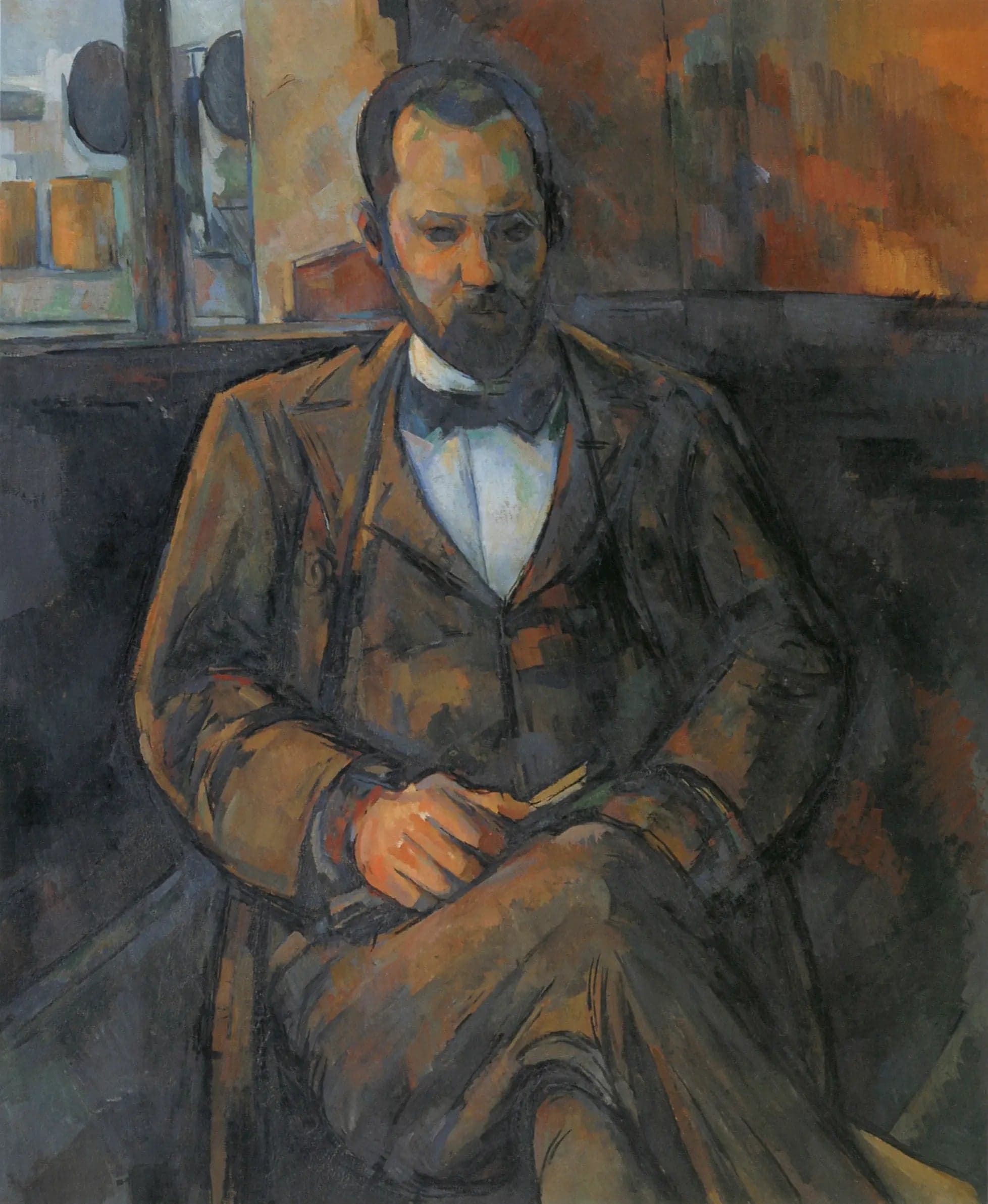
Portrait of Ambroise Vollard
- Original dimensions
- 81 x 101 cm
- Museum
- Petit Palais
- Year
- 1899
Scene depicted
In this painting, Cézanne reveals the soul of his subject through a composition of striking psychological depth. Vollard, a painter but also a vector of modernity, is depicted in soft light, each shade of color enhancing the dignity and strength of the character. The work is not just a simple portrait; it is a psychological study, a silent dialogue between the artist and his model, capturing the very essence of his being.
Historical context
It was in 1899, in Paris, the vibrant capital of the Belle Époque, that Paul Cézanne delivered this iconic work. Inscribed in the movement of cubism , Portrait d'Ambroise Vollard stands out as a remarkable illustration of the transition to a bold artistic modernity. Today, this painting resides at the Petit Palais , testifying to its importance within the cultural heritage of France.
Place in the artist's career
Portrait d'Ambroise Vollard positions itself as a major work in Cézanne's career, marking an evolution of his style towards a more advanced form of abstraction. In mirror with other famous paintings such as Les Joueurs de cartes and La Montagne Sainte-Victoire , it illustrates his relentless quest to decipher the underlying structure of the visual world, while anchoring human emotions at the heart of his work.
Anecdote
“Painting must become something tangible, like a heartbeat.” This quote inspires Cézanne's creative process as he immerses himself in capturing the face of his friend and art dealer Ambroise Vollard. Imagine a sunny morning, the smell of oil paint floating in the air, where each brushstroke resonates like a promise of artistic immortality. This painting , full of life, evokes a deep intimacy and a unique exchange between artist and subject.
Major exhibitions
The Cubism