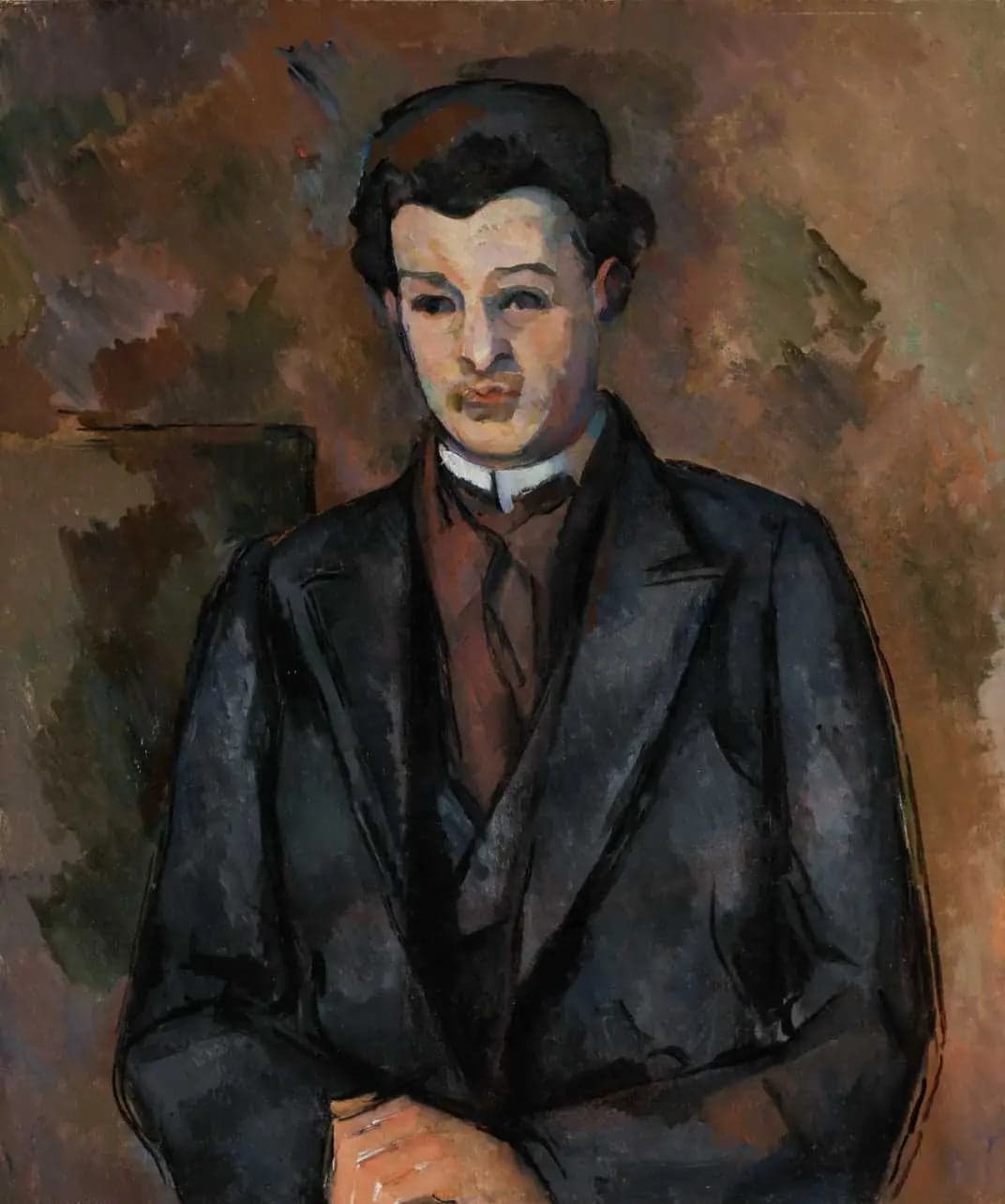
Portrait of Alfred Hauge
- Original dimensions
- 60 x 72 cm
- Museum
- Norton Museum of Art
- Year
- 1899
Scene depicted
The canvas “Portrait d'Alfred Hauge” reveals a man with an intense gaze, filled with gentleness and deep thoughts. The composition conveys an intimate atmosphere, illustrating the relationship between the portraitist and his model, a perceptible dance between light and shadows that sculpts every feature of the face. Cézanne succeeds in capturing a living essence, a moment frozen in time that invites understanding of the man's soul.
Historical context
Created in 1899 in Aix-en-Provence, this painting is part of the Impressionist movement without being limited to it, marking a transition towards a more personal and structured form. The canvas , currently displayed at the Norton Museum of Art, offers a captivating glimpse into the era when art became a quest for authentic expressions. Each brushstroke reflects the artistic climate of the late 19th century, a time bubbling with creative energy.
Place in the artist's career
This canvas appears as a significant milestone in Cézanne's career, illustrating his evolution towards a bolder style. It subtly dialogues with other works such as “The Card Player” and “Mont Sainte-Victoire,” reflecting both his search for structure and his exploration of emotions.
Anecdote
“I want to capture the essence of things, even a simple face.” These words still resonate, recalling an April morning when Cézanne crossed paths with Alfred Hauge in a lively and colorful alley. This chance encounter sparked inspiration for this masterpiece , highlighting the emotional depth of humanity.