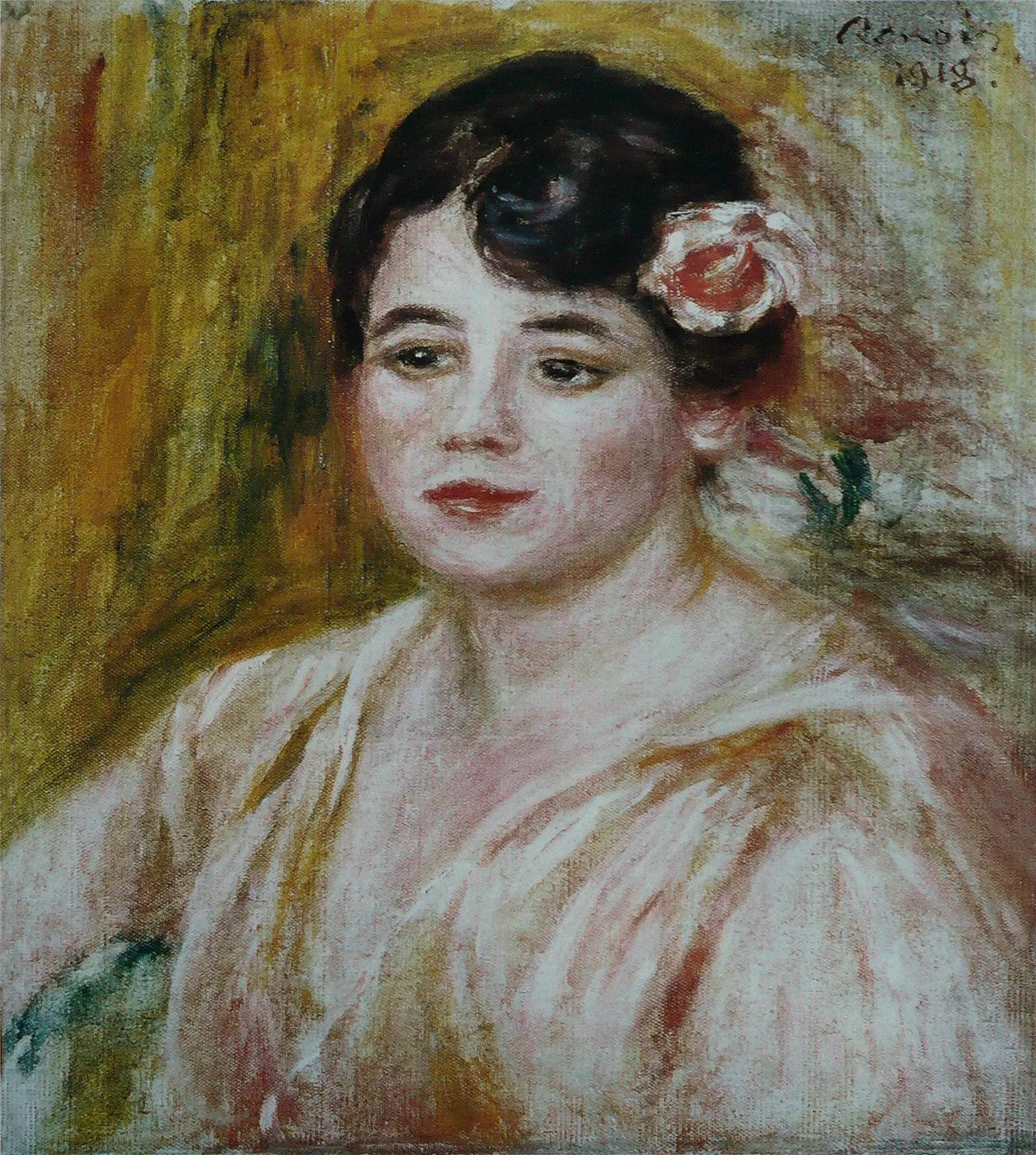
Portrait of Adèle Besson - Pierre
- Original dimensions
- 36.8 x 41 cm
- Movement
- post impressionism
- Museum
- Museum of Fine Arts and Archaeology of Besançon
- Year
- 1918
Scene depicted
Through “Portrait of Adèle Besson,” Renoir delivers an intimate vision. Adèle, bathed in soft light, appears with a gaze that is both dreamy and melancholic. This canvas encapsulates the essence of the post-war period, where the charm and vitality of faces resonate with the hope of artistic and human renewal. Each brushstroke evokes a personal legend, a story woven into the canvas.
Historical context
This painting was created in 1918, in the beautiful city of Cagnes-sur-Mer, a region imbued with Mediterranean sweetness. A pioneer of the post impressionist movement, Renoir captured the light and spirit of his time. Currently, the canvas rests in the Museum of Fine Arts and Archaeology of Besançon, offering visitors a window into this intimate masterpiece with dimensions of 36.8 by 41 centimeters.
Place in the artist's career
The “Portrait of Adèle Besson” is part of a period of maturity for Renoir, symbolizing his evolution towards an increasing emphasis on luminance and feelings. In parallel, other paintings , such as “Luncheon of the Boating Party” or “The Large Bathers,” testify to his exploration of human figures and nature, sealing his legacy in art.
Anecdote
“True beauty lies in the simplicity of a stolen moment,” Renoir might have said while reminiscing about this particular moment. Imagine a sunny morning, a quiet alley where he crossed the gentle gaze of Adèle Besson, the source of inspiration for this pictorial work . The tenderness and warmth of this painting ignite the heart and invite daydreaming.