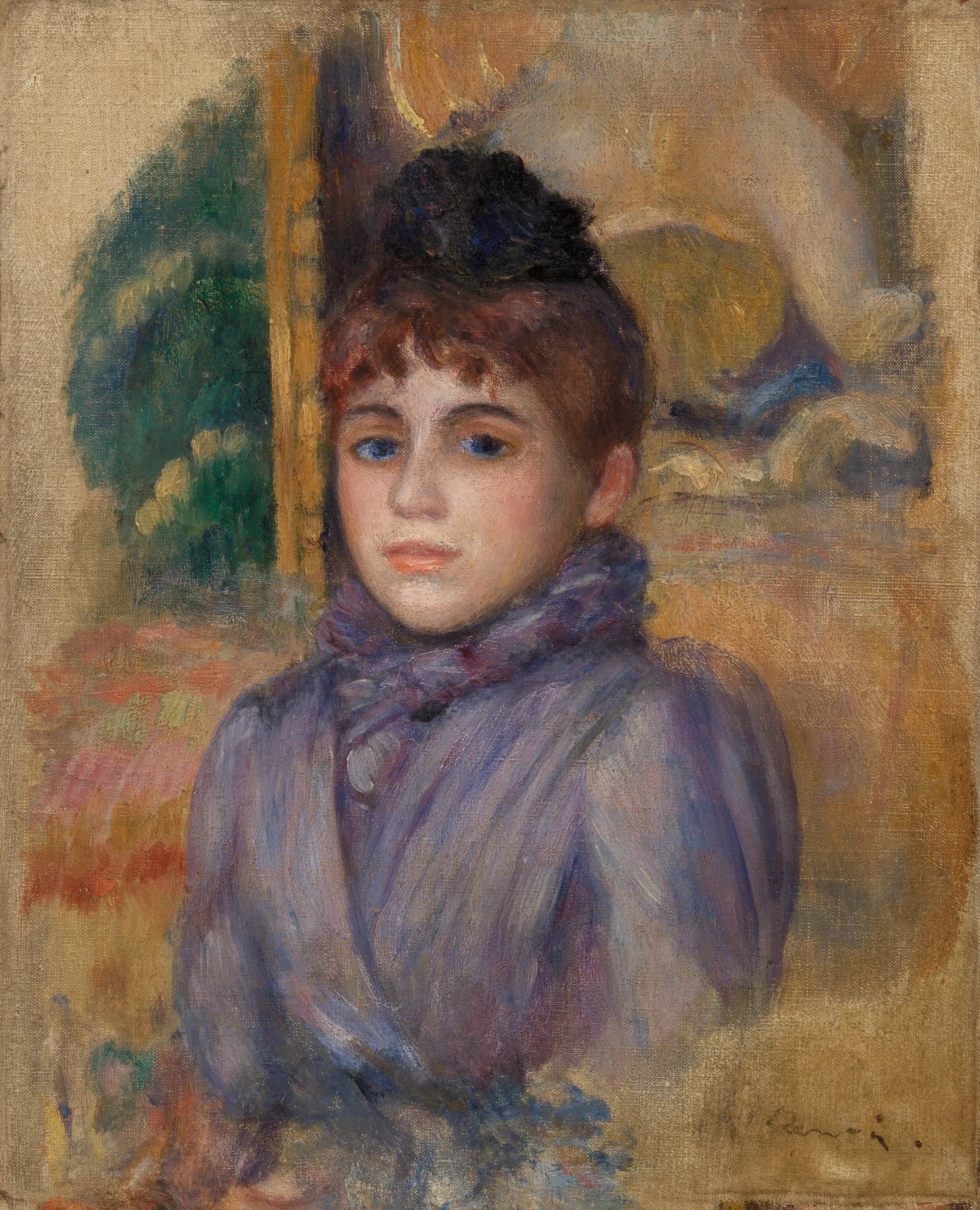
Portrait of a Young Woman - Pierre
- Original dimensions
- 47 x 56.5 cm
- Museum
- Hungarian National Gallery
- Year
- 1900
Scene depicted
The painting “Portrait of a Young Woman” reveals a delicate figure, gazing at the viewer with a serene look. The composition is marked by the judicious choice of poses, where each curve seems to vibrate under the light, creating a light atmosphere. This is not just a portrait; it is a silent dialogue, an exploration of the feminine soul, wrapped in palpable softness.
Historical context
This painting , created in 1900, is located in Budapest, at the heart of European artistic history. Renoir, an emblematic figure of Impressionism , captures the essence of feminine beauty through delicate light and a vibrant palette. Today, this canvas is displayed at the Hungarian National Gallery , where it continues to amaze visitors with its brilliance and timeless charm.
Place in the artist's career
This portrait is positioned at a pivotal time in Renoir's career, where he refines his style while integrating Impressionist influences. Alongside masterpieces like “Luncheon of the Boating Party” or “Dance at Bougival,” this painting highlights his evolution towards a more intimate exploration of his subjects, marking a significant turning point in his artistic approach.
Anecdote
“The beauty of faces speaks to me, beyond words.” Renoir might have said, brush in hand, allowing himself to be inspired by the subtle glow of a young woman encountered in the streets of Paris. It is this fleeting moment that brought this masterpiece to life, transcribing the innocence and spontaneity of a unique moment immortalized on his canvas .