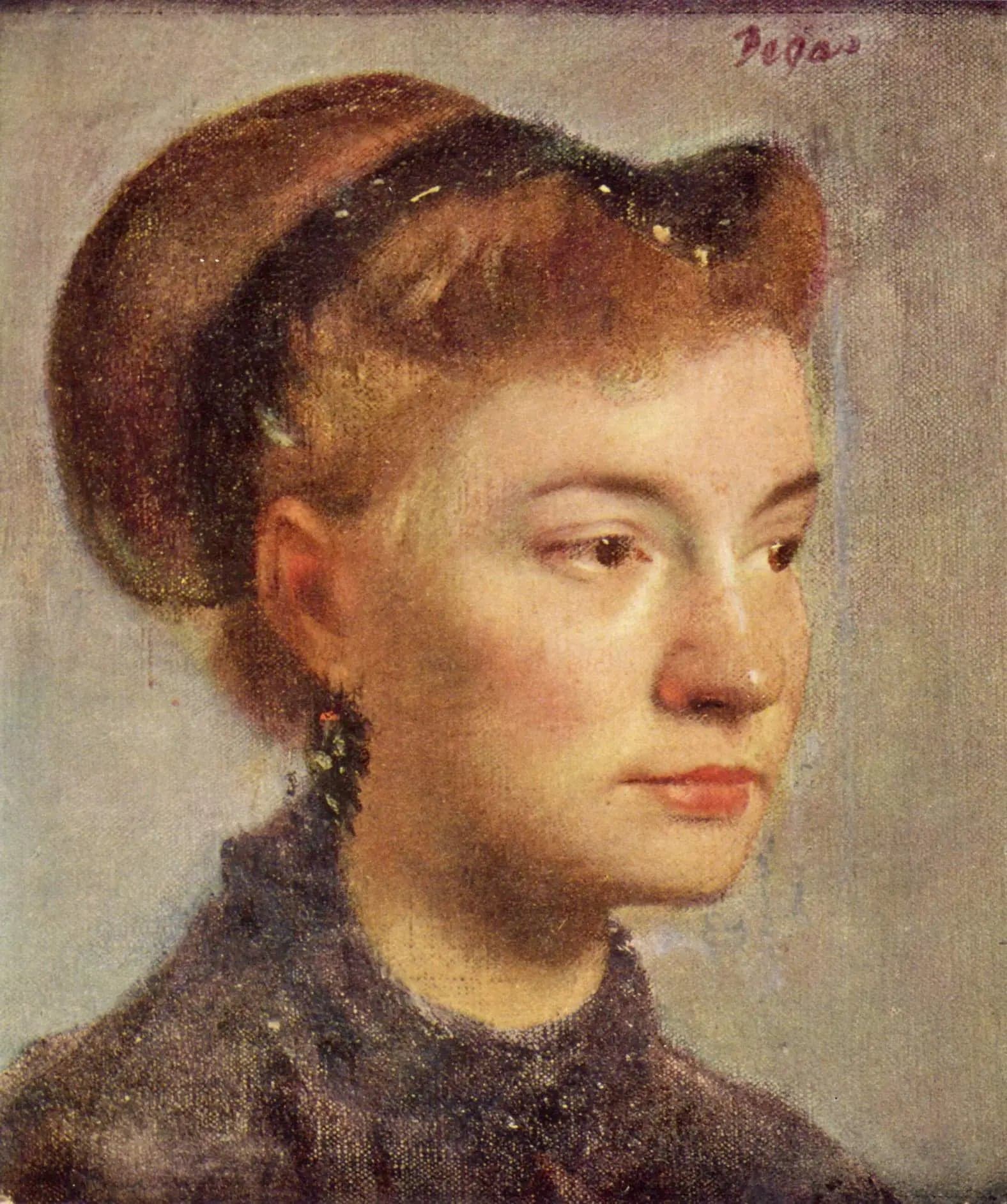
Portrait of a Young Woman
- Original dimensions
- 22 x 27 cm
- Museum
- Orsay Museum
- Year
- 1867
Scene depicted
The painting “Portrait of a Young Woman” highlights a female figure, depicted with rare delicacy. Her posture, elegant and introspective, seems frozen in a moment of contemplation. The subtle nuances of light caress her face, revealing a depth of soul that transports the viewer into a soft and intimate atmosphere.
Historical context
In 1867, in the heart of Paris, Edgar Degas composed this timeless painting , an emblematic piece of a nascent movement: Impressionism . In this effervescent universe, the light of the city blends with artistic innovation, and the canvas stands out for its boldness. Currently preserved at the Orsay Museum , this work displays delicate dimensions that invite one to approach and grasp all the details.
Place in the artist's career
This canvas , both promising and revealing, positions itself as a milestone in Degas's career. It heralds a period of maturity, where his style evolves towards bolder compositions. Compared to “The Dancer at Rest” and “The Ballet,” this masterpiece shows the artist's quest to capture movement and emotion, raising a dialogue between stillness and immediacy.
Anecdote
“Capturing the fleeting moment is painting the soul,” Degas might have said while admiring this canvas on a spring morning in Paris. Among the bustling alleys, his gaze fell upon a young woman, a serene face, a source of inspiration for this vibrant painting of emotion.
Major exhibitions
third Impressionist exhibition