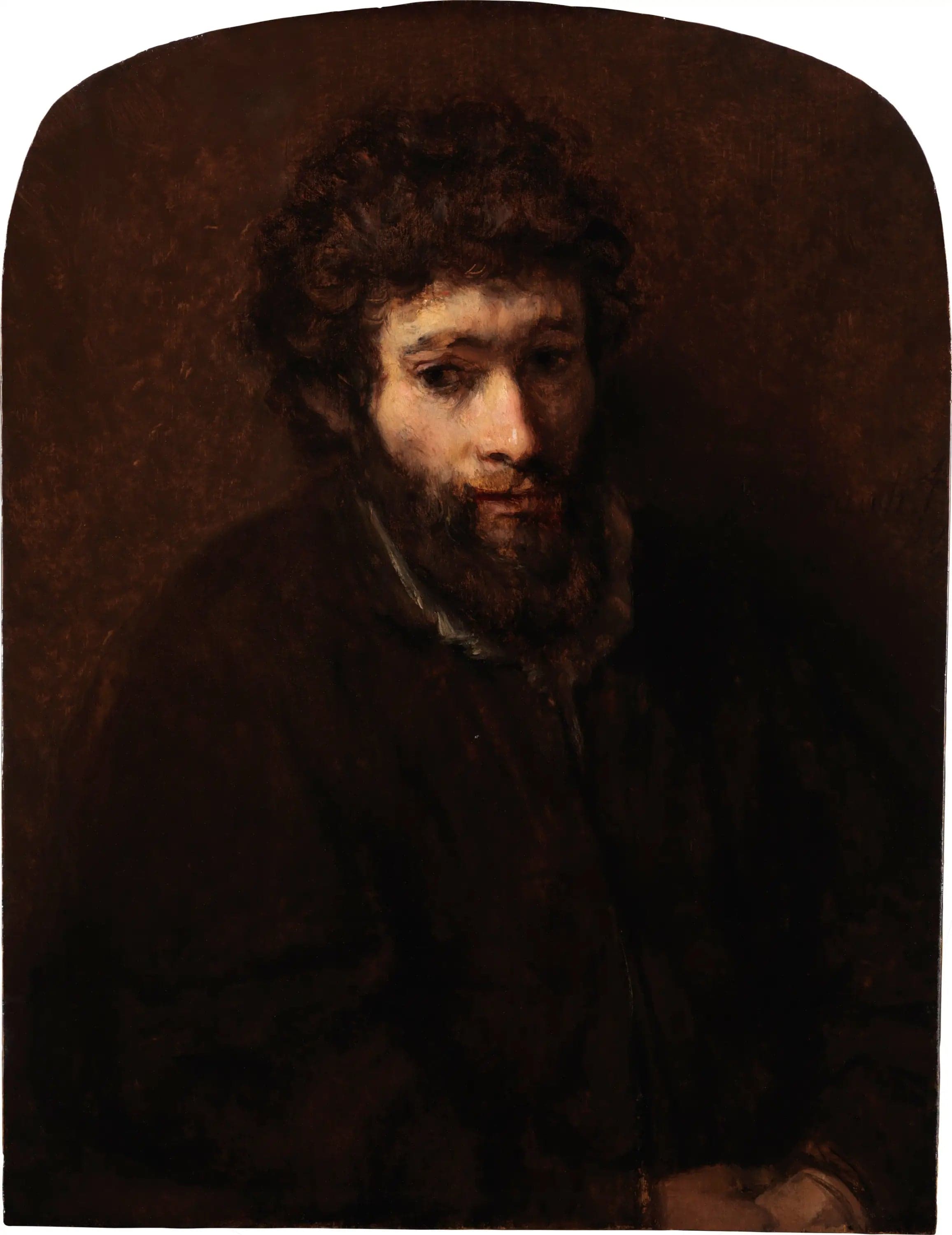
Portrait of a Young Man
- Original dimensions
- 31.3 x 40.4 cm
- Museum
- The Leiden Collection
- Year
- 1657
Scene depicted
The painting “Portrait of a Young Man” resonates with delicate subtlety. On this canvas , the young man appears frozen in silent contemplation, his gaze lost on the horizon. Rembrandt manages to blur the boundaries between the viewer and the subject, offering a total immersion into the soul of the model. Each brushstroke reveals not only exceptional technique but also a life story, expressing emotions and reflections on youth and its evanescence.
Historical context
Created in 1657, this painting is emblematic and was born in Leiden, a city in the Netherlands where the art of light and shadow takes on a masterful dimension. Rembrandt , an iconic figure of the Baroque movement, managed to capture human essence with unparalleled precision. Today, the canvas is preserved within the prestigious Leiden Collection, a sanctuary for admirers of pictorial work.
Place in the artist's career
This painting occupies a unique place in the career of Rembrandt , illustrating a turning point towards stylistic maturation. It echoes other masterpieces, such as “The Night Watch” and “The Old Woman and the Glass of Wine,” demonstrating a constant evolution in his treatment of light and human expressions. Each painting testifies to the art of Rembrandt , who knows how to blend raw emotion with technical virtuosity.
Anecdote
“Every face casts a shadow of unexplored stories,” could have declared Rembrandt one spring morning as he walked through a quiet alley in Leiden. It is in this quest for authenticity that he turned his gaze to a young man with mysterious charm, infusing his painting with evocative power. This fleeting moment became the source of inspiration for his masterpiece .