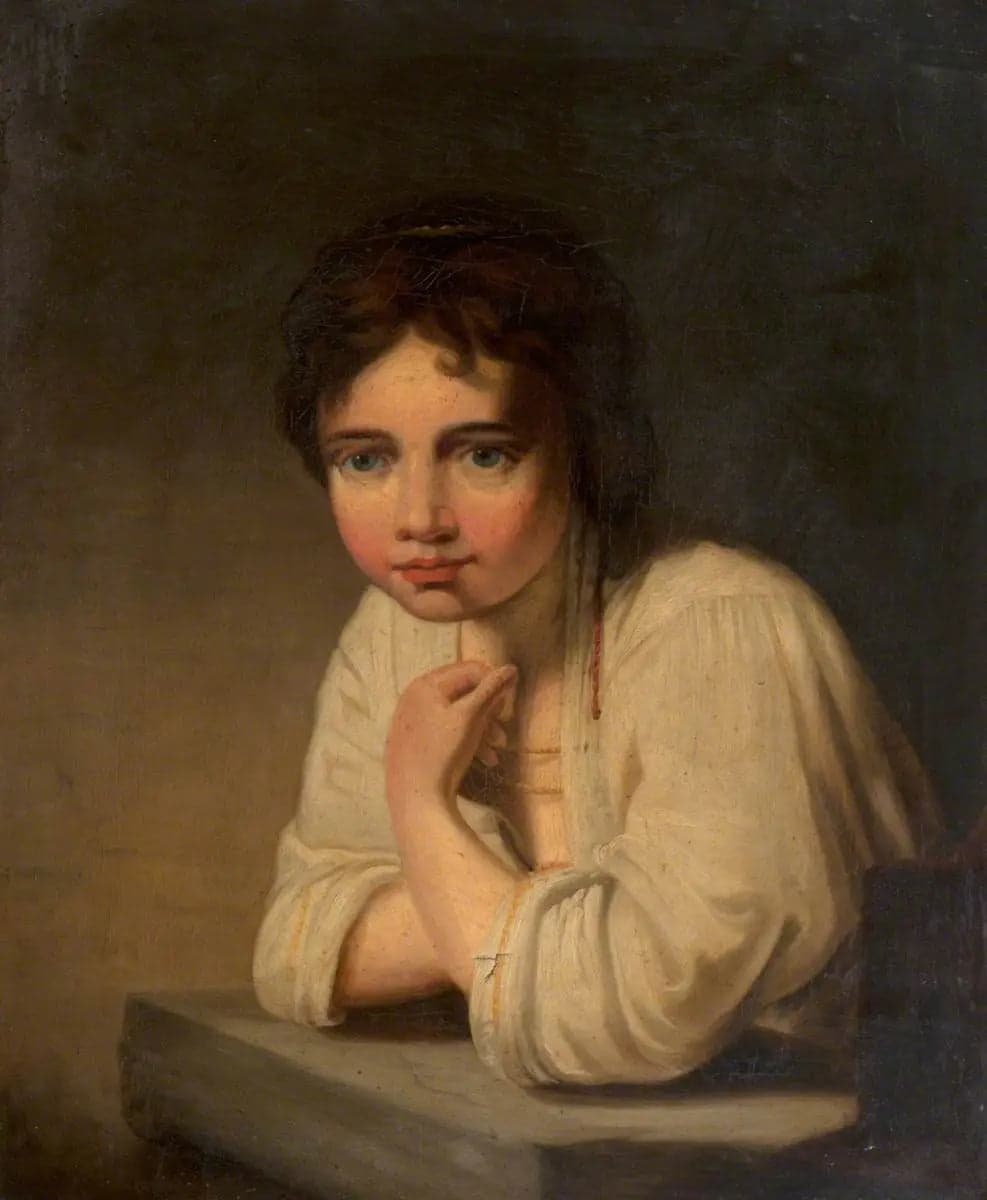
Portrait of a Young Girl
- Original dimensions
- 47 x 56.6 cm
- Museum
- private collection
- Year
- 1650
Scene depicted
The painting “Portrait of a Young Girl” transports us to a frozen moment where the heroine, with a delicate and curious face, seems ready to reveal her secrets. The details of her clothing and the way the light caresses her face inform us of Rembrandt 's art of capturing fleeting beauty and sincere emotions.
Historical context
Created in 1650, this painting was born under the sky of Amsterdam, the flagship city of the Dutch Golden Age. Emerging from the baroque movement, the painting embodies the peak of a period of wealth, artistic innovation, and inner contemplation. Today, this painting is part of a private collection, carefully preserved.
Place in the artist's career
This painting represents a significant milestone in Rembrandt 's career, marking a period of maturity where he manages to integrate emotion and technique. It is situated between notable works such as “The Night Watch” and “The Anatomy Lesson of Dr. Tulp,” reflecting the evolution of his style, where light and shadow assert themselves as full-fledged characters.
Anecdote
“Every face is a novel, a universe to explore.” This phrase, spoken by Rembrandt , could perfectly illustrate his creative journey. Imagine the master, one April morning, surprised by the soft light filtering through the shutters of his studio, as he meets the captivating gaze of a young girl whose youth and innocence inspire him to immortalize her essence in this masterpiece .