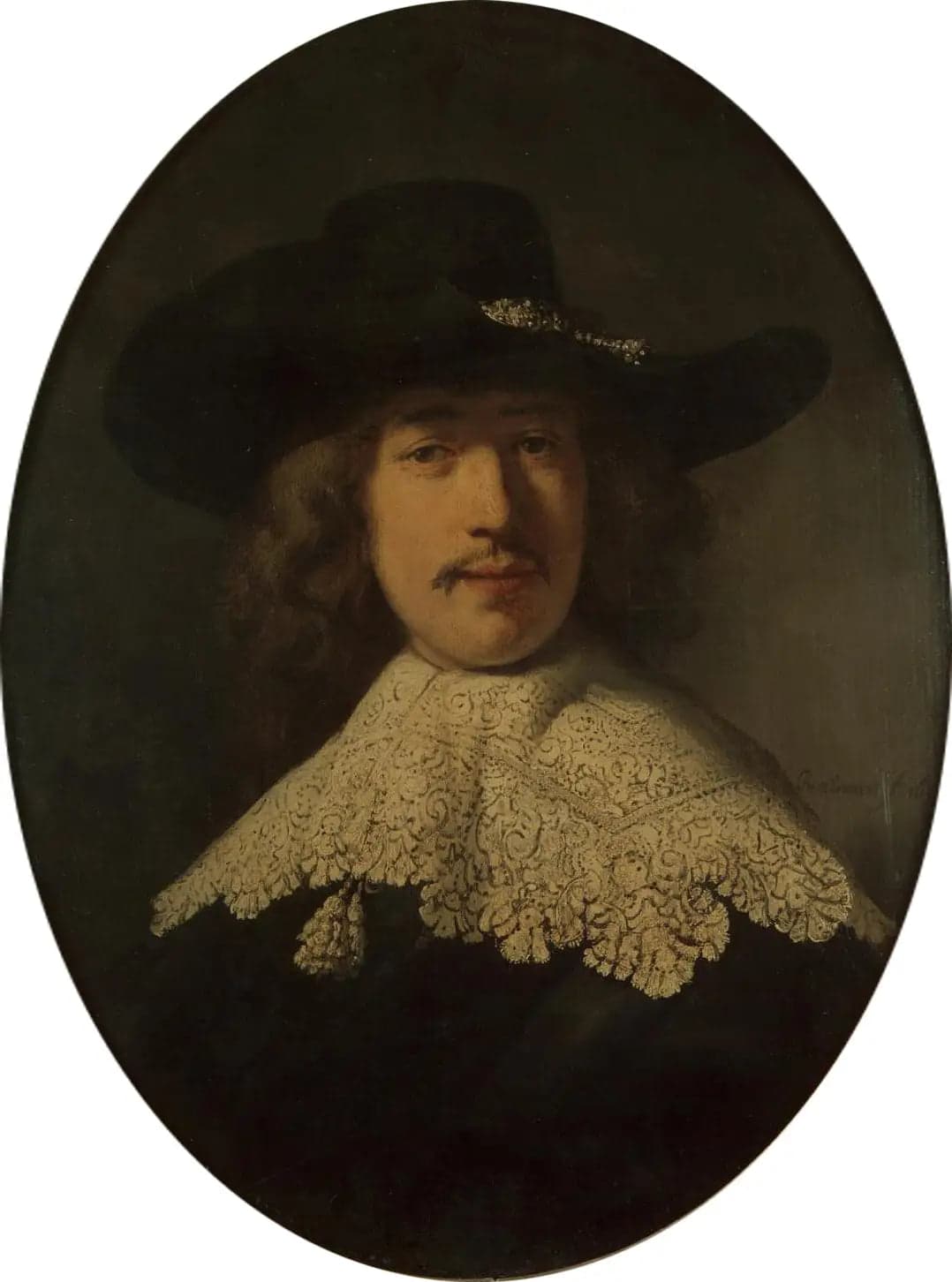
Portrait of a Young Bachelor
- Original dimensions
- 52 x 70.5 cm
- Museum
- Hermitage Museum
- Year
- 1634
Scene depicted
This canvas highlights the complexity of human emotions. In a subtle play of light and shadow, Rembrandt paints with striking authenticity the silhouette of a young man. Expressing the subtlety of the gaze, the painting invites us to reflect on the questions and aspirations of this bachelor, fiction and reality intertwining through the visual language of art.
Historical context
Painted in 1634, in the heart of the Netherlands, this canvas is emblematic of a flourishing era, marked by the transition from Baroque to Classicism. The painting is currently housed in the Hermitage Museum , where it is part of these immortal masterpieces. The finesse of its execution and the depth of emotions it evokes testify to a cultural context where art was both a mirror of society and a vector of personal expression.
Place in the artist's career
The Portrait of a Young Bachelor represents a significant milestone in the career of Rembrandt , marking the peak of his Baroque style. At this time, the artist oscillates between realism and idealization, a duality also present in his paintings such as the painting of “The Night Watch” and “The Anatomy Lesson of Dr. Tulp,” thus creating a fascinating bridge between his various artistic explorations.
Anecdote
“I aspire to capture the breath of the soul,” said Rembrandt , when, on a misty morning, he spotted a young man with an intrigued gaze. This fleeting moment would inspire the painting now recognized as a masterpiece. This canvas , through the strength of its composition, evokes this silent encounter between the artist and his model, transforming a simple scene into a vibrant work of art.