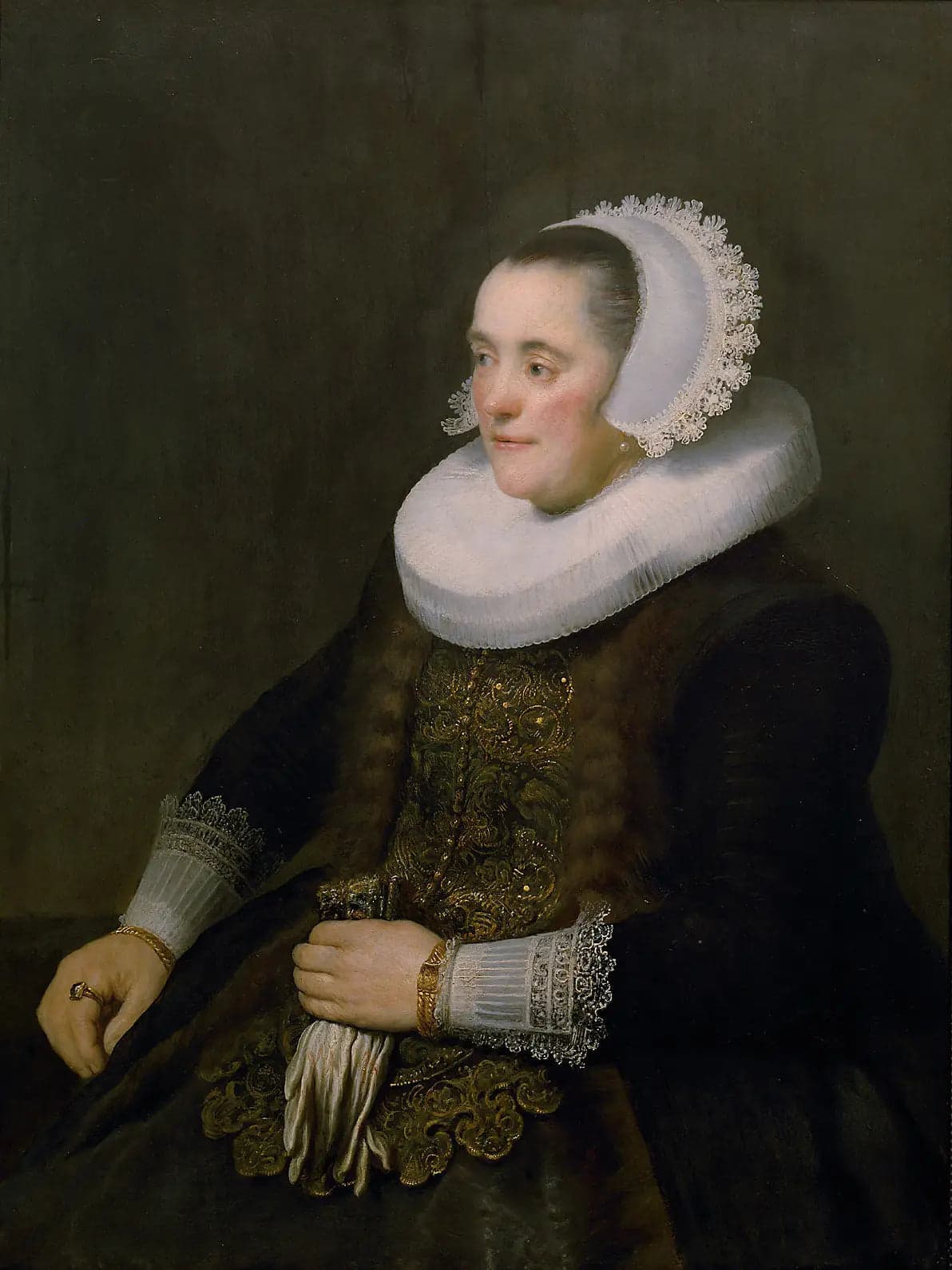
Portrait of a Woman.
- Original dimensions
- 67.5 x 90 cm
- Museum
- Vienna Museum of Art History
- Year
- 1632
Scene depicted
The painting “Portrait of a Woman” captures the essence of feminine grace. It reveals a woman of natural beauty, whose delicate expression seems to tell a secret story. The nuances of light and shadow shape a sensitive face, accompanied by a veil that adds mystery to her appearance. This pictorial work does not merely represent; it evokes deep and universal emotions.
Historical context
Created in 1632, this iconic work rests in Vienna, a city of art and history. Inscribed in the Baroque movement, this painting illustrates a period rich in emotion and innovative techniques. The painting is located in the Vienna Museum of Art History, a true sanctuary of masterpieces. Its dimensions, 67.5 x 90 cm, make it a treasure to behold.
Place in the artist's career
This masterpiece is situated at a turning point in Rembrandt 's career. After emerging with works such as “The Night Watch,” “Portrait of a Woman” marks an artistic maturity. While he explores increasingly refined techniques, other paintings like “The Anatomy Lesson” and “Bathsheba at the Mirror” illustrate the development of his rich and empathetic style.
Anecdote
Rembrandt , inspired by ephemeral beauty, is said to have declared: “A woman carries within her the glimmers of light that can only be captured with a brush.” Imagine him one spring morning, wandering through the streets of Amsterdam, when his gaze meets a silhouette, a true embodiment of inspiration for this painting .