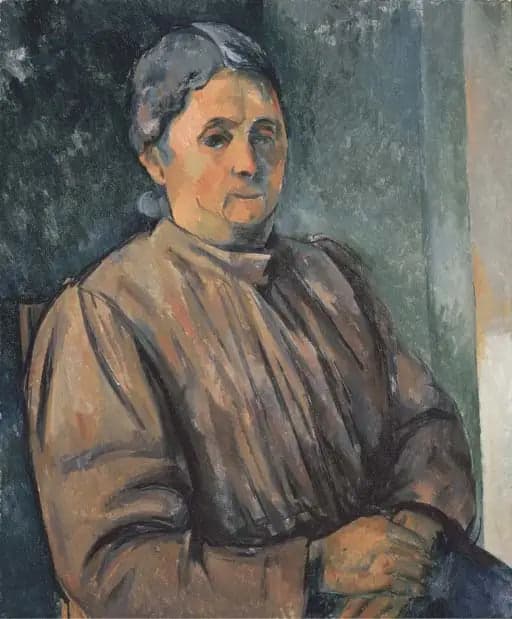
Portrait of a Woman
- Original dimensions
- 73.3 x 93.3 cm
- Museum
- Barnes Foundation
- Year
- 1892
Scene depicted
The painting “Portrait of a Woman” depicts a female figure with a captivating gaze. With tenderness, Cézanne immortalizes her timeless beauty, enveloped in a soft ambiance. The delicate features and luminosity of the composition evoke emotional intensity, offering a sincere connection between the artist and his model.
Historical context
Created in 1892, this exceptional painting finds its roots in the vibrant light of Aix-en-Provence, the artist's birthplace, and is at the heart of the Impressionist movement. At that time, Cézanne reinvents perceptions, living between tradition and modernity. Today, the canvas is preserved at the Barnes Foundation , a sanctuary dedicated to artworks from the late 19th century, revealing the depth of a century in full transformation.
Place in the artist's career
This canvas is situated at a turning point in Cézanne's career, marking a period of stylistic maturation. Alongside iconic works like “The Card Players” and “Mont Sainte-Victoire,” it testifies to a technical and emotional evolution, where each canvas becomes a quest for visual truth.
Anecdote
“I seek to make the visible, invisible.” It is in this spirit that Cézanne captures the essence of a face he may have encountered on a spring morning, its vibrant colors still resonating in the fresh air. The painting then becomes a window into his soul, and each brushstroke evokes the brilliance of memories.