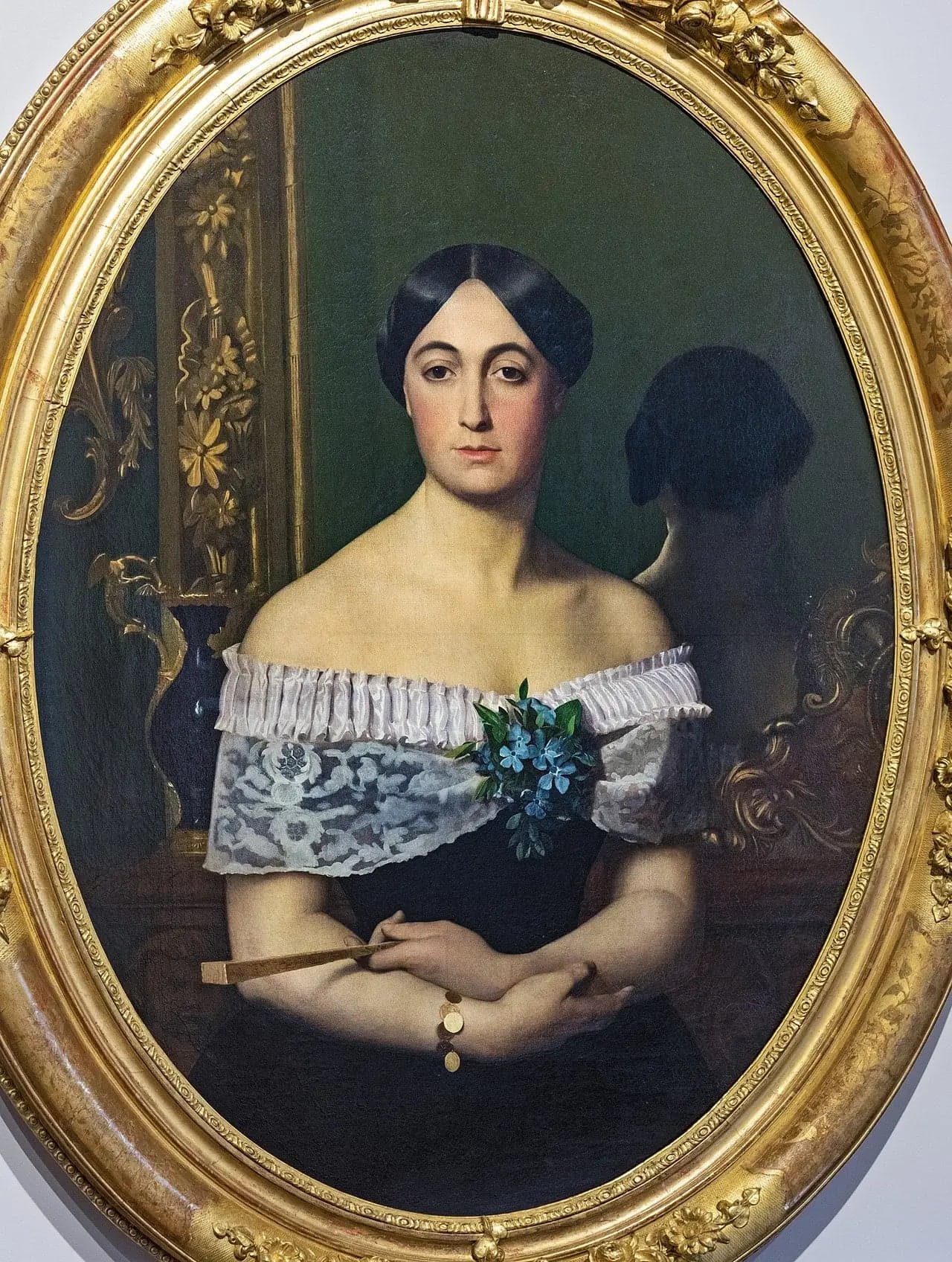
Portrait of a Woman - Jean
- Original dimensions
- 86 x 114 cm
- Museum
- musée Ingres-Bourdelle
- Year
- 1850
Scene depicted
The painting “Portrait de femme” reveals a sublime femininity, illustrating a woman with a penetrating gaze, immersed in timeless elegance. Her delicate face, enhanced by artistically arranged drapery, evokes a sharp softness mixed with inner strength. Through this portrait, Gérôme immerses us in the inner world of his model, revealing complex emotions and a captivating presence.
Historical context
Created in 1850, the painting “Portrait de femme” finds its place in Montauban, in the heart of the Occitanie region, in France. Jean-Léon Gérôme , an iconic figure of the academic movement , captures with infinite delicacy the feminine essence within an era marked by the search for beauty and truth. This masterpiece, now exhibited at the musée Ingres-Bourdelle, testifies to an unparalleled mastery both technical and aesthetic.
Place in the artist's career
The painting “Portrait de femme” is situated at a crucial moment in Gérôme's career, a stylistic peak where he begins to explore more nuanced themes of humanism. Compared to other paintings such as “The Dance of Disobedience” and “Pollice verso,” this work illustrates a transition from simple realism to a deeper quest for identity and characters.
Anecdote
“Beauty often hides in a fleeting glance,” Gérôme might have declared one April morning, inspired by the golden light of spring reflecting in the streets of Montauban. It is in this delicate atmosphere that the idea for this painting is born. This gaze, captured on the canvas , is the fruit of an ephemeral encounter, the echo of a living emotion that resonates through time.