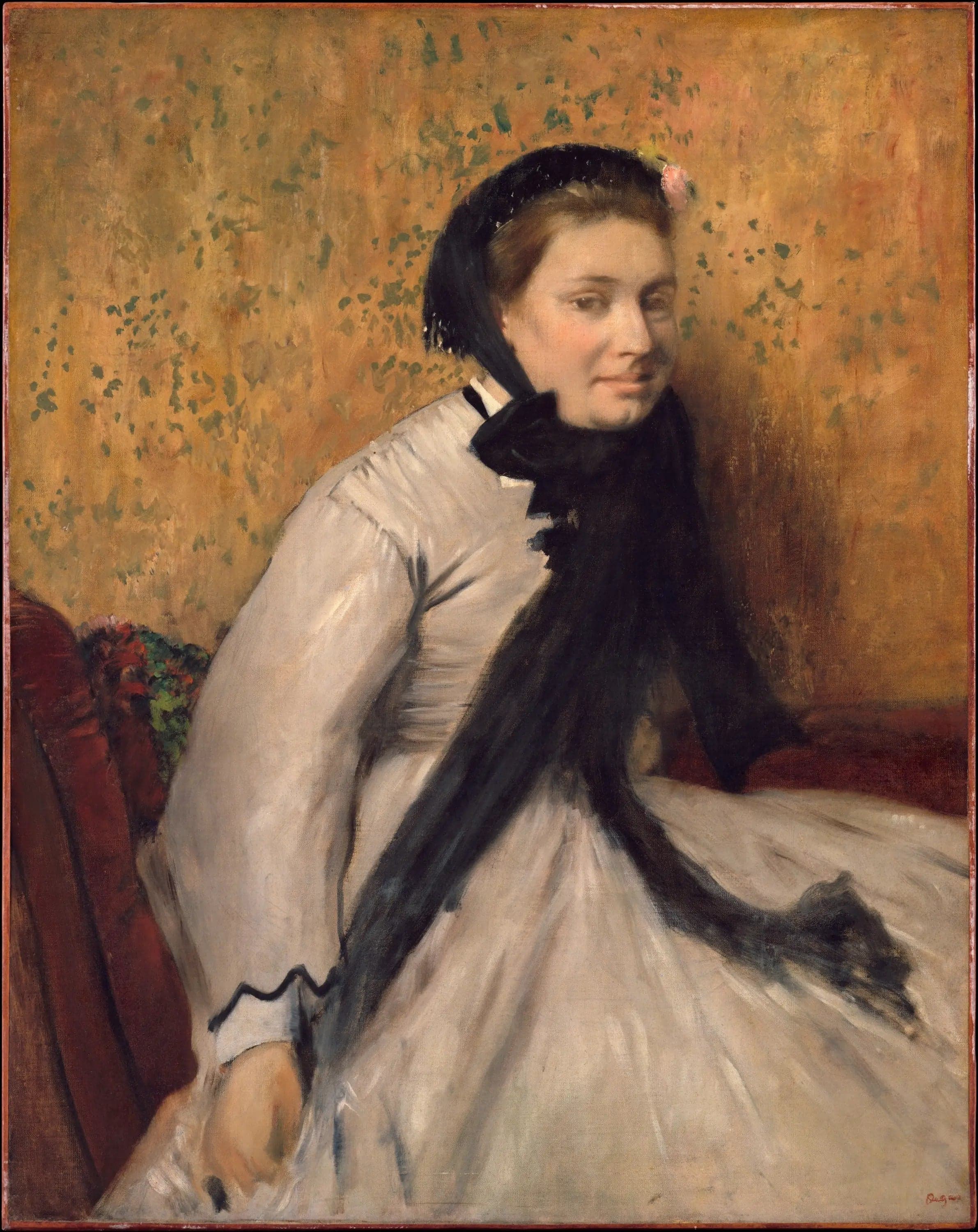
Portrait of a Woman in Gray
- Original dimensions
- 72.4 x 91.4 cm
- Museum
- Metropolitan Museum of Art
- Year
- 1865
Scene depicted
This composition by Edgar Degas subtly illustrates a woman in gray, immersed in reflection, her face brushed by soft light. This painting does not merely represent a figure; it narrates a story through silence and the eloquence of gestures, creating a palpable intimacy.
Historical context
Created in 1865 in Paris, this painting emblematic of the Impressionist movement captures the very essence of women in bourgeois society of the time. The painting is carefully preserved at the Metropolitan Museum of Art in New York, where it continues to evoke the brilliance of a unique artistic moment.
Place in the artist's career
The Portrait of a Woman in Gray is situated at a significant turning point in Degas's career, reflecting his growing mastery of the relationships between light and movement. In parallel, works like “The Dancer with a Tambourine” and “The Dance Class” highlight his technical and emotional evolution through intimate portraits and scenes of everyday life.
Anecdote
Degas, an admirer of fleeting beauty, once declared: “Beauty must be a moment felt, not a posture imposed.” It was in a Parisian alley, crossing the gaze of a woman in gray, that the inspiration for this masterpiece came to life, inviting him to capture a rare emotion.