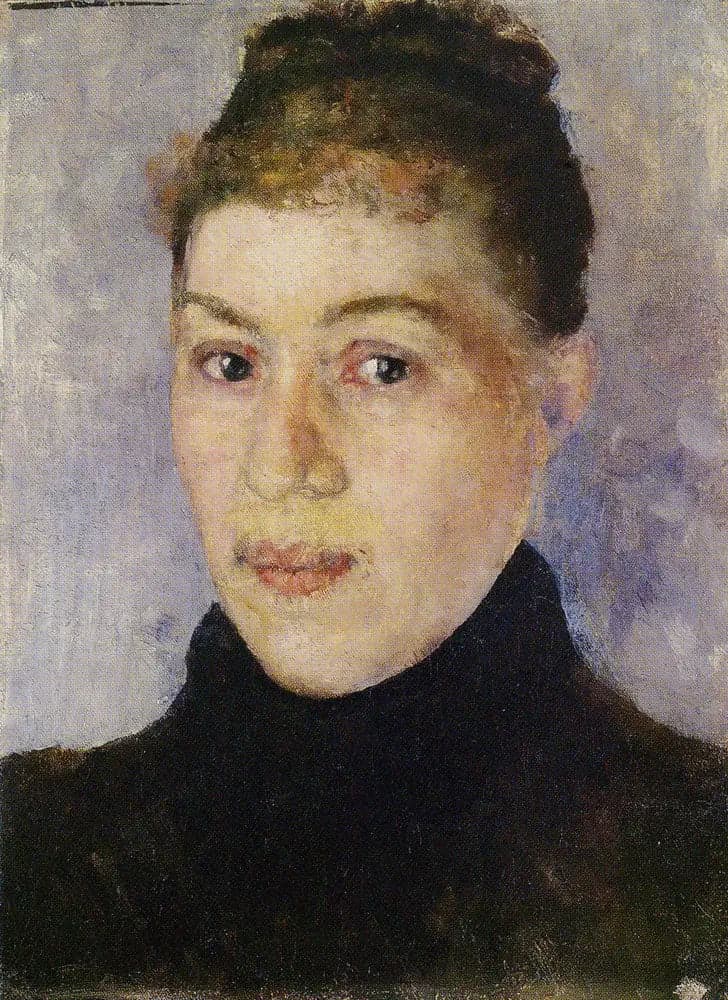
Portrait of a Woman
- Original dimensions
- 27.5 x 37.5 cm
- Museum
- Not specified
- Year
- 1883
Scene depicted
This canvas unfolds a feminine figure with enigmatic features, evoking a phenomenon of introspection. The sublime execution by Edvard Munch projects a feeling of anxiety tinged with beauty, capturing an emotional authenticity. It transcends mere appearances to reveal the complexity of human feelings, where the woman becomes both subject and symbol of inner struggles.
Historical context
Created in 1883, during a period when Edvard Munch begins to make a name for himself in the Symbolist movement, this painting finds its place in the artistic context of Oslo, Norway. The work reflects a crucial moment in the history of art, where emotion and human psychology take precedence over classical conventions. Although the current location of this canvas is not documented, its dimensions of 27.5 x 37.5 cm show the finesse and intimacy of this composition.
Place in the artist's career
The Portrait of a Woman represents one of the very first milestones in Munch's career, establishing his distinctive style and interest in the human psyche. By comparing it with later works such as The Madonna and The Scream, one can see the evolution of his approach: from emotional delicacy to a more radical expression of his existential concerns.
Anecdote
Edvard Munch once said: "Art is not the reproduction of the visible, but the visible of the invisible." It was in a quiet alley in Oslo, one spring morning, that the inspiration for this masterpiece seized him. This delicate moment, where a face he encountered deeply touched him, is marked by the vibrant and unsettling atmosphere that permeates the portrait .