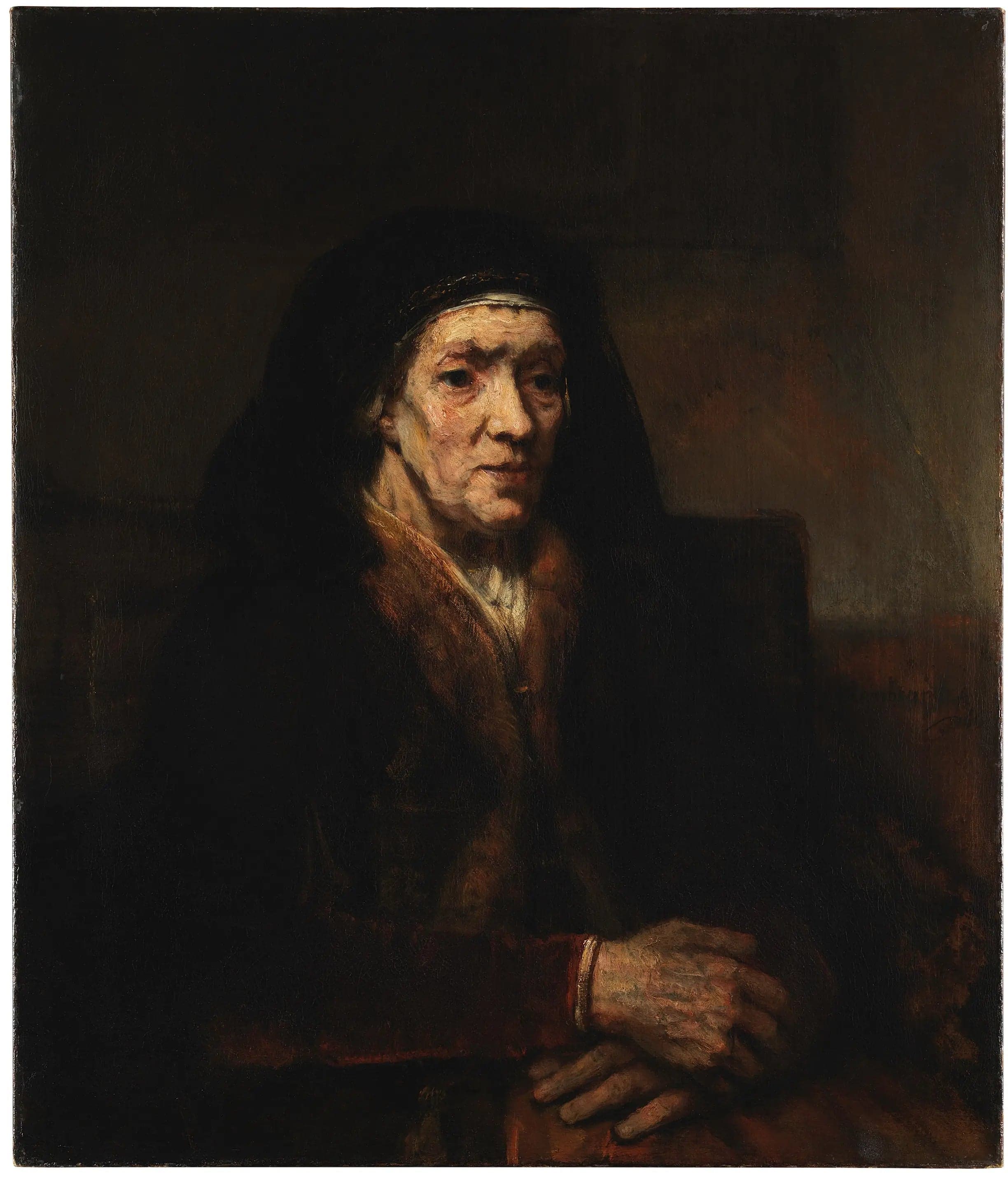
Portrait of a seated woman, hands clasped
- Original dimensions
- 64.8 x 77.5 cm
- Museum
- Not specified
- Year
- 1660
Scene depicted
In this painting , the woman is depicted in a reflective posture, hands joined on her knees, a symbol of serenity and contemplation. The depth of her expression, combined with the meticulous attention to the play of light and shadow, captures the very essence of human psychology. This emotive composition embodies the artist's perpetual quest to immortalize the intimate on canvas.
Historical context
Created in 1660, this painting is a perfect example of Dutch baroque art, an artistic movement characterized by dramatic chiaroscuro and a deep exploration of the human subject. Located in Amsterdam, this period was marked by a rich cultural and artistic flourishing. The painting is currently in a private collection, but it is often admired by art enthusiasts. The dimensions of this iconic work reveal a strong, almost palpable presence.
Place in the artist's career
The painting “Portrait of a Woman Sitting with Hands Joined” is situated at a crucial stage in Rembrandt 's career. Marking his mature period, it reflects his mastery of pictorial techniques. At the same time, works like “The Night Watch” and “The Anatomy Lesson of Dr. Tulp” highlight his stylistic evolution, oscillating between intimacy and grandeur.
Anecdote
“Every portrait tells a story, but those painted with passion whisper the truth of the soul.” This fictional quote from Rembrandt certainly resonates when observing his famous masterpiece. Imagine a winter morning, the soft light from a window gently illuminating the face of a woman with a thoughtful gaze, worthy of the canvas he would immortalize.