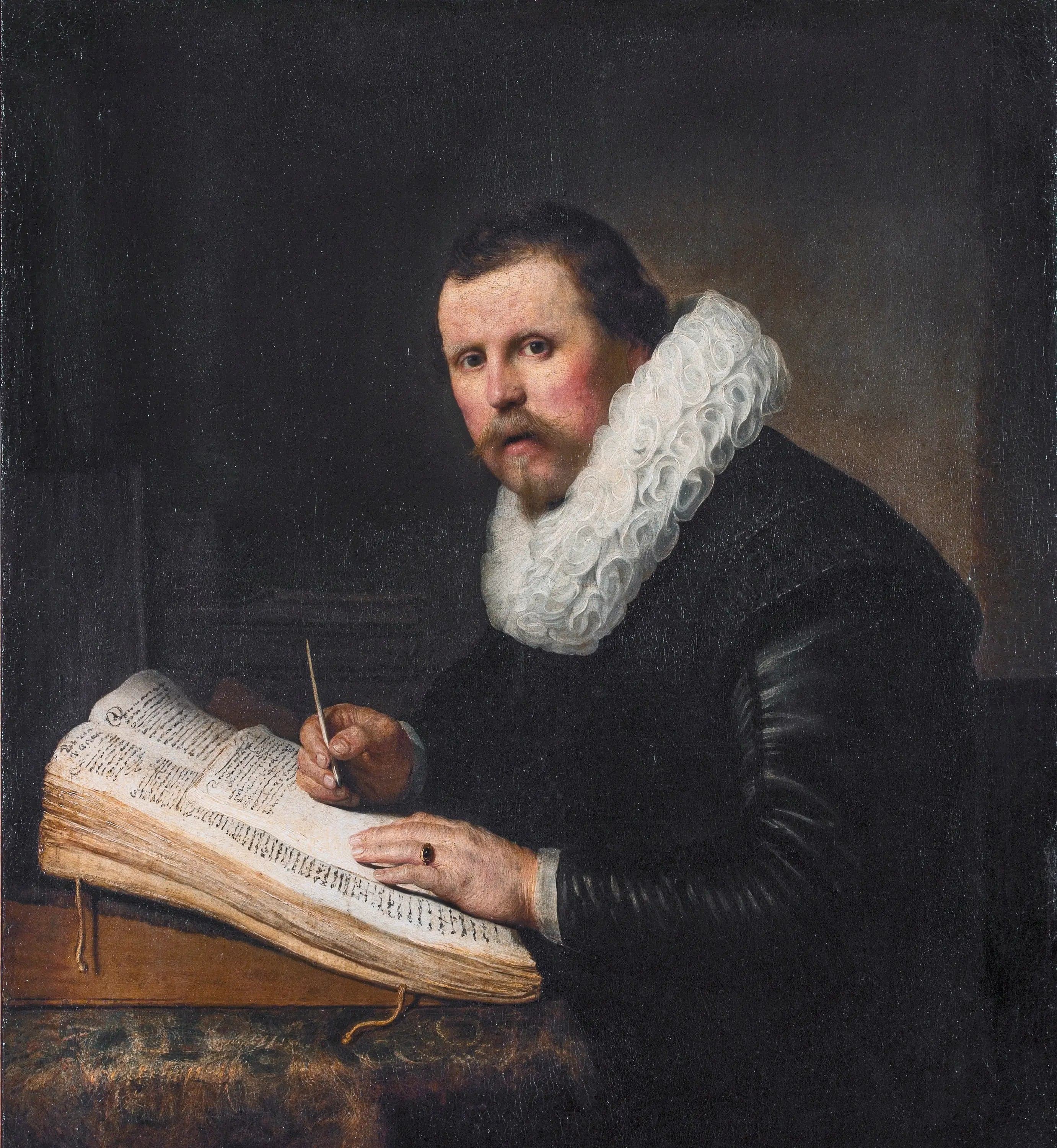
Portrait of a Scholar
- Original dimensions
- 92 x 104.5 cm
- Museum
- Hermitage Museum
- Year
- 1631
Scene depicted
The painting "Portrait of a Scholar" depicts an intellectual lost in thought, his posture studiously grounded, his gaze captivated by inner reflections. The meticulous details of his clothing and the play of light on his face evoke an atmosphere of deep erudition. It is a composition that invites one to dive into the intellectual life of its time while offering a contemporary reflection on the quest for knowledge.
Historical context
Created in the second half of the 17th century, the painting "Portrait of a Scholar" is part of the artistic movement of Baroque . At the time, the Netherlands emerged as a hub of artistic innovation, with Rembrandt as one of its iconic figures. Today, this masterpiece is the subject of overwhelming admiration at the Hermitage Museum in Saint Petersburg, where its modern dimensions of 92 x 104.5 cm embody the power of a fascinating historical era.
Place in the artist's career
This painting fits perfectly into Rembrandt's career, marking a phase of realism and introspection. Compared to works like "The Night Watch" and "The Supper at Emmaus," "Portrait of a Scholar" reveals the artist's maturity in capturing humanity in all its complexity, demonstrating a unique mastery of light.
Anecdote
“I aspire to capture not only the face but also the essence of the soul,” said Rembrandt when speaking of his art. That morning, a ray of light filtered through the window, illuminating the face of a sage, a face caught between curiosity and contemplation. This fleeting moment gave birth to a pictorial work that transcends time, where shadow and light dance inextricably.
Major exhibitions
Dutch masters from the Hermitage