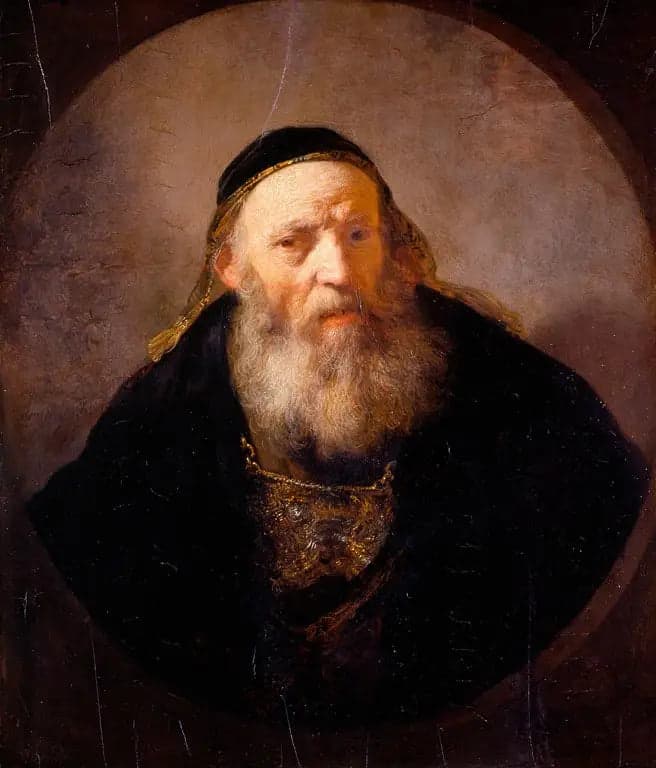
Portrait of a Rabbi
- Original dimensions
- 62.3 x 72.6 cm
- Museum
- Royal Collection
- Year
- 1635
Scene depicted
The painting "Portrait of a Rabbi" depicts a man dressed in traditional robes, projecting a sense of dignity and intellectual depth. His composed posture and penetrating gaze immerse the viewer in spiritual reflection. This painting , through its mastery of chiaroscuro and rendering of textures, invites us on an inner journey, where the alchemy between light and shadow echoes the spiritual struggles of the individual.
Historical context
Created in 1635, the painting "Portrait of a Rabbi" by Rembrandt is now at the heart of the Royal Collection in London. This canvas , emblematic of the Baroque period of the 17th century, reflects the cultural flourishing of the Netherlands, where the artist was able to capture human essence in all its complexity. Rembrandt , at the peak of his artistic career at this precise moment, focuses on themes of introspection and identity, merging a rich historical context with innovative technique.
Place in the artist's career
In the career of Rembrandt , "Portrait of a Rabbi" represents a period of artistic maturation. Alongside other great paintings such as "The Anatomy Lesson of Dr. Tulp" and "The Night Watch," this painting offers a striking contrast between the living drama of the composition and pure introspection. Rembrandt preserves his distinctive style here while deepening his explorations of the human soul.
Anecdote
"Light reveals the soul," it is said that Rembrandt often declared. That afternoon, in a quiet alley in Amsterdam, he encounters a face that deeply marks him. This fleeting meeting will inspire his masterpiece . In "Portrait of a Rabbi," the soft light flatters the subject's face, evoking an atmosphere imbued with wisdom, respect, and serenity.