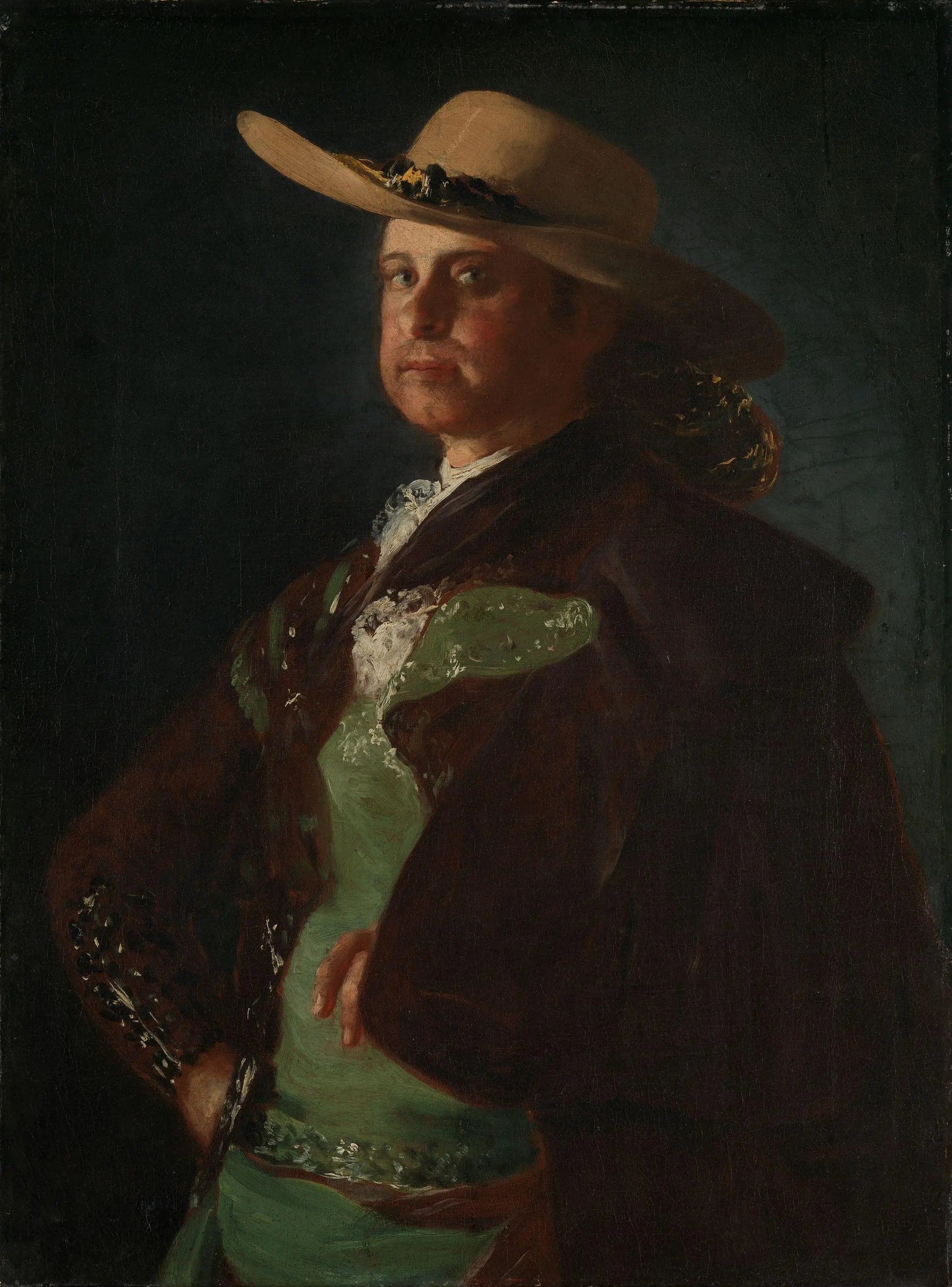
Portrait of a Picador
- Original dimensions
- 57.8 x 77.1 cm
- Museum
- National Museum
- Year
- 1900
Scene depicted
In Portrait of a Picador , Goya takes us to the heart of a scene vibrant with life, where the palpable tension of a bullfight is illustrated through the determined features of the picador. His intense gaze, etched by trials, embodies the bravery and sacrifice inherent in his art. This canvas does not merely represent a man; it glorifies a tradition, a know-how, and the deep connection between man and beast.
Historical context
Sculpted at the heart of the late 19th century, this painting emblematic of Francisco de Goya immerses the viewer in an era where art asserts itself as a powerful vector of emotion and reflection. Created in the vibrant city of Madrid, this canvas is an integral part of an artistic movement where passion and drama intertwine. Currently exhibited at the National Museum, this painting captivates and invites any art lover to discover its subtleties through its dimensions, where the magic of the moment extends over 57.8 x 77.1 cm.
Place in the artist's career
This painting , far from being a simple portrait, stands at a crossroads in Goya's career. It is a pivotal moment where his style asserts itself, parallel to works such as the painting “La Maja Desnuda” and the poignant “Las Familias de Carlos IV.” Here, Goya sharpens his critical eye and dives into the depths of the human soul.
Anecdote
“Art must awaken souls,” said Goya in the intimacy of his studio. That morning, under the soft light of a Madrid spring, he meets the gaze of a picador, his face marked by time and the passion of the arena. This fleeting encounter gives birth to a masterpiece , the Portrait of a Picador , a painting where the expressive force of the subject emerges with all its power.